••
Accra Local Authorities Launch Massive Enforcement Drive for Revenue, Sanitation, and Market Infrastructure
•3 min read•7 sources
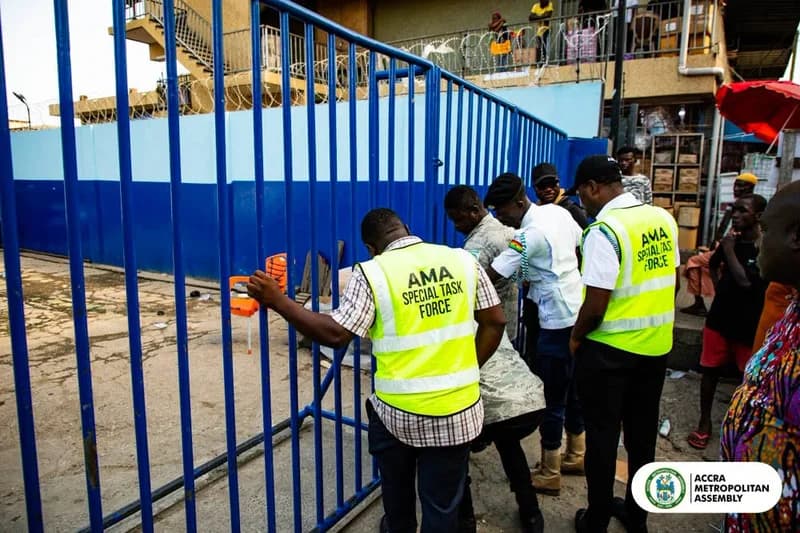
Local government authorities in Accra have initiated a sweeping series of enforcement measures and development projects aimed at boosting revenue, improving sanitation, and modernizing urban trade. From the Accra Metropolitan Assembly’s (AMA) aggressive crackdown on tax defaulters to the Ayawaso North Municipal Assembly’s ambitious relocation plans for a new market, the capital city is undergoing a significant administrative push for order and fiscal compliance. These efforts coincide with a new national policy that elevates sanitation as a critical performance metric for Metropolitan, Municipal, and District Chief Executives (MMDCEs) following a 2025 government restructuring, emphasizing accountability at the local level.
Led by Mayor Michael Kpakpo Allotey, the AMA has deployed a Revenue Mobilization Task Force to inspect businesses and advertising properties across the metropolis. Starting June 22, 2026, the Assembly will begin locking up shops and premises of owners who have failed to pay Business Operating Permits (BOP), Property Rates, and Outdoor Advertising Fees. To facilitate compliance, the AMA has integrated its collection systems with the Ghana Integrated Financial Management Information System (GIFMIS) and introduced mobile shortcode payment options. Simultaneously, Mayor Allotey has issued a final warning against hawking and unauthorized trading under the Kwame Nkrumah Interchange, citing congestion and unsanitary conditions. Violators of these directives face severe penalties under the Local Governance Act, 2016, including potential imprisonment or fines up to 100 penalty units.
In a parallel effort to modernize commercial infrastructure, the Ayawaso North Municipal Assembly has secured 10 acres of land in the Shai Osudoku District to relocate occupants from the government-owned Kaasuankuda site in Maamobi. This relocation is the precursor to constructing a new market designed to support the government’s 24-hour economy program. According to the Municipal Chief Executive, Haruna Mohammed Awal, the project has a total allocation of GH¢58 million, of which GH¢42 million has already been received. While construction is slated to begin within six weeks of the relocation, the assembly is currently navigating resistance from some occupants who have filed legal petitions. Officials are working to provide essential utilities like water and electricity at the new Shai Osudoku site to ensure a seamless transition for the traders.
These localized enforcement and development actions reflect a broader national shift toward decentralization and rigorous performance management. The Government of Ghana has recently reassigned primary sanitation responsibilities back to local authorities, making clean environments a core Key Performance Indicator for MMDCEs. Stakeholders, including experts like Mr. Yaw Attah Arhin from World Vision Ghana, emphasize that such structured evaluation measures are essential for driving investment and regulatory enforcement. As the AMA and other municipal assemblies tighten their fiscal and environmental controls, the focus remains on building a cleaner, safer, and more prosperous Accra through improved revenue mobilization and infrastructure development.
