Politics
Latest politics stories from Ghana's newsrooms

politics|
NPP holds thanksgiving services in Goaso and Kintampo
The New Patriotic Party (NPP) has embarked on a national thanksgiving tour to celebrate the successful conclusion of its internal elections and the selection of its flagbearer for the 2028 general elections. The tour, which included significant stops in Goaso and Kintampo, brought together national executives and party leadership to express gratitude for the peaceful electoral process and to prepare the party's grassroots for the upcoming national campaign. In Goaso, located in the Ahafo Region, the party held a service at the Seventh-day Adventist (SDA) Church. General Secretary Justin Frimpong Kodua emphasized the necessity of divine guidance as the party moves forward. During the service, National Chairman John Boadu addressed specific concerns raised by the SDA community regarding elections held on Saturdays. Boadu assured the congregation that the party's flagbearer, Dr. Mahamudu Bawumia, is committed to addressing these religious observance issues if he is successful in the 2028 polls. During a visit to Kintampo, Dr. Mahamudu Bawumia declared that the party has successfully resolved its internal wrangling, urging all members to embrace unity. He stressed that a cohesive front is essential for the NPP to secure a majority of parliamentary seats and implement its socio-economic policies. To demonstrate his commitment to community relations, Dr. Bawumia donated GH‵30,000 to the local Muslim community, reinforcing his call for party members to work diligently at the local level. The tour also highlighted the election of the party's new executive team, including National Treasurer Alfred Kojo Thompson. The Young Executive Forum (YEF) has formally congratulated Thompson, expressing confidence that his leadership and integrity will significantly enhance the party's financial management. The YEF pledged its full support to the new leadership as they focus on strengthening the party's mission and administrative structures. As the NPP transitions from internal reorganization to active national mobilization, these thanksgiving events serve as a platform to consolidate support across different regions and religious groups. By prioritizing internal reconciliation and grassroots engagement, the party leadership aims to build the momentum necessary for the 2028 electoral cycle.

politics|
Michael Tetteh Kwetey takes number one spot on NDC regional ballot
Michael Tetteh Kwetey has secured the number one position on the ballot paper for the National Democratic Congress (NDC) Greater Accra Regional Chairmanship race. The official balloting process, which determines the order in which candidates appear for the voting exercise, has placed Kwetey at the top of the list. In the context of Ghanaian internal party politics, the first slot is frequently utilized as a symbolic advantage and a primary mnemonic device for mobilizing delegates during the campaign period. Following the balloting outcome, Kwetey emphasized that the number one position represents more than just a numerical sequence. He stated that the top spot symbolizes the renewed direction and the core values he intends to bring to the NDC's leadership within the Greater Accra Region. His campaign has focused on revitalizing the party's regional structure and ensuring that the NDC is well-positioned to engage voters effectively in what is traditionally a critical electoral battleground. The Greater Accra regional elections are scheduled to take place in November 2026. As the party continues its internal reorganization efforts under the current administration, the race for the regional chairmanship is expected to draw significant attention from party members and political observers. Kwetey’s early securing of the first ballot slot provides a focal point for his messaging as he seeks to consolidate support from delegates across the various constituencies in the region ahead of the polls.

politics|
United Kingdom bans violent online pornography depicting strangulation
The United Kingdom government has announced a ban on online pornography depicting violent acts, including strangulation and incest, which will come into effect on 6 November 2025. The new legislation specifically targets material showing non-fatal strangulation, incestuous acts, and adult actors role-playing as minors. This policy shift follows a comprehensive review that highlighted the increasing normalization of choking within adult content and the significant potential for harm it poses to viewers, particularly young people who may be influenced by these depictions. Justice Minister Alex Davies-Jones emphasized that the primary goal of the law is to combat the spread of violent content that distorts perceptions of healthy and consensual relationships. While non-fatal strangulation is already categorized as a criminal offense in physical interactions without consent, these new regulations extend those legal protections to the digital sphere. The government has warned that offenders could face substantial prison sentences for the possession or publication of such prohibited material. Legal experts have expressed support for the move but have cautioned that the effectiveness of the ban will rely heavily on the responsiveness of technology companies. Platforms will be required to implement robust enforcement measures to identify and remove the restricted content quickly. As the November deadline approaches, the UK government intends for these measures to create a safer online environment and align digital content standards with existing laws against physical sexual violence.
Only From Anansi
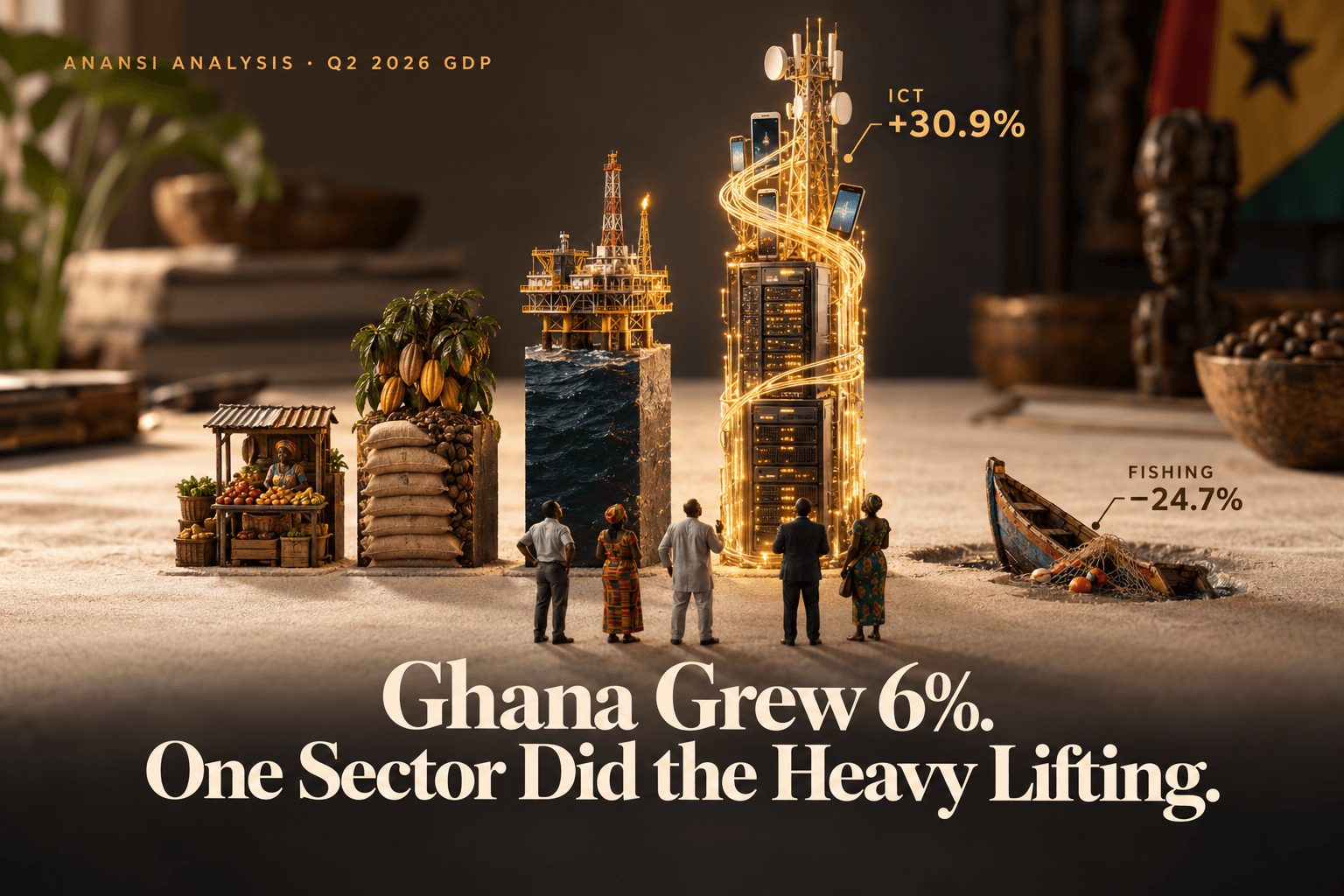
Understanding Ghana's Q2 2026 GDP Figures: What the Numbers Really Mean
Beyond the headline growth rate: a granular look at agriculture, manufacturing and services in Ghana's Q2 2026 GDP report, plus a year-end temperature check.
26 September 2026 · 11 min read
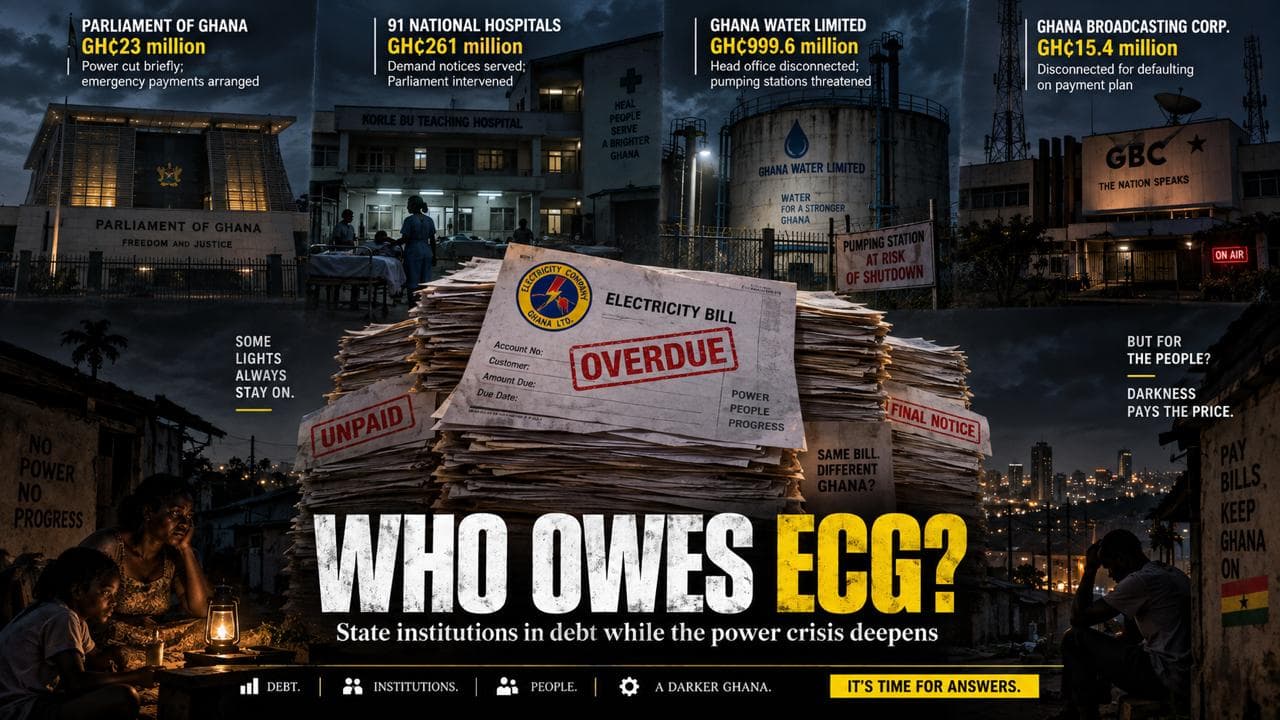
Ghana's Electricity Crisis Is Really a Revenue-Conversion Crisis: What the Evidence Says About ECG
ECG sells around GH¢22 billion of power but spends roughly GH¢35 billion buying and delivering it. Audited accounts, IMF assessments and World Bank reviews show the real problem is not generation, but converting electricity into cash.
1 September 2026 · 25 min read
About Anansi News
Anansi News is a daily home for the latest Ghana news. Our AI reads across Ghana's leading newsrooms and summarizes what matters, so you can follow politics, business, sports, and entertainment in one place without the noise.
We cover national developments and regional coverage from Accra, Kumasi, and beyond, and readers in Ghana and across the diaspora rely on us to stay close to home.