••
Gender Ministry Moves to Align Age of Consent and Marriage Laws Amid Renewed Social Protection Drive
•2 min read•4 sources
Ghana’s Ministry of Gender, Children and Social Protection (MoGCSP) has initiated a series of critical legal and policy reforms aimed at safeguarding the rights of children and advancing women’s economic empowerment. Central to these efforts is a plan to reconcile the legal disparity between the age of consent for sex, currently set at 16, and the legal age for marriage, which is 18. This legislative gap has been identified by officials and advocates as a significant factor contributing to child abuse and rising teenage pregnancy rates across the country. By harmonizing these laws, the Ministry seeks to create a more robust protective framework for minors, particularly girls.
Speaking at a community dialogue in Dachio, Ms. Francisca Atuluk, Director for Social Protection, and Minister Agnes Naa Momo Lartey confirmed that a specialized team has been tasked with reviewing these inconsistencies to propose formal amendments. The Ministry is committed to a transparent process, planning extensive public dialogues to gather stakeholder feedback and build a national consensus on the reforms. To support these legislative goals, the government is also expanding field-based social interventions, including the School Feeding Programme and mass registrations for the National Health Insurance Scheme (NHIS), ensuring that vulnerable populations have the healthcare and educational support necessary to thrive.
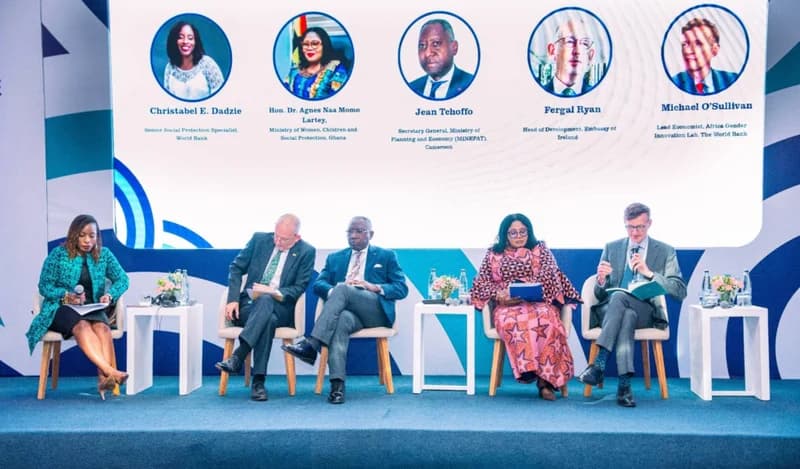
On the international front, Ghana is asserting its leadership in social protection through continental knowledge exchanges. Minister Lartey recently led a high-level delegation to Addis Ababa, Ethiopia, to study the Productive Safety Net Programme (PSNP 5). During the summit, she highlighted the Ghana National Household Registry as a key innovation for improving the targeting of the Livelihood Empowerment Against Poverty (LEAP) programme. She advocated for viewing social protection as a strategic investment in human capital rather than mere welfare, emphasizing the need to transition beneficiaries toward sustainable economic pathways through entrepreneurship and employment.
These domestic and regional efforts are further bolstered by a growing movement to protect activists across West Africa. In Dakar, Senegal, representatives from Germany’s bilateral cooperation (GIZ) joined the R seau des Femmes Leaders pour le D veloppement (RFLD) to address the safety of Women Human Rights Defenders. This broader focus on gender-sensitive initiatives reflects a holistic strategy by Ghanaian and regional leaders to dismantle socio-cultural barriers and ensure that legal protections are matched by practical security and economic opportunity for women and children alike.