••
Devastating Disasters Strike Communities Across Ghana: Storms, Fires, and Lake Tragedy Leave Thousands Displaced
•3 min read•6 sources
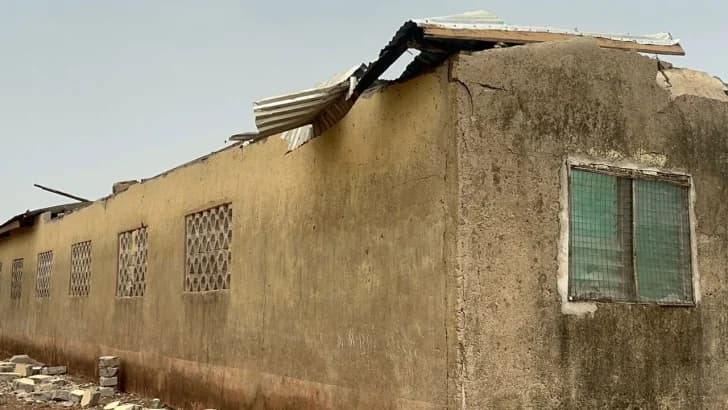
Ghana has recently been hit by a wave of tragic accidents and natural disasters, leaving families grieving and thousands displaced across the country. In the Gushegu constituency, a powerful windstorm wreaked havoc, damaging over 250 houses and displacing nearly 2,000 residents. The storm's impact was particularly severe on educational infrastructure, with classroom blocks and teachers' quarters at institutions such as Gaa Kindergarten and Gushegu Senior High School suffering significant damage. Local Member of Parliament Alhassan Tampuli, who toured the affected areas, has already mobilized 500 bags of cement and 100 packets of roofing sheets for relief, warning that the destruction could severely disrupt the academic calendar if urgent interventions are not made.
A heart-wrenching maritime tragedy further darkened the national mood as nine members of a single family perished on the Volta Lake. A canoe carrying 16 passengers from Yeji to Congo capsized during a storm, resulting in the deaths of a herdsman's mother, three wives, and five children. The Ghana Maritime Authority has expressed deep concern over the incident, noting that the victims were not wearing life jackets and the vessel had departed from an unapproved location to avoid safety checks. In response, authorities are considering stricter enforcement measures, including the deployment of a Water Safety Guards unit and remote monitoring of water transport to prevent such preventable losses in the future.
Simultaneously, fire outbreaks have caused extensive property damage in the Ashanti and Greater Accra regions. In Bogyawe, within the Bekwai Municipality, a three-bedroom house was completely razed, leaving occupants with nothing to salvage and prompting an urgent appeal for temporary shelter and essential items. In the capital, fire crews from Madina, Adenta, and Legon battled a blaze at the Madina Ritz Junction that destroyed multiple wooden structures and containers. Another domestic fire at Tantra Hill was successfully contained by the Amasaman Fire Station before it could spread to neighboring residences, although one bedroom was entirely consumed by the flames.
These collective incidents highlight a growing vulnerability to both natural and man-made disasters in Ghana, underscoring the urgent need for improved infrastructure and stricter adherence to safety regulations. While no injuries were reported in the Madina and Tantra Hill fires, the loss of life on Volta Lake and the mass displacement in Gushegu have left communities reeling. Officials and victims alike are calling for increased support from the government and NGOs to rehabilitate affected areas, even as the Ghana National Fire Service and Maritime Authority urge the public to prioritize fire safety measures and the use of life-saving equipment.
Related topic
Ghana Fire Service Recruitment: Latest News Today →
