••
Ghana to Launch GH‡1.2 Billion Free Primary Healthcare Policy: Phased Rollout Begins Wednesday
•3 min read•13 sources
On Wednesday, April 15, 2026, the Government of Ghana will officially launch its ambitious Free Primary Healthcare (FPHC) policy, marking a pivotal shift toward a preventive health model. Health Minister Kwabena Mintah Akandoh announced that the initiative will begin with a phased rollout in 150 districts, with the ultimate goal of achieving nationwide coverage by 2028. This policy is designed to reduce the 'No Bed Syndrome' by catching illnesses early through routine screenings for conditions like hypertension and diabetes, thereby easing the burden on major referral hospitals. Supported by a GH‡1.5 billion allocation in the 2026 budget, the program requires an estimated GH‡1.2 billion annually to sustain essential services across the country.
To support this massive undertaking, the government has already procured over 24,000 units of critical medical equipment, including incubators, glucometers, and ultrasound machines, specifically prioritizing underserved communities. The rollout includes the deployment of more than 350 container-based clinics and nationwide outreach programs featuring home visits and screenings in public locations. Minister Akandoh clarified that while the service is free for basic curative and preventive care—requiring only a valid national ID—it is not a replacement for the National Health Insurance Scheme (NHIS). Patients referred to higher-level facilities for advanced care will still need valid insurance, highlighting a dual-track system where NHIS remains crucial for secondary and tertiary treatments, even as coverage has recently increased to 66%.
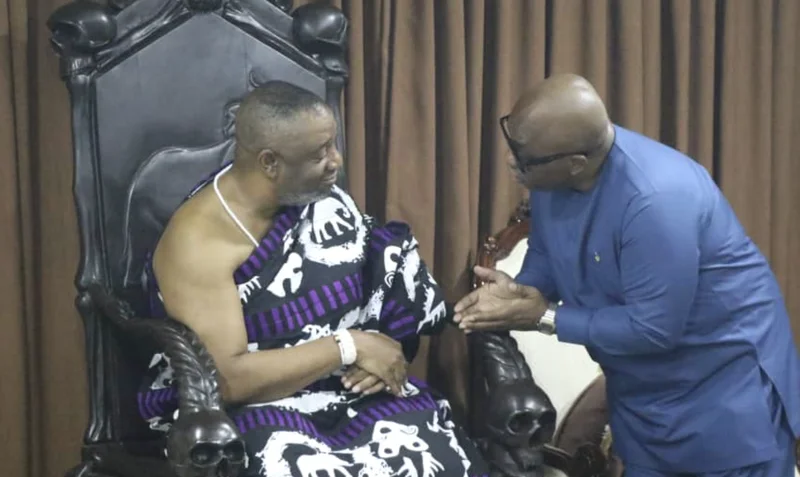
Parallel to the healthcare rollout, the government is intensifying health literacy efforts and seeking traditional support. Education Minister Haruna Iddrisu has endorsed a nationwide NHIS sensitization program and an inter-regional quiz competition for Senior High Schools, set to run from May to November 2026. This initiative aims to foster responsible health-seeking behavior among the youth and prepare them for Universal Health Coverage. On the diplomatic and traditional front, the Ministry of Health has secured the endorsement of the Ga State, with King Tackie Teiko Tsuru II accepting an invitation to the launch and expressing support for the initiative's focus on chronic disease management, including conditions like Parkinson’s disease.
Despite the optimism, the rollout faces significant political and logistical hurdles. Minister Akandoh recently criticized former President Nana Akufo-Addo's 'Agenda 111' project, noting that despite GH‡4.8 billion in spending under the previous administration, facilities have faced significant delays. Furthermore, staffing remains a critical concern; in the Krachi West Municipality, health officials have raised alarms over the refusal of workers to accept postings to remote island communities, with only five out of twenty-five personnel reporting for duty. As the government transitions the healthcare system from an emergency-driven model to one focused on prevention, the success of the Free Primary Healthcare initiative will depend heavily on resolving these infrastructure gaps and personnel shortages.

