••
African Leaders and Experts in Accra Demand Strategic Governance and Value Addition for Critical Mineral Wealth
•2 min read•8 sources
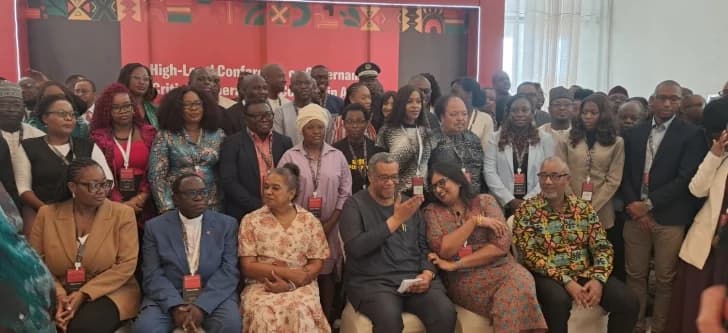
A high-level conference in Accra has brought together policymakers, industry experts, and civil society leaders to address the intersection of governance, critical minerals, and conflict in Africa. Organized by the Open Society Foundations from July 27 to 29, 2025, the summit focused on how the continent can leverage its vast reserves of cobalt, lithium, and other essential resources to drive sustainable development. Key participants emphasized that Africa must move beyond being a mere exporter of raw materials to becoming a central player in the global green energy supply chain through industrialization and value addition.
Augustus "Goosie" Tanoh, Senior Presidential Advisor on the 24-Hour Economy Policy to President John Mahama, warned that Africa risks repeating historical mistakes if it fails to assert control over its mineral value chains. He argued that local production and the development of internal industries are essential for job creation and long-term peace. Tanoh highlighted the African Continental Free Trade Area (AfCFTA) as a vital mechanism for fostering economic integration and reducing reliance on foreign industrial advancement. Supporting this view, Alexander Kofi-Mensah Mould, CEO of the Millennium Development Authority (MiDA), noted that resource abundance alone does not build legacies; rather, wise governance and equitable resource sharing determine whether mineral wealth leads to prosperity or instability.
Dr. Chukwuemeka B. Eze, Director of the Democratic Futures in Africa programme at the Open Society Foundations, advocated for a fundamental rethinking of resource management. He stressed that transparent governance systems and community ownership are necessary to ensure that local populations benefit directly from extraction activities. Adding a systemic perspective, Bishop Matthew Hassan Kukah observed that the continent’s developmental challenges often stem from weak institutional systems rather than individual leadership failures alone, calling for robust frameworks that prioritize democratic accountability and regional cooperation.
Looking toward the future, the discussions in Accra set the stage for broader continental initiatives aimed at bridging the technology and energy gaps. While the mineral conference addressed the physical resources needed for the global transition, upcoming events like the Pan African AI Summit and African Energy Week 2026 are expected to focus on human capital and investment. Leaders at the Accra forum agreed that "opening the doors" to decision-making for African talent and securing concrete financing commitments are the next critical steps in transforming dialogue into tangible economic outcomes for the continent.
Related topic
John Mahama: Latest News & Updates →

