••
Graphic Online critique exposes sport trafficking and governance failures
•2 min read•1 source
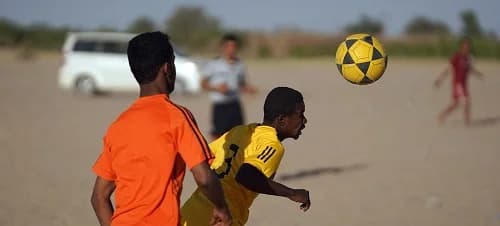
A theoretical critique published by Graphic Online has brought renewed attention to the urgent issue of sport trafficking across Africa, highlighting the systemic exploitation of young athletes. The study identifies a disturbing trend where minors and their families are targeted by traffickers who manipulate cultural aspirations tied to professional football. This exploitation is facilitated by a combination of extreme poverty and significant governance failures within national and international sporting bodies, which have left vulnerable youth without adequate protection from fraudulent schemes.
The critique employs political economy and migration theory to analyze how global sports structures contribute to local exploitation. It reveals that the "football dream" often becomes a nightmare for young Africans who are lured abroad under false pretenses by unlicensed agents. Once in foreign countries, many find themselves abandoned or subjected to labor exploitation when the promised professional contracts fail to materialize. The report emphasizes that the gap between the high-profile branding of global sports and the reality of local athlete welfare creates a fertile ground for these predatory practices.
To address these challenges, the study proposes a series of rigorous interventions aimed at both government and international organizations. Key recommendations include the implementation of stricter regulations for sports agents and academies to ensure they operate transparently and ethically. Furthermore, the report calls for enhanced safeguarding policies specifically designed to protect minors from being trafficked under the guise of sports migration. Educational initiatives are also highlighted as a critical tool to help families and young athletes recognize the warning signs of fraudulent recruitment schemes.
The ongoing crisis underscores a profound ethical contradiction in the sporting world, where the pursuit of talent often overrides the fundamental human rights of the individuals involved. As African nations continue to produce world-class talent, the call for improved governance becomes more pressing. Experts suggest that without immediate action to reform agent licensing and oversight, the integrity of the sport will continue to be compromised by those seeking to profit from the desperation of young athletes and their families.