••
AGRA Report Demands Focus on Farmer Earnings Amidst Significant African Agrifood Growth
•3 min read•3 sources
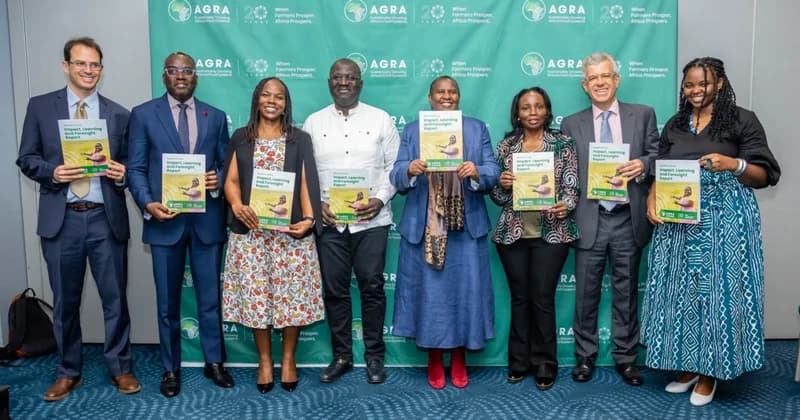
The Alliance for a Green Revolution in Africa (AGRA) has called for a fundamental shift in how the continent’s agricultural success is measured, arguing that the true litmus test of food system transformation lies in the actual earnings of smallholder farmers. In its landmark report, "Africa’s agrifood system transformation and the path ahead," AGRA highlights two decades of noteworthy progress in strengthening agrifood systems while warning that current gains have not yet translated into the income levels necessary to sustain long-term prosperity. The report serves as both a celebration of a twenty-year journey and a critical call to action for governments and private sector players to prioritize value retention at the farm level.
Over the last twenty years, Africa has seen substantial growth in agricultural infrastructure and inputs. The report notes that the number of seed companies across sub-Saharan Africa has surged from a mere 12 to several hundred, while fertilizer usage has more than doubled. This period has also witnessed a significant increase in the adoption of drought-tolerant maize and a rise in small and medium-sized enterprises (SMEs) providing digital agricultural services. These advancements have contributed to an increase in the gross value-added of agriculture and improved breeding capacities, establishing a foundation for a more resilient food system.
Despite these structural improvements, the report underscores a persistent gap between industrial growth and farmer welfare. Agricultural yields and farmer incomes across the continent remain significantly below global averages, suggesting that merely scaling existing strategies will not be enough to achieve the continent's 2035 agricultural targets. AGRA emphasizes that without an integrated approach that addresses productivity, institutional capabilities, and market access simultaneously, the trajectory of Africa's agrifood transformation may fall short of its potential to lift millions out of poverty.
This call for transformation is being echoed by practical efforts on the ground, such as the Africa Food Systems Forum (AFSF) held in Kigali, Rwanda. The forum has become a vital hub for innovation, attracting over 5,000 stakeholders from 50 countries. Among those seeking to bridge the gap between policy and practice are young Ghanaian entrepreneurs like Robben Asare and Abdul-Wahab Ibrahim, who are actively pursuing investments and partnerships to transform agricultural waste into high-value products. These innovators represent the emerging class of agrifood leaders who are essential to realizing the value retention goals outlined in the AGRA report.
Ultimately, the path forward for Africa’s food systems requires a united front involving researchers, businesses, and policymakers. The report concludes that while the progress made in regional trade and policy frameworks is commendable, the next two decades must focus on ensuring that growth is inclusive and profitable for the farmers who form the backbone of the economy. By aligning investment with farmer-centric outcomes, Africa can ensure food security and sustainable economic development for its growing population.
