••
Northern Regional Minister Orders School Feeding Probe as Ghana Elevates Maritime and Engineering Professional Standards
•3 min read•3 sources
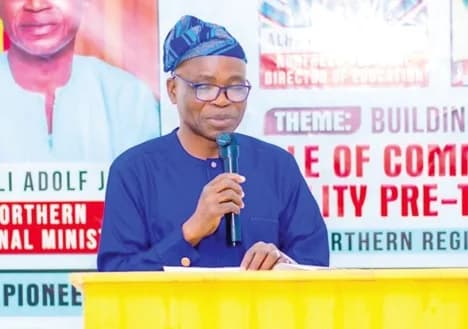
Northern Regional Minister Ali Adolf John has launched a critical investigation into the Ghana School Feeding Programme following allegations of systemic irregularities. This move comes as educational and professional bodies across the country, including the Ghana Maritime Authority and the Institution of Engineering and Technology, intensify calls for higher standards and accountability. During a Regional Education Forum in Tamale, Minister John highlighted reports of caterers failing to meet daily meal requirements—often providing food only two or three days a week—and schools inflating beneficiary figures. He emphasized that such misconduct undermines the vital support system intended for Ghana’s most vulnerable children.
Beyond financial irregularities, the education sector is grappling with challenges regarding student safety and discipline. Recent data presented by the Northern Regional Statistics Officer revealed 65 violent incidents in Senior High Schools during 2025, primarily involving physical assault and sexual harassment. In response, regional authorities are implementing enhanced guidance, counseling, and community-based collaboration to restore order. Justin Bayor of ActionAid Ghana reinforced these efforts at the forum, asserting that strict accountability is essential to ensure that educational resources are utilized effectively for the benefit of the youth.
Parallel to reforms in basic and secondary education, the Ghana Maritime Authority (GMA) is advocating for a significant overhaul of vocational training and certification for seafarers. Speaking at a training program at the Regional Maritime University, GMA Deputy Director-General Mubarik Masawudu underscored the necessity of aligning Ghana’s standards with International Maritime Organization (IMO) requirements. With over 85% of global goods moved by sea, Masawudu noted that improving assessment standards is vital for Ghanaian seafarers to remain competitive in an industry increasingly shaped by digitalization and automation.
The drive for professional excellence was further echoed by the Institution of Engineering and Technology, Ghana (IET-GH), which recently inducted 130 new engineers. Under the theme "Engineering Ghana's Future: Innovation, Integrity and Sustainable Development," IET-GH President Wonder Salami Davor challenged the new inductees to prioritize ethical practices while seeking innovative solutions to the country's infrastructure woes. Notably, the institution is advocating for the development of underground urban rail transportation systems to alleviate chronic congestion in major cities, representing a shift toward more sophisticated engineering planning.
These collective developments signal a national push toward more robust oversight and modernization within Ghana's educational and professional pipelines. Whether through investigating school-level corruption or elevating the technical competencies of engineers and seafarers, the focus remains on building a disciplined and skilled workforce. As government officials and professional institutions collaborate to address these systemic challenges, the ultimate goal is to create a more resilient and ethically grounded foundation for Ghana’s future economic and social development.
