••
Minister Armah-Kofi Buah Announces Major Mining Act Amendments and Full Restoration of Achimota Forest Reserve
•3 min read•28 sources
The Government of Ghana has initiated a comprehensive overhaul of the nation's land and natural resource management, led by Minister for Lands and Natural Resources, Emmanuel Armah-Kofi Buah. Central to these reforms is the Cabinet's approval of amendments to the Minerals and Mining Act, which proposes reducing the maximum duration of mining leases from 30 to 20 years and requiring mining companies to secure formal recommendations from host communities before licenses are processed. Simultaneously, the Cabinet has revoked Executive Instrument (E.I.) 144, restoring the 361.5-acre Achimota Forest Reserve to its full protected status, a move aimed at safeguarding Accra’s ecological integrity and preventing further encroachment from private developers.
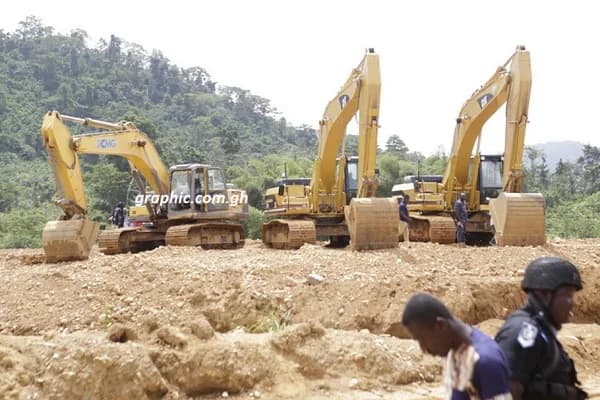
To combat illegal mining, popularly known as galamsey, the government has intensified field operations and technological monitoring. Minister Buah revealed that over 3,000 excavators remain unclaimed at Tema Port following the implementation of a geo-fencing system designed to restrict equipment to licensed areas. Between January and June 2026, the National Anti-Illegal Mining Operations Secretariat (NAIMOS) conducted 200 operations, resulting in over 200 arrests and the destruction of significant illegal mining infrastructure. These efforts are complemented by the deployment of 2,069 Blue Water Guards to protect water bodies and the successful reclamation of 1,335 acres of degraded land in 2025, with an additional 1,500 acres targeted for restoration this year.
Beyond enforcement, the Lands Commission is undergoing a digital transformation through the Strategic Land Administration Reform Project (SLAP), aiming to reduce land registration times to just one month via the Enterprise Land Information System (ELIS). In the mineral sector, the government confirmed the discovery of high-grade iron ore deposits in the Oti Region and has registered over 9,000 miners under the Responsible Community Mining Scheme (rCOMSDEP) to formalize small-scale operations. To ensure host communities benefit directly from resource extraction, the Forestry Commission is training managers on Social Responsibility Agreement (SRA) portals, while the new mining laws will mandate Community Development Agreements (CDAs) to replace unilateral corporate decision-making.
Despite these advancements, the reforms face notable political and legal hurdles. John Darko, MP for Suame, has warned that the 20-year lease cap might deter capital-intensive investment, potentially making Ghana less competitive than West African neighbors like C$te d’Ivoire. On the legal front, lawyers for Ashanti Regional NPP Chairman Bernard Antwi-Boasiako, currently facing charges for facilitating unauthorized mining, have petitioned the Supreme Court to interpret the constitutionality of specific sections of the Minerals and Mining Act. Additionally, local authorities in Juaben have called for urgent ministerial intervention to resolve jurisdictional overlaps between police commands that have allowed illegal mining to threaten critical road infrastructure.
Minister Buah has emphasized that the "era of impunity is over," signaling a firm stance against environmental degradation regardless of the status of the offenders. The government’s multi-pronged approach—combining legislative reform, technological surveillance, and community-centric licensing—seeks to balance economic exploitation with environmental sustainability. As the revised Minerals and Mining Bill heads to Parliament, its passage will be a defining moment for Ghana’s ability to manage its natural heritage and secure a greener future for coming generations.
Related topic
NPP (New Patriotic Party): Latest News →

