••
Johnson Pandit Asiama confirms all 23 banks meet capital requirements
•2 min read•4 sources
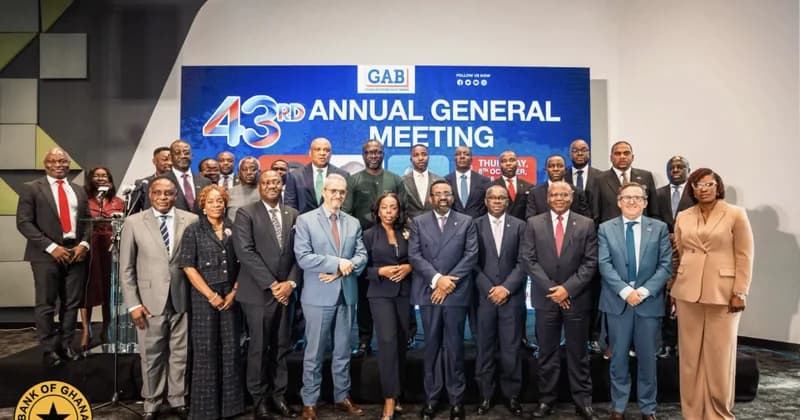
Governor of the Bank of Ghana, Dr. Johnson Pandit Asiama, has announced that all 23 commercial banks in the country have successfully met regulatory capital requirements. This achievement marks a significant milestone in the sector's recovery following the Domestic Debt Exchange Programme (DDEP), which had previously left 13 banks in breach of capital regulations. Speaking at the 43rd Annual General Meeting of the Ghana Association of Banks, the Governor revealed that the banking sector's total assets grew by 20.47%, reaching GH₵500.20 billion as of August 2026.
The surge in assets, up from GH₵415.20 billion in August 2025, is being attributed to improved macroeconomic conditions and a series of robust regulatory reforms. Financial stability indicators have also shown marked improvement; the industry's Capital Adequacy Ratio (CAR) rose from 18.28% to 19.10% over the past year. Furthermore, the sector has seen a notable improvement in asset quality, with the Non-Performing Loans (NPL) ratio dropping from 20.77% to 15.66% during the same period.
Despite these gains, Dr. Asiama cautioned that the completion of the capital recovery process is not an end in itself. He emphasized that banks must maintain capital levels that align with their specific risk profiles and continue to strengthen their internal risk management systems. The Governor set a further target for the industry, directing all banks to work toward reducing their NPL ratios to 10% by the end of December 2026 to ensure the long-term health of their loan portfolios.
Looking forward, the Bank of Ghana plans to release new directives concerning credit risk management and liquidity coverage to further solidify the regulatory framework. Dr. Asiama also highlighted the increasing importance of cybersecurity and the integration of artificial intelligence in banking operations. He stressed that while regulatory compliance is mandatory, the future stability of the sector depends on proactive management and the adoption of sustainable business models capable of withstanding future economic shocks.
