••
African Leaders Urge Industrial Growth and Modern Diplomacy Amid eSwatini Deportation Controversy
•3 min read•4 sources
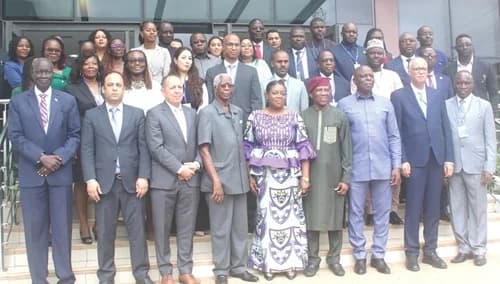
African political and institutional leaders are calling for a fundamental shift in the continent’s approach to economic development and international relations to ensure long-term stability. Johnson Asiedu Nketia, National Chairman of Ghana's National Democratic Congress (NDC), has advocated for an urgent transition from raw material exports to robust industrialization, while the African Union (AU) is pushing for "proactive diplomacy" to navigate modern technological and environmental threats. These calls for systemic advancement come against a backdrop of complex international agreements, notably a controversial migration deal between the United States and eSwatini that has drawn sharp criticism from human rights observers.
Speaking at a high-level meeting in Russia, Asiedu Nketia emphasized that Africa must leverage its vast reserves of critical minerals to build local industries rather than serving as a mere supplier for global markets. He argued that the intensifying global competition for minerals provides a unique window for African nations to transform resources into technology and tangible economic value. Asiedu Nketia asserted that political independence is unsustainable without strong industrial capacity, calling for the continent to become an active participant in global trade to ensure common prosperity for its people.
Complementing this economic vision, AU Commissioner Bankole Adeoye recently underscored the necessity of a "proactive diplomacy" strategy during a lecture in Accra. Adeoye highlighted that traditional diplomatic training and methods are increasingly inadequate for addressing emerging threats such as artificial intelligence, drones, cyber warfare, and climate change. He advocated for a new, African-centric curriculum aligned with Agenda 2063, stressing that diplomats must play a more active role in safeguarding democracy and human rights. According to Adeoye, establishing lasting peace through modernized diplomacy is a prerequisite for any meaningful developmental progress across the continent.
However, the intersection of international policy and human rights remains a significant point of friction, as evidenced by the recent arrival of 11 additional deportees in eSwatini from the United States. This group, primarily of African origin, is part of a deportation program linked to U.S. immigration policies under a $5.1 million agreement. Reports indicate that many of these individuals are being held at the Matsapha correctional facility without new charges, despite having already served sentences in the U.S. Amnesty International and other legal advocates have condemned the arrangement, raising alarms over human rights abuses and the lack of transparency surrounding the repatriation and detention process.
Together, these developments underscore the dual challenge facing Africa: the drive to modernize internal economic and diplomatic systems while managing the complexities of international partnerships. As the AU prepares a Memorandum of Understanding to enhance collaboration between regional mechanisms, the continent remains at a critical crossroads. The success of both the industrialization agenda and the new diplomatic framework will likely depend on how effectively African nations can protect their citizens’ rights and sovereignty while negotiating their place in an increasingly competitive global landscape.
Related topic
NDC (National Democratic Congress): Latest News →

