••
Finance Minister Dr. Cassiel Ato Forson Proposes 70% Export Value Guarantee for Cocoa Farmers Amid Legislative and Social Reform Debates
•3 min read•15 sources
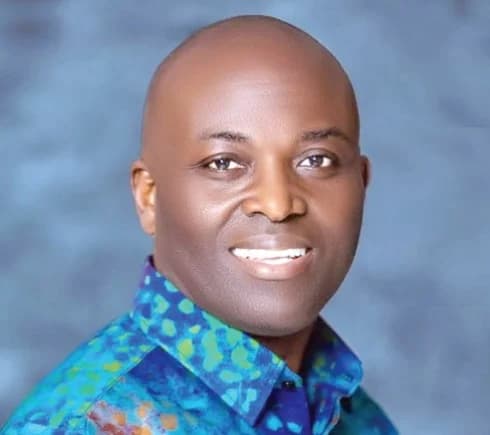
In a significant move to stabilize Ghana’s agricultural backbone, Finance Minister Dr. Cassiel Ato Forson announced a comprehensive overhaul of the cocoa sector governance framework during the 2026 Mid-Year Fiscal Policy Review. The proposed legislation aims to guarantee farmers at least 70% of the gross Free-on-Board (FOB) price, utilizing market-based pricing mechanisms to enhance rural incomes and ensure the industry's long-term sustainability. This announcement comes as the administration of President John Mahama receives mixed praise for concluding the International Monetary Fund (IMF) program. Former Sekondi MP Andrew Egyapa Mercer noted that while the current administration successfully navigated the final phase, the groundwork was significantly shaped by the reforms of the previous Akufo-Addo administration. Simultaneously, a group of five Members of Parliament has reintroduced the Anti-Witchcraft Accusations Bill, seeking to criminalize allegations and protect vulnerable citizens after the bill previously failed to receive presidential assent from the former president. While policy reforms advance in Parliament, the government is facing immediate social and logistical hurdles. Transport unions, including the GPRTU, have temporarily suspended a planned 30% fare hike following intensive negotiations with the Ministry of Transport. However, union leaders remain cautious, citing volatile petroleum prices as a potential trigger for future adjustments. Social tensions further escalated at the Techiman Krobo Nursing Training College, where the National Union of Ghana Students (NUGS) has demanded a thorough investigation into alleged police brutality during a student protest over poor welfare conditions. On the international front, Foreign Affairs Minister Samuel Okudzeto Ablakwa confirmed that the government is providing consular assistance to Asante Akyem North MP Ohene Kwame Frimpong, who remains in Dutch custody under a U.S. extradition warrant, asserting that due process is being closely monitored. Beyond immediate crises, experts and political veterans are calling for more structural, long-term thinking in governance. Dr. John Kingsley Krugu, former CEO of the Environmental Protection Authority, warned that the Environmental Protection Act of 2025 (Act 1124) risks becoming a "law on paper" without dedicated funding and the establishment of the National Environment Fund. His concerns were echoed by Professor Kwabena Frimpong-Boateng, who urged the Mahama administration to move away from "politically branded" short-term programs in favor of sustained national development plans to address housing and food security. Infrastructure challenges also persist in the South Tongu district, where MP Maxwell Kwame Lukutor is urgently seeking €12 million to complete the stalled Agordomi Water Project, highlighting a €63 million debt owed to contractors that continues to delay clean water access for 300,000 residents. In the political arena, the opposition New Patriotic Party (NPP) is already witnessing internal and external maneuvering ahead of future cycles. Aspiring Ashanti Regional Chairman Odeneho Kwaku Appiah (COKA) has launched a critique of the Mahama government, alleging that flagship policies like the "24-hour economy" have failed to translate into job creation and have instead led to higher utility costs. Meanwhile, the Base Movement Ghana has officially endorsed former presidential hopeful Kennedy Agyapong for the 2028 elections, establishing new committees and digital platforms to mobilize grassroots support outside traditional party structures. As the government attempts to balance these political critiques with economic reforms and social demands, the coming months will be pivotal for the implementation of the ambitious cocoa and environmental policies currently on the table.
Related topic
NPP (New Patriotic Party): Latest News →

