••
Finance Minister Ato Forson and UNECA Urge Shift to Industrial Energy Planning at Accra Conference
•3 min read•6 sources
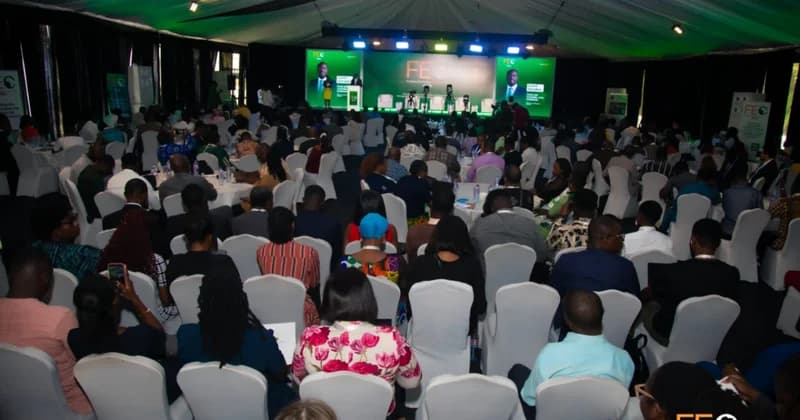
At the 2026 Future of Energy Conference in Accra, African policy leaders and economic experts issued a strong call for a fundamental overhaul of the continent's energy strategy. Ghana’s Minister of Finance, Dr. Cassiel Ato Forson, and Dr. Marit Kitaw of the UN Economic Commission for Africa (UNECA) emphasized that Africa must transition from focusing energy planning on household consumption to prioritizing production for industrialization. Despite holding vast mineral reserves essential for the global green transition—such as cobalt in the Democratic Republic of Congo and platinum in South Africa—the continent remains in a paradox where 600 million people lack basic electricity and Africa attracts a mere 2% of global clean energy investment.
Dr. Ato Forson argued that Africa cannot industrialize as long as the global market perceives the continent as "too risky to power." He called for an end to the traditional raw export model, urging African nations to instead build a high-value industrial base for batteries and clean energy technologies. Highlighting Ghana’s recent economic improvements, including significantly reduced inflation and improved GDP growth, the Finance Minister stressed that macroeconomic stability is the essential foundation for attracting the necessary investments. He cautioned that without strategic policies focused on infrastructure and technology transfer, the continent risks repeating historical patterns of resource extraction without retaining economic wealth.
Complementing this view, Dr. Marit Kitaw urged governments to align energy planning with mineral strategies and industrial policies. She introduced the concept of "development shoring," which advocates for relocating processing and manufacturing closer to the source of raw materials to retain value and build technical skills within Africa. Dr. Kitaw noted that while household access is a social necessity, affordable and reliable energy for production is what will ultimately spur job creation and economic transformation. This shift requires coherent policies across various government ministries to prevent fragmented efforts that have historically stifled industrial growth.
The conference also addressed the massive funding gap required to achieve these goals, noting that global mandates for electric vehicles are creating a supply crunch for critical minerals. Dr. Forson stated that public budgets alone are insufficient to meet infrastructure demands, calling instead for innovative financing mechanisms including blended finance, local currency funding, and public-private partnerships. Central to this strategy is the African Continental Free Trade Area (AfCFTA), which leaders believe will provide the unified market and regional cooperation necessary to enhance Africa's bargaining power in global markets and ensure the global energy transition serves as a catalyst for continental prosperity.


