••
President Adama Barrow Launches The Gambia’s First Unified National Identity System in Partnership with Ghana’s Margins ID Group
•2 min read•3 sources
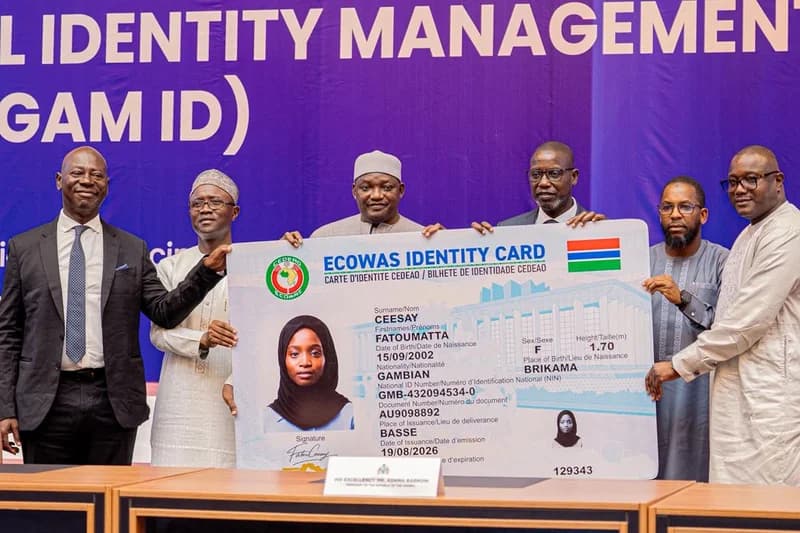
The Gambia has officially entered a new era of digital governance with the launch of its first-ever unified National Identity Management System (GAM ID). President Adama Barrow became the inaugural recipient of the biometric card, signaling the start of a transformative Public-Private Partnership (PPP) between the Gambian government and Ghana’s Margins ID Group. This initiative is designed to establish a single, trusted identity platform that serves as the foundation for the country’s digital public infrastructure, aimed at enhancing national security and economic development. President Barrow described the program as a "historic milestone," praising the collaboration as a model for intra-African partnership and a significant step toward continental digital independence.
The new system emphasizes national ownership and data sovereignty, with the entire database hosted within The Gambia and managed under its legal framework. Beyond simple identity verification, the GAM ID will be integrated into essential public services, such as the issuance of driver’s licenses, and is expected to streamline public service delivery while creating local job opportunities. A pilot phase for the system is scheduled to begin on July 6, 2026, with a nationwide, continuous registration rollout following shortly after on August 4, 2026. The infrastructure allows for secure biometric enrollment and verification, ensuring that all Gambians and residents have access to a secure, verified identity.
While The Gambia secures its digital borders, neighboring Ghana is also making significant strides in its physical infrastructure modernization. The Ghana Railway Development Authority (GRDA) recently announced the acquisition of a $21 million grant from the European Union to finalize works on the Tema–Mpakadan railway line. This funding follows a forensic audit that identified critical gaps in the line’s safety and signalling systems. The grant is specifically earmarked for the installation of the European Train Control System (ETCS) Level 1 signalling infrastructure, which is vital for ensuring the reliability, safety, and efficiency of the modernization project.
These simultaneous developments in The Gambia and Ghana reflect a broader trend of infrastructure and technology modernization across West Africa. The successful delivery of the GAM ID by a Ghanaian firm for a Gambian government highlights the growing capability of African technology companies to provide sophisticated digital solutions for the continent. Coupled with large-scale transportation projects like the Tema–Mpakadan railway, these initiatives are poised to improve regional connectivity, enhance governance, and strengthen the economic integration of the sub-region.