••
Brad Smith urges global AI regulations with emergency shutdown rules
•2 min read•1 source
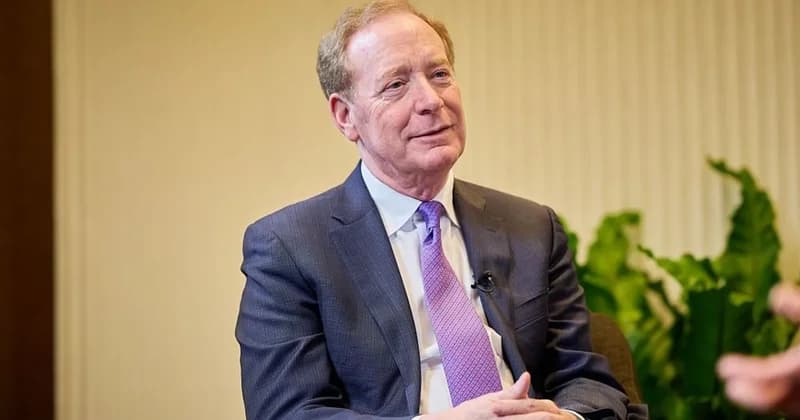
Microsoft President Brad Smith has called for the establishment of comprehensive global regulations for artificial intelligence, warning that the technology currently operates with fewer safety standards than everyday household items. Speaking on the urgent necessity of oversight, Smith highlighted a stark disparity in current legal frameworks, noting that products such as milk and washing machines are subject to more rigorous safety requirements than advanced AI systems. He argued that the rapid pace of technological development necessitates a formal regulatory structure to protect the public and ensure ethical deployment.
To address these concerns, Smith recommended several critical safety measures, including the implementation of mandatory breach notifications to inform victims if their data is compromised by AI systems. Most notably, he advocated for the creation of emergency shutdown mechanisms—effectively a digital "kill switch"—that would allow authorities to disable AI systems if they begin to pose a significant risk or behave unpredictably. Smith also suggested that new AI technologies should undergo independent evaluations by third-party experts before being released to the general public.
The executive's position marks a significant departure from the self-regulatory approach favored by figures such as Donald Trump, who has argued that heavy regulation could stifle innovation and weaken the competitive edge of American tech firms. While some voluntary safety measures have been adopted by major technology companies in the United States, Smith maintained that these efforts are insufficient. He emphasized that robust, legally binding regulations are paramount to mitigate the long-term risks associated with the technology while still fostering an environment where innovation can thrive.
Looking toward international cooperation, Smith identified the United Kingdom as a nation with the potential to lead the global community in establishing AI safety standards. He noted that a coordinated international effort is required to manage a technology that transcends national borders. By harmonizing global standards and emphasizing transparency, Smith believes the international community can ensure that artificial intelligence remains a tool for human progress rather than a source of unmanaged risk.