••
Dangote Refinery Launches $1.6 Billion IPO and $14 Billion Expansion Plan Amid Volatile Global Oil Markets
•2 min read•3 sources
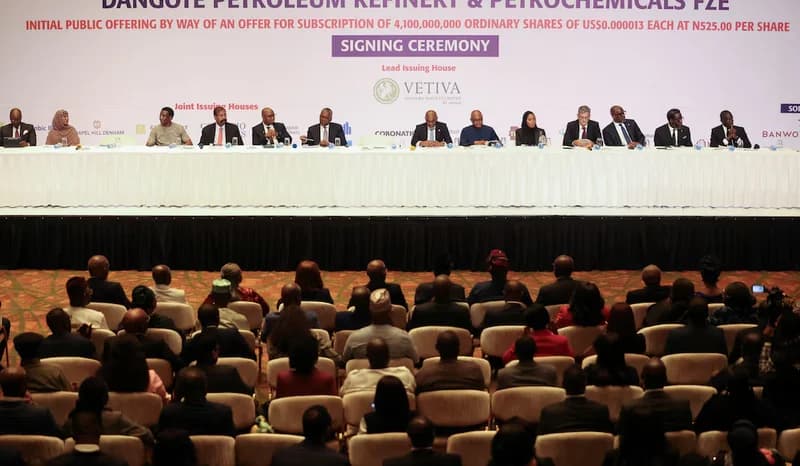
Nigeria’s Dangote Oil Refinery has announced a massive $14.3 billion expansion project intended to double its processing capacity from 700,000 to 1.4 million barrels per day by 2029. This landmark development coincides with the launch of an Initial Public Offering (IPO) aimed at raising approximately 2.15 trillion naira ($1.63 billion) from retail investors. The refinery, which transitioned from a $476 million loss in 2025 to a $1.82 billion after-tax profit in the first half of 2026, represents a significant shift in Africa’s downstream energy independence. Aliko Dangote, the refinery’s founder, emphasized that the IPO, scheduled to run from September 14 to October 13, 2026, seeks to encourage broad participation among Nigerians and the wider African population.
While Nigeria celebrates this industrial milestone, energy experts in neighboring Ghana are calling for greater regulatory stability to attract similar long-term capital. Speaking at the Africa Oil Week conference, Gideon Ayi-Owoo, the Energy and Industrials Leader at Deloitte Ghana, stressed that policy certainty is the primary catalyst for unlocking significant infrastructure commitments. Ayi-Owoo noted that the focus of the regional energy sector is shifting from simple resource extraction to adding economic value through industrialization. He pointed to successful regional collaborations, such as the West Africa Gas Pipeline, as blueprints for how coherent regulations can drive sustainable growth and job creation across the continent.
These regional movements come at a time of heightened volatility in the global energy market, with Brent crude futures recently climbing to $97.49 a barrel and U.S. West Texas Intermediate rising to $92.92. This price surge is driven by escalating geopolitical tensions in the Middle East, with analysts at Goldman Sachs adjusting price forecasts upward due to risks of prolonged supply disruptions that could persist into 2027. For West African economies, the combination of rising global prices and the massive capacity expansions led by the Dangote Group highlights a critical juncture: the urgent need for domestic refining capacity and stable policy frameworks to buffer regional economies against global market shocks.