••
Denkyirahene and Bimbilla Regent Champion Unity and Development Through Traditional Festivals and Honours
•2 min read•3 sources
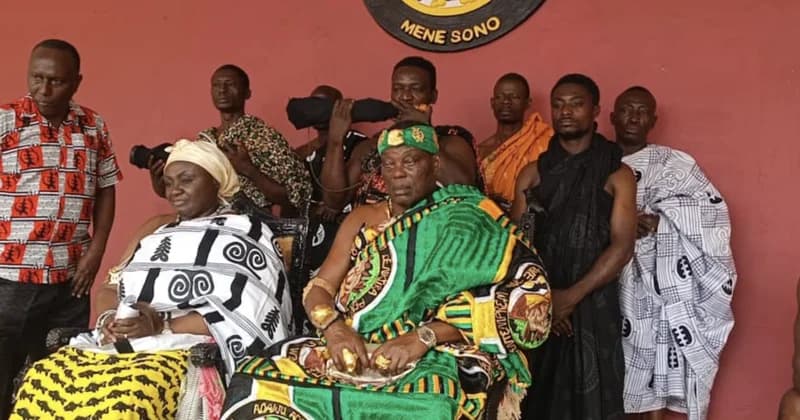
Traditional leadership remains a cornerstone of development and social cohesion across Ghana, as evidenced by recent cultural celebrations and the recognition of key developmental actors. In the Denkyira Traditional Area, the Denkyirahene, Odeefo Boa Amponsem IV, used the occasion of the sixth Akwasidae festival to issue a fervent appeal for unity and peace. Addressing a gathering of chiefs and people, the traditional leader emphasized that progress in education, healthcare, agriculture, and the local economy is intrinsically linked to a stable and harmonious environment. He particularly urged the youth to eschew divisive behaviors and called upon community leaders to resolve conflicts through dialogue to preserve the area's rich cultural heritage.
In the Nanung traditional area, the Regent of Bimbilla, Nyelinbolgu Naa Dassana Andani Yakubu, underscored the importance of individual contribution to community growth by conferring a prestigious chieftaincy title on Tanko Rashid Computer. As the Administrator of the Ghana Investment Fund for Electronic Communications (GIFEC), Rashid was honored with the title "Nanung Barizaa Naa Kola" for his transformative impact on the region. His contributions include the rehabilitation of critical road infrastructure and the establishment of a local radio station, which has significantly improved information dissemination and promoted peace within the kingdom. The Regent expressed hope that such recognition would inspire others to invest in the sustainable development of their home communities.
The spirit of communal support was also mirrored in Dagbon, where corporate entity MTN Ghana demonstrated its commitment to cultural preservation by supporting the Damba Festival celebrations. Presenting a donation of GH¢20,000, along with GH¢1,000 in airtime and other essential items, MTN representative Simon Amoh reaffirmed the company’s dedication to the Dagbon Traditional Council. Receiving the donation at the Gbewaa Palace in Yendi, Kampakuya-Naa Abukari II commended the gesture, noting the festival's significance in celebrating chieftaincy heritage and the birth of Prophet Mohammed. These collective efforts across different regions highlight a unified drive toward leveraging tradition and partnership to foster national progress.