••
Attorney General Dominic Ayine Announces Sweeping Constitutional Reforms Including Five-Year Terms and Elected Local Executives
•3 min read•25 sources
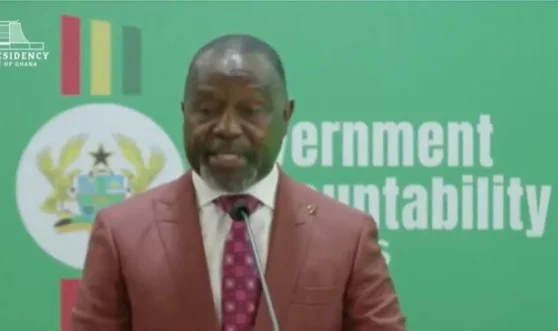
Attorney General Dr. Dominic Ayine has formally presented the government’s White Paper on the Constitutional Review Committee (CRC) recommendations, signaling a transformative era for Ghana’s governance. Announced on July 30, 2026, the proposed reforms include extending presidential and parliamentary terms from four to five years and capping ministerial appointments at 60 to prevent executive overreach. To ensure smoother transitions and more effective policy assessment, the government has also accepted a fixed election date in the first week of November. A national referendum is slated for 2027 to approve entrenched provisions, with the necessary amendment bills expected to be finalized by October 2026.
In a historic shift toward executive accountability, the government has accepted recommendations that President John Mahama pay taxes on his salary and allowances while in office, though retirement benefits and pensions will remain exempt. To broaden the democratic space, the eligibility age for presidential candidates is set to be lowered from 40 to 35 years. Furthermore, the size of Parliament will be capped at 300 members, utilizing a hybrid system where 276 members are elected through traditional constituencies and 24 seats are reserved for proportional representation to ensure the inclusion of women, youth, and persons with disabilities. Minister for Government Communications Felix Kwakye Ofosu clarified that the proposed five-year term extension will only apply to future administrations and not to President Mahama’s current tenure.
Judicial and electoral reforms form a core component of the new proposals, aiming to enhance the efficiency of the legal system and the stability of the state. The Supreme Court will be capped at 19 justices, and the Chief Justice will now serve a single, non-renewable 10-year term to ensure predictable leadership transitions. To mitigate the tension following general elections, the government has mandated that presidential election petitions must be filed within 14 days of the results and resolved by the Supreme Court within a strict 30-day window. Additionally, the government has moved to allow dual citizens to hold various public offices, including seats in Parliament, though they remain barred from the positions of President and Vice President.
The reforms also address long-standing human rights and decentralization concerns. Ghana is set to formally abolish the death penalty, replacing it with life imprisonment for serious crimes, a move Dr. Ayine described as a commitment to international human rights standards. At the local level, the government has approved the direct election of all Metropolitan, Municipal, and District Chief Executives (MMDCEs), moving away from the presidential appointment system to enhance local accountability. To further empower the public, a 'citizen-initiative' mechanism will be introduced, allowing Ghanaians to propose constitutional amendments directly if they secure the support of 10% of registered voters. While the government views these changes as essential for stability, some critics argue that the term extension might reduce the frequency of leader accountability to the electorate.
Related topic
John Mahama: Latest News & Updates →

