••
Energy Committee Chairman Emmanuel Bedzrah Urges Finance Ministry to Release $5.6m Amid National Push for Resource Management Reform
•3 min read•9 sources
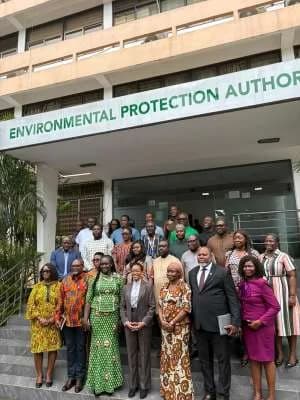
Parliament’s Energy Committee, led by Chairman Emmanuel Bedzrah, has intensified its call for the Ministry of Finance to release $5.6 million owed to the Petroleum Commission. This appeal is a critical move to ensure the commission's regulatory independence and operational efficiency under President John Mahama’s administration. The funds, originally earmarked for budgetary support during the Domestic Debt Exchange Programme between 2019 and 2020, are now urgently required to complete a dedicated petroleum data center. Bedzrah emphasized that the commission’s current reliance on data from the Ghana National Petroleum Corporation (GNPC) hampers its regulatory role and could deter potential investors in Ghana’s upstream petroleum sector.
The drive for energy infrastructure coincides with broader sector reforms and exploration milestones. The Petroleum Commission, under Chief Executive Emeafa Hardcastle, is pursuing legislative amendments to the Exploration and Production Act to improve investment conditions and revenue sharing. Simultaneously, the GNPC and Explorco are preparing for significant onshore activities, with plans to drill the first exploration well in the Voltaian Basin before the end of 2026. This push for modernization is complemented by advocacy from GOIL Managing Director Edward Abambire Bawa, who is urging the government to introduce incentives that make Liquefied Petroleum Gas (LPG) more affordable for rural households to reduce reliance on traditional firewood.
Beyond the energy sector, the government is refocusing on environmental sustainability and scientific commercialization. Dr. Zanetor Agyeman-Rawlings, the Minister of Environment, Science and Technology, has called for stronger synergy between scientific institutions and industry to turn research into marketable products, particularly to address emerging challenges like electronic waste from renewable technologies. To strengthen the protection of Ghana's marine resources, the Fisheries Commission recently inaugurated the Scientific and Technical Committee (STC) and the Fisheries Management Operational Committee (FMOC) under the Fisheries and Aquaculture Act, 2025. These bodies are designed to prevent the kind of ecological and financial setbacks seen in the $200 million Saltpond field decommissioning by integrating scientific advice and local stakeholder expertise into future projects.
On the regional level, the administration is making strides in agricultural infrastructure while facing calls for greater land integrity. Bono East Regional Minister Francis Owusu Antwi has reported significant progress on the Kintampo Farmer Service Centre, the first of five regional hubs—and 270 planned nationwide—under the "Feed Ghana Programme." These centers will provide farmers with mechanization, storage, and credit access. However, challenges in resource governance persist, as seen in Wenchi, where the Sofoase and Nkwaduano Yefri Royal Families are demanding a transparent investigation into alleged illegal mining activities and corruption affecting the Tain River. These combined developments reflect a multifaceted government effort to balance industrial growth with environmental accountability and food security.
Related topic
John Mahama: Latest News & Updates →

