Ghana News AI
HomeBriefsAsk GhanaTopicsTools
•
•

Stay Informed

Get AI-curated news briefs from Ghana delivered to your inbox every morning. Free forever, no spam.

Explore

  • Home
  • Briefs
  • About

Categories

  • Politics
  • Business
  • Sports
  • Entertainment
  • Africa

Features

  • Analysis
  • Cedi Rates
  • Dollar to Cedi
  • Ghana Gold Price
  • BoG Policy Rate

Topics

  • Armed Forces Recruitment
  • WAEC Results & News
  • Nana Ama McBrown
  • NDC News
  • All Topics

Legal

  • Privacy Policy
  • Terms of Service
Ghana News AI© 2026. All rights reserved.
Made withfor Ghana
politics

FIFA COO Kevin Lamour Terminated Amid Internal Power Struggle; China Bids Farewell to Reformist Premier Zhu Rongji

Yesterday•3 min read•14 sources
FIFA COO Kevin Lamour Terminated Amid Internal Power Struggle; China Bids Farewell to Reformist Premier Zhu Rongji
  1. Home
  2. /Politics
  3. /FIFA COO Kevin Lamour Terminated Amid Internal Power Struggle; China Bids Farewell to Reformist Premier Zhu Rongji

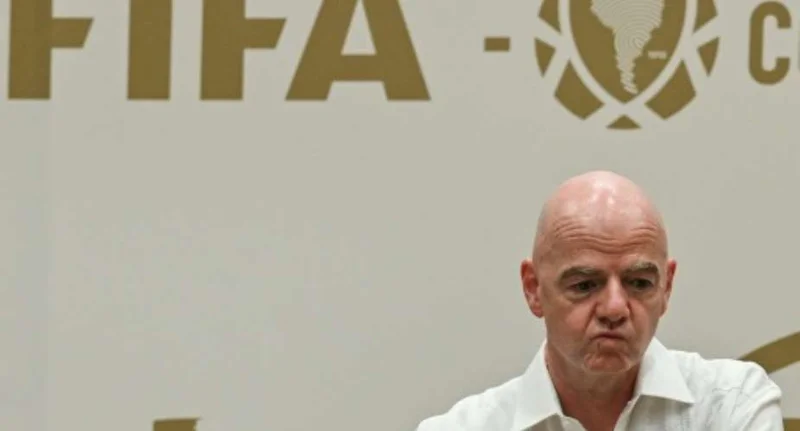
FIFA has officially terminated the contract of its Chief Operating Officer, Kevin Lamour, following his public opposition to President Gianni Infantino’s controversial proposal to sell a significant stake in the organization’s commercial operations. The dismissal, confirmed on August 17, 2026, highlights a deepening rift within football's global governing body. Lamour, who had served as COO since November 2024, was a vocal critic of the "FIFA Forward Enterprise" scheme, which sought to sell a 20-21% stake in a new subsidiary managing the World Cup and other tournaments to a U.S. investment fund for an estimated $4.2 billion. \n\nThe internal conflict reached a boiling point after Lamour characterized the commercial plan as a project serving personal interests rather than the collective mission of football. Although the proposal was ultimately withdrawn on August 1, 2026, following intense backlash from various football confederations—including threats from UEFA and widespread calls for Infantino’s resignation—the fallout has led to a major reshuffle. Analysts suggest that by removing high-ranking officials like Lamour, Infantino is reasserting his authority and consolidating power ahead of the FIFA presidential elections scheduled for March 2027. \n\nMeanwhile, in a significant moment for international politics, China paid its final respects to former Premier Zhu Rongji, who was cremated at the Babaoshan Revolutionary Cemetery in Beijing on August 18, 2026. Zhu, a pivotal figure in China’s modern history, passed away at the age of 98 on August 12 after a period of illness. The farewell ceremony was attended by President Xi Jinping and the top echelon of the Communist Party leadership, who honored Zhu’s legacy as a "loyal Communist Party member" and a transformative leader. \n\nZhu Rongji’s tenure as Premier from 1998 to 2003 was defined by aggressive economic reforms that paved the way for China’s entry into the World Trade Organization and its subsequent rise as a global economic powerhouse. Even former President Hu Jintao sent a tribute, acknowledging Zhu’s influential role in the nation’s development. His passing marks the end of an era for the reform-minded wing of the party, occurring at a time when China’s current leadership continues to navigate complex domestic and international economic challenges. \n\nThese dual developments—the administrative upheaval at FIFA and the state funeral in Beijing—underscore a period of transition in global institutional leadership. While FIFA grapples with questions of transparency and the commercialization of sport, China reflects on the market-oriented reforms of the late 20th century. Both events reflect broader themes of governance, the tension between individual power and institutional integrity, and the lasting impact of leaders who shaped the global stage.

Our Take

From the Team

Coming Soon

Our team will add key insights, trends, and actionable takeaways to help you stay informed faster.

This story touches markets covered on Anansi Intelligence ↗.

More from politics

Continue exploring similar stories

Dome-Kwabenya–Kitase residents protest over 20-year road neglect
politics|Yesterday

National Youth Forum 2026 Headlines Governance and Accountability Drive Under Mahama Administration

The Ghanaian political landscape is currently defined by a robust push for youth engagement, sectoral transformation, and enhanced local accountability. At the forefront of this agenda is the National Youth Forum 2026, scheduled for August 19 at the University of Professional Studies, Accra (UPSA). Convened by the Minister for Youth Development and Empowerment, George Opare Addo, under the theme "A Sound Youth, A Sound Nation," the forum seeks to bridge the gap between policymakers and the over 70% of Ghanaians aged 35 and below. This initiative aligns with President John Mahama’s broader "Reset Agenda," a sentiment echoed by Presidential Special Envoy for Reparations, Ambassador Ekwow Spio-Garbrah, who recently called for closer coordination between diplomatic missions and his office to advance the nation’s global reparations and justice objectives. In the energy and infrastructure sectors, Minister for Energy and Green Transition John Abdulai Jinapor has charged the Petroleum Commission to focus on a 15-year transformation plan aimed at maximizing oil and gas production while navigating the global energy transition. This push for industrialization is accompanied by strict enforcement of public safety; the Ministry has issued a one-month ultimatum for occupants of GRIDCo transmission rights-of-way to vacate following a recent explosion in Ashaiman. Meanwhile, the Driver and Vehicle Licensing Authority (DVLA) has commissioned its 25th district office in Asuogyaman to decentralize services and combat licensing fraud, reflecting a government-wide effort to improve service delivery and professionalize state institutions. At the local level, political friction and calls for accountability have intensified. In Gomoa West, aspiring MP Blessed Godsbrain (Captain Smart) has criticized sitting MP Richard Gyan-Mensah for alleged diplomatic discourtesy during the Akwanbɔ Festival, framing his candidacy as a "rescue mission" amid accusations of government persecution. In Ada West, a dispute has erupted between the current District Chief Executive and his predecessor over land earmarked for a fire station. Amid these tensions, Central Regional Minister Ekow Panyin Okyere Eduamoah has urged traditional leaders to move beyond partisan politics and actively hold public officials accountable to ensure community development projects, such as the newly commissioned stores in Twifo Mampong, meet the needs of the populace. Traditional and cultural governance also face significant scrutiny as authorities seek to preserve institutional integrity. The Ada Traditional Council recently suspended four of its members for two years for defying a decision to cancel the 2026 Asafotufiami Festival durbar, citing a breach of custom. Simultaneously, Agortime-Ziope MP Charles Agbeve is advocating for national copyright protection for Kente designs to protect local weavers from foreign exploitation. These internal efforts to maintain order and protect heritage are bolstered by a firm commitment to national stability; Interior Minister Muntaka Mohammed Mubarak and the National Chief Imam have both recently emphasized the necessity of interfaith harmony and religious tolerance as the bedrock of Ghana’s peace. However, significant challenges remain regarding community trust and resource management. Forest-fringe communities are demanding greater transparency in the management of Social Responsibility Agreement (SRA) funds from timber contractors, while residents in Dome-Kwabenya have taken to the streets to protest two decades of road neglect. As private hostel owners near KNUST challenge the Rent Control Department’s jurisdiction over student housing fees, and police officers raise alarms over alleged internal misconduct involving ammunition sales, the Mahama administration faces a complex task: balancing ambitious national transformation goals with the urgent, grassroots demands for transparency, infrastructure, and justice.

Mary Addah, Executive Director of Transparency International Ghana
politics|Yesterday

Ghana’s Accountability Crisis: Auditor-General Flags $20 Billion in Irregularities Amid Global and Regional Regulatory Shifts

Ghana’s financial landscape is under intense scrutiny following a landmark analysis of Auditor-General reports from 2010 to 2025, which revealed a staggering $19.96 billion (GH¢129.8 billion) in financial irregularities. The report, compiled by Auditdata Gh, highlights a systemic failure in debt recovery, with outstanding debts and unrecovered loans accounting for two-thirds of the flagged issues. Notably, 81% of these irregularities were recorded during the tenure of the previous New Patriotic Party (NPP) administration, with the remaining $3.74 billion occurring during National Democratic Congress (NDC) years. This financial revelation coincides with a worrying assessment from Transparency International (TI-Ghana), which reported that the country’s Corruption Perceptions Index has stagnated at a score of 43 in 2025, reflecting a normalization of administrative corruption that poses a significant threat to national development. These governance challenges have intensified political friction in Parliament, particularly regarding the legal boundaries of executive authority and public accountability. The Minority caucus, led by Damongo MP Samuel A. Jinapor, has formally challenged Foreign Affairs Minister Samuel Okudzeto Ablakwa’s authority to demand a refund from Hajia Alima Mahama, a former Ambassador to the United States. Jinapor contends that under Article 187 of the Constitution, only the Auditor-General possesses the legal power to disallow or surcharge public officers, characterizing the Minister’s demand as a circumvention of due process. This debate over institutional powers is mirrored in the ongoing controversy surrounding the Bank of Ghana’s technical insolvency. While the Minority has raised alarms over the central bank’s negative equity, Majority MP Fred Kyei Asamoah argued that these concerns are not new and criticized previous attempts to block parliamentary scrutiny of the bank’s operations during the prior administration. Beyond the halls of Parliament, institutional and regional developments are further shaping the accountability narrative. Locally, the Office of the Registrar of Companies (ORC) is embroiled in a dispute with the Cyber Security Authority (CSA) over sanctions it deems "premature and procedurally unfair," seeking administrative redress from the Attorney-General. Regionally, neighboring Senegal has taken proactive steps toward transparency, with its parliament passing a law mandating that the president and top officials declare their assets upon entering and leaving office. This move toward legislative tightening comes as Nigeria reports a significant expenditure of N252 billion in the first half of 2026 to address persistent insecurity, including banditry and kidnappings, highlighting the immense fiscal pressure that internal instability places on West African governments. On a global scale, the demand for corporate and political responsibility is reaching a fever pitch. In the United States, Meta has entered a high-stakes jury trial as 30 states seek over $1 trillion in damages for alleged privacy violations that have harmed young users. The legal action, which demands the removal of features like "like" counts to protect youth mental health, mirrors historical consumer protection battles against the tobacco and opioid industries. Furthermore, political rhetoric in the U.S. has triggered a travel boycott among Canadians, who are increasingly opting for domestic vacations over American destinations. These international events, alongside Ghana’s internal audit and corruption debates, underscore a growing global consensus that sustainable governance depends on the rigorous enforcement of transparency and the protection of public interests across both the public and private sectors.

Lord Ibrahim Sani calls for national reset on youth unemployment
politics|Yesterday

Dr. Rashid Pelpuo and Organised Labour Advance Transition to Independent Public Emoluments Commission

The Government of Ghana has intensified efforts to reform public sector compensation through the establishment of the Independent Public Emoluments Commission (IPEC). During a two-day stakeholder engagement in Accra, the Minister for Labour, Jobs and Employment, Dr. Rashid Pelpuo, emphasized that collaboration and social dialogue are critical to the success of this transition. The proposed commission is set to replace the existing Fair Wages and Salaries Commission (FWSC) framework, which was established under the Act of 2007. The primary goal of IPEC is to create a more transparent, inclusive, and fiscally sustainable wage structure that accurately reflects the value of workers' contributions while addressing the economic realities of the state. Organised Labour, led by Trades Union Congress (TUC) Secretary-General Joshua Ansah, has pledged its full support for the transition. Ansah highlighted the necessity of comprehensive public sector pay reforms to resolve longstanding issues such as pay fragmentation and wage bill pressures. Dr. George Smith-Graham, Chief Executive of the FWSC, further noted that the IPEC Bill aims to rectify challenges encountered under the Single Spine Pay Policy. Over 50 labour groups participated in the consultations, underscoring a collective commitment to ensuring that the new framework provides fairness and equity across the public sector without being undermined by a fragmented approach to implementation. Parallel to these institutional reforms, independent presidential aspirant Lord Ibrahim Sani has called for a fundamental "national reset" to address Ghana’s staggering youth unemployment rate, which currently stands at 34.4%. Sani argues that the government must shift its focus from temporary employment programs toward fostering an economic environment that enables private-sector growth. He advocates for a National Youth Employment Compact that aligns education with market needs, specifically through investments in vocational training, digital skills, and agriculture. Sani’s proposal emphasizes that the youth should be viewed as a vital national asset rather than a statistical burden, requiring long-term, stakeholder-driven solutions. Complementing these calls for economic revitalization, Morgan Ayawine, the General Secretary of the Industrial and Commercial Workers’ Union (ICU-Ghana), was recently recognized as Africa’s Most Respected CEO in Labour and Union Leadership in Lusaka, Zambia. Upon receiving the award, Ayawine urged the government to prioritize the revitalization of local industries to generate sustainable jobs for the youth. He also reaffirmed the ICU’s commitment to protecting strategic national assets from unilateral government decisions. Together, these developments—ranging from institutional wage reforms to high-level advocacy for job creation—signal a pivotal moment in Ghana’s labor and economic policy landscape under the current administration.

Trump Issues Military Threat to Oman as Kushner Advances Gaza Roadmap and UK PM Burnham Targeted by Impersonator
politics|Yesterday

Trump Issues Military Threat to Oman as Kushner Advances Gaza Roadmap and UK PM Burnham Targeted by Impersonator

International relations faced a series of high-stakes developments this week as US President Donald Trump issued a stark military threat against Oman while his special envoy, Jared Kushner, conducted critical negotiations in Jerusalem regarding the future of Gaza. Simultaneously, across the Atlantic, British Prime Minister Andy Burnham was ensnared in a sophisticated digital impersonation attempt involving a top US official. These events highlight a volatile period in global diplomacy, ranging from aggressive posturing in the Middle East to cybersecurity vulnerabilities among top-tier world leaders. President Trump sparked international concern during a phone interview by threatening to bomb Oman, a traditional US ally and mediator, if it obstructs efforts to secure a peace deal with Iran. "If Oman gets in the way, we’ll bomb the shit out of them," the President remarked, referencing ongoing negotiations to reopen the strategic Strait of Hormuz, which has seen restricted shipping for months. Despite the aggressive rhetoric and a lapsed deadline for a final agreement, Trump maintained he was in no hurry to finalize a deal, asserting that Iran is under significant pressure and should "surrender" to US terms. In Israel, US special envoy Jared Kushner held a four-hour meeting with Prime Minister Benjamin Netanyahu to advance a post-war roadmap for Gaza. The discussions resulted in the formation of two bilateral working groups focused on the demilitarization of Hamas and public health infrastructure. Netanyahu reiterated that Israeli Defense Forces (IDF) would not withdraw from Gaza until Hamas is fully disarmed, a condition that remains a significant point of contention. While Kushner described the talks—which included preliminary contact with Hamas representatives in Egypt—as constructive, skepticism persists regarding Hamas's genuine commitment to surrendering its arsenal. The week’s political landscape was further complicated by a security breach in London, where Prime Minister Andy Burnham unknowingly exchanged messages with an individual impersonating Susie Wiles, President Trump’s Chief of Staff. Burnham reported the incident to authorities after becoming suspicious of the correspondence. While the UK government downplayed the significance of the messages, the incident prompted a formal inquiry from the British embassy to the White House. US officials clarified that Wiles’ devices were not hacked, yet the breach raises urgent questions about the security of high-level communications, particularly following reports that the mobile numbers of several British Cabinet ministers were recently leaked online. These converging events underscore the complex challenges facing the current US administration and its allies. Between the threat of military action against a mediating partner, the fraught negotiations for a stable Gaza, and the persistent threat of digital subversion, the diplomatic landscape remains deeply unsettled. As working groups begin their tasks in Israel and security protocols are reviewed in the UK, the international community remains watchful for the next phase of Trump’s assertive foreign policy and its impact on regional stability and global security.

All
africa
business
education
entertainment
health
news
politics
sports
technology