••
French police arrest 2,000 people in nationwide cost-of-living riots
•2 min read•3 sources
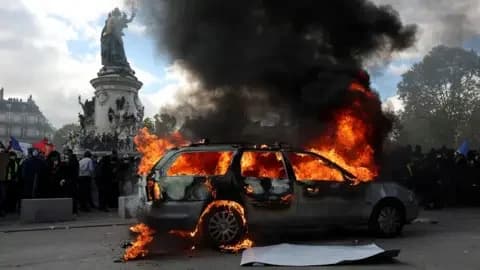
Authorities in France have arrested more than 2,000 people following a wave of violent protests that swept through the country, leaving one person dead and hundreds of police officers injured. While an estimated 550,000 people took to the streets to demonstrate against the rising cost of living and deteriorating public services, the movement was marred by significant unrest in major cities including Paris and Limoges. In the capital, peaceful marches devolved into chaos as protesters clashed with riot police. According to government reports, more than 600 shops were vandalized, and the streets were left littered with burnt-out cars and shattered glass. Prime Minister Sébastien Lecornu confirmed that at least 150 officers were injured during the confrontations, which saw buildings set ablaze and widespread looting. The government has characterized the violence as some of the worst unrest the nation has faced in years. The demonstrations were sparked by a combination of grievances, primarily centered on soaring fuel prices and the high cost of basic goods. Additionally, student groups joined the "gilets jaunes" (yellow vests) movement to protest staff shortages in schools and broader educational hardships. These combined social and economic frustrations have created a volatile atmosphere, with protesters demanding immediate government investment in public services and schools. President Emmanuel Macron is set to address the nation as his administration attempts to contain the escalating crisis. While the government has offered some concessions in an effort to quell the anger, political tensions remain high with upcoming presidential elections on the horizon. The President has promised that those responsible for vandalism and violence will be held accountable, as leaders from across the political spectrum debate the appropriate response to the ongoing unrest.