••
Prof. Frimpong-Boateng and Traditional Leaders Demand Radical Reforms to Address $21 Billion Environmental Crisis
•3 min read•11 sources
Ghana is currently caught in an environmental "roundabout," according to former Minister for Environment, Science, Technology, and Innovation, Professor Kwabena Frimpong-Boateng. Speaking at the Fourth Annual Colloquium at the University of Education, Winneba, the renowned cardiothoracic surgeon warned that the nation has failed to sustain environmental solutions, leading to a cycle of recurring degradation. He revealed a staggering $21 billion is required to reclaim and restore approximately 23,853 square kilometers of land devastated by illegal mining (galamsey), with the restoration of the Ankobra River alone estimated at $400 million. He criticized the political system for punishing officials who enforce environmental laws while allowing those who neglect their duties to escape accountability.
To address this systemic failure, Prof. Frimpong-Boateng proposed that public officials who approve development projects in protected areas, such as wetlands and forest reserves, should face personal criminal liability. He argued that the fight against galamsey effectively collapsed after safeguards introduced in 2018 were abandoned, leading to the reversal of brief gains seen during the 2017 mining moratorium. To ensure continuity across successive administrations, he advocated for a "National Environmental Compact," a legally binding framework that would hold governments accountable for maintaining environmental commitments and prevent the abandonment of critical safeguards for political reasons.
Complementing this call for accountability, Baffour K.S. Sikabede, the Chief of Akyem Essase, urged traditional leaders to resist the financial inducements of the mining industry. He emphasized that chiefs must prioritize the health of local rivers and forests over mining royalties, describing traditional authorities as the historical guardians of the environment. Sikabede called on the government to consult and adequately resource traditional rulers before granting mining concessions on stool lands, rather than involving them only after environmental damage has already occurred. He pledged that no illegal mining would take place within his jurisdiction, stressing that environmental protection is a collective moral responsibility.
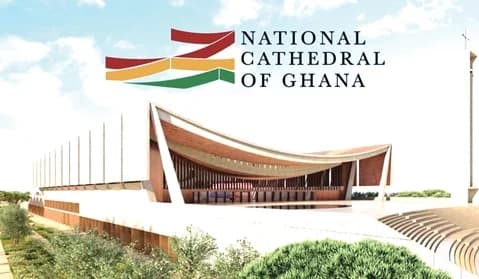
The debate over Ghana’s natural resources also extends to the religious and economic sectors. Prominent religious leaders, including Archbishop Nicholas Duncan-Williams and Dr. Mensa Otabil, have recently addressed the intersection of faith and governance, with Duncan-Williams calling for spiritual action against galamsey and Otabil defending the National Cathedral project against political division. Simultaneously, the Minerals Commission has taken steps toward decentralization by inaugurating a new seven-storey regional office and laboratory in Kumasi to improve service delivery and mineral testing. As Ghana navigates these complex issues, policy experts also caution that the government must conduct thorough cost-benefit analyses before implementing export bans on critical minerals like lithium, suggesting that regional collaboration may be more effective than isolated national processing efforts.

