••
GBA Condemns EOCO for Attempted Arrest of Manhyia South MP as ECG Workers Mobilize for Nationwide Protest
•3 min read•18 sources
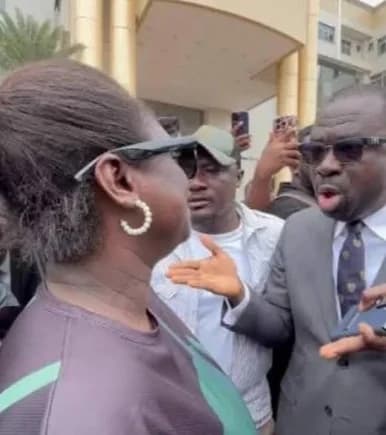
On September 23 and 24, 2026, Ghana’s political and legal landscape faced significant tension as the Ghana Bar Association (GBA) formally condemned an attempt by the Economic and Organised Crime Office (EOCO) to arrest Nana Agyei Baffour Awuah, the Member of Parliament for Manhyia South, within the premises of the Accra High Court. Simultaneously, unions representing workers of the Electricity Company of Ghana (ECG) announced a nationwide demonstration set for September 29, 2026. These events highlight a week of mounting friction between state agencies, organized labor, and the administration of President John Dramani Mahama, touching on issues of judicial independence and the management of national utilities.
The incident involving Nana Agyei Baffour Awuah occurred on September 23 after he represented a client in court. Awuah reported being approached by an unidentified EOCO official who attempted to take him into custody without providing proper identification. The GBA characterized the attempt as an assault on the legal profession and a threat to the independence of lawyers, warning that such actions undermine the rule of law and public confidence in the justice system. The association, led by President Efua Ghartey, emphasized that investigations involving legal professionals must respect constitutional guarantees and professional privileges, urging state agencies to strictly adhere to due process to avoid setting dangerous precedents.
Adding to the political pressure, the Senior Staff Union and Junior Staff Union of the ECG, coordinated by the Public Utility Workers Union (PUWU), have mobilized members across all operational regions for a massive protest against proposed Private Sector Participation (PSP) in the company. The workers, who have been wearing red armbands in solidarity, intend to march toward various regional offices to present a petition to President John Dramani Mahama. The unions argue that private investment in the national electricity distributor is not in the public's best interest and have signaled their intent to continue their opposition until the government reconsider its stance on the PSP proposal.
In the realm of regional governance and economic development, Bono East Regional Minister Francis Owusu Antwi expressed sharp disappointment during a site visit to the 24-hour economy market project in Kintampo. Despite the project’s importance to local commerce, the Minister revealed that less than one percent of the work has been completed by the contractor, S. D. H. Construction Limited. Minister Antwi described the firm as the poorest performer among contractors in the region and has initiated sanctions. Meanwhile, Vice President Professor Jane Naana Opoku-Agyemang has been championing economic inclusion, recently urging financial institutions like Absa Bank Ghana to expand financial access for women-owned businesses and youth entrepreneurs to stimulate growth in the agriculture and manufacturing sectors.
These developments coincide with growing calls for institutional accountability regarding human rights and police conduct. The Ghana National Association of Teachers (GNAT) is currently demanding an independent probe into the death of teacher Abu Seidu following a police encounter in the Savannah Region, while a Damongo Circuit Court judge recently ordered medical care for two accused persons who appeared with visible injuries allegedly sustained during police torture. Collectively, these events underscore a critical period for the Mahama administration as it navigates the complexities of infrastructure delivery, labor relations, and the necessity of maintaining human rights standards within state law enforcement agencies.