••
Ghana Advances National Welfare Through Integrated Health, Agriculture, and Infrastructure Initiatives
•3 min read•13 sources
Ghana is witnessing a robust phase of multi-sectoral development, characterized by significant advancements in public health, humanitarian support, and local infrastructure. A cornerstone of these efforts is the launch of the Free Primary Healthcare initiative at the Shai-Osudoku District Hospital, aimed at achieving universal health coverage by removing financial barriers for essential services. Complementing this government action, the McDan Foundation and RIDNE Consortium recently executed a GH¢1 million humanitarian intervention for nearly 7,000 widows at La Town Park. This project provided vital health screenings and food supplies, highlighting the critical role of private-sector collaboration in strengthening social safety nets for vulnerable populations.
In the realm of healthcare and research, recent developments have underscored a commitment to maternal and specialized care. A significant study by Kwame Nkrumah University of Science and Technology (KNUST) found that completing at least eight antenatal care visits can reduce the risk of preterm birth by 54% and low birth weight by 31%, advocating for more frequent maternal health visits. On the ground, the healthcare infrastructure received a boost from MODEC, which donated GH¢830,000 in medical equipment to the Assemblies of God Hospital in Saboba—a donation that proved essential after a fire subsequently damaged the hospital’s children’s ward. Furthermore, Tobinco Pharmaceuticals donated GH¢125,000 in blood tonics to the Ghana Prisons Service to enhance inmate welfare and support rehabilitation.
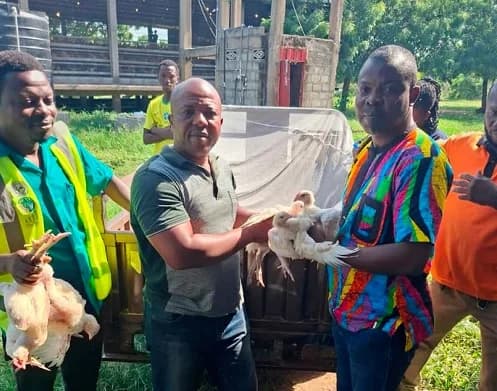
Agricultural and community-led infrastructure projects are also driving progress across several regions. Deputy Minister for Food and Agriculture John Dumelo announced a strategic partnership with the Netherlands to revitalize Ghana’s vegetable seed sector through enhanced research and technical cooperation. Local agricultural productivity is being further empowered by the distribution of 6,000 palm seedlings in New Juaben North and 10,000 chickens in Yilo Krobo under the "Nkoko nkitinkiti" programme. Meanwhile, the Mayekoo foundation, with support from the Jaques family, addressed critical water shortages by installing a new borehole and storage system at Vakpo E.P. Primary School, ensuring safe drinking water for more than 500 pupils.
Finally, Ghana is enhancing its safety and digital rights through maritime, peace-building, and communication initiatives. The Ministry of Transport and Ghana Maritime Authority have launched a national hydrography drive to improve maritime safety and support the blue economy, while a new peace monument in Zebila marks the successful completion of a two-year reconciliation project in Bawku West. Addressing modern threats, civil society groups are advocating for legal reforms to combat Technology Facilitated Gender-Based Violence (TFGBV), aiming to safeguard women's participation in public life. These efforts are supported by the Accra Metropolitan Assembly’s acquisition of a high-tech audio-visual van to modernize public communication and community engagement across the capital.
Related topic
Ghana Prisons Service Recruitment: Latest News →