••
Advancing Educational Sovereignty: Africa’s Digital Future and the Power of Indigenous Language
•2 min read•2 sources
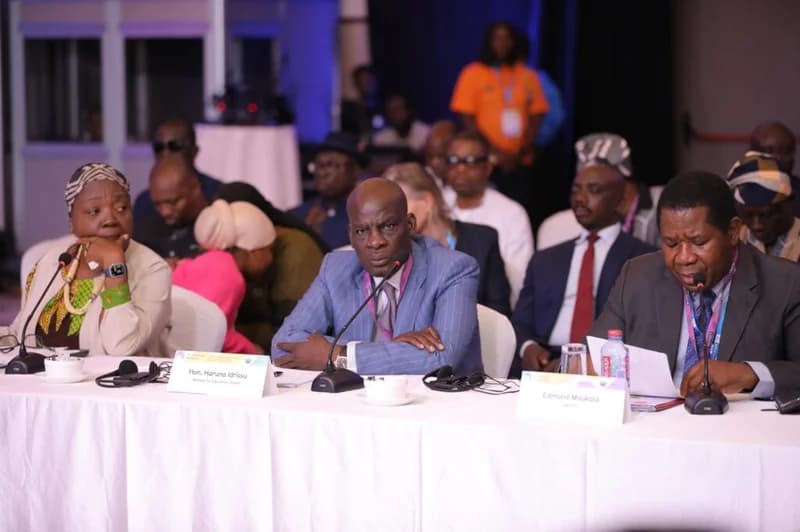
Education leaders and technology experts recently convened at the 18th Ministerial Roundtable to chart a new course for the continent's intellectual future. Under the theme "Championing Sovereign, Innovative and United Learning Systems: Empowering Africa on Its Own Terms," the summit emphasized the urgent need for Africa to lead its own digital transformation. Ghana’s Minister for Education, Haruna Iddrisu, challenged the continent to stop depending on external educational solutions and instead prioritize locally relevant content. This call for digital sovereignty was echoed by UNESCO Representative Edmund Moukala, who stressed that foundational literacy remains a non-negotiable prerequisite for responsible AI adoption and digital readiness across underserved communities.
Running parallel to these high-level digital strategies is a growing discourse on the linguistic frameworks that underpin African development. Analysis from development communications consultant Charles Mensah highlights a critical cognitive disconnect in Ghana’s educational and developmental planning. Drawing on the Sapir-Whorf hypothesis—the theory that the language one speaks shapes their perception of reality—Mensah argues that the dominance of English in formal discourse creates a bifurcated mindset. While English provides a vehicle for technical precision, it often lacks the cultural resonance necessary for community-rooted problem solving, whereas indigenous languages currently lack the technical registers required for complex policy and strategy discussions.
To bridge this gap, experts are advocating for a fundamental shift toward mother-tongue instruction and the deliberate development of technical vocabularies within local languages. This approach aims to ensure that technical precision and cultural relevance are no longer mutually exclusive. By evolving indigenous languages to handle modern technical registers, Ghana can move away from imported development frameworks that often fail to address local nuances. The synthesis of these perspectives suggests that true educational sovereignty for Africa requires more than just local hardware or software; it demands a cognitive and linguistic realignment that allows Ghanaians to think, innovate, and lead in the languages that best reflect their social and cultural realities.
