••
Ghana's Agricultural Outlook: Navigating Market Shortages and Scaling Private Sector Innovation
•3 min read•3 sources
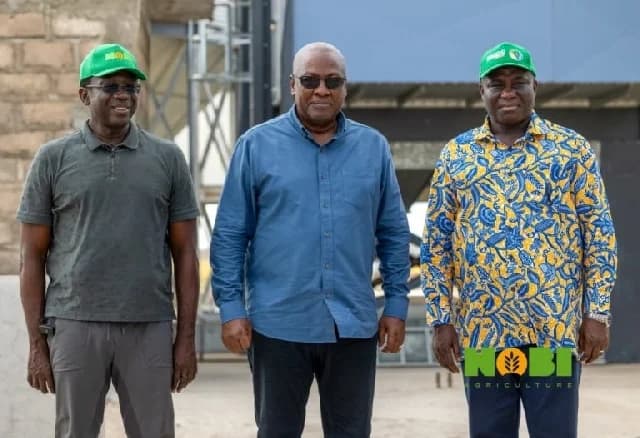
Ghana's agricultural sector is currently grappling with a complex mix of systemic challenges and promising private-led growth, as major crop yields fluctuate and market prices soar. While long-standing pillars like cocoa and emerging staples like ginger face significant threats from disease and policy failures, large-scale mechanized projects are being touted as the blueprint for national food self-sufficiency. The stark contrast highlights a critical juncture for the nation’s economy, where the balance between traditional farming and modern agribusiness investment remains fragile.
In the domestic market, a severe shortage of ginger has triggered a dramatic surge in prices, with the cost of a sack jumping from an average of GH¢200-300 to approximately GH¢2,500. This crisis is attributed to a persistent disease that has ravaged harvests for the past two years. Addressing the situation, Deputy Minister of Food and Agriculture, John Dumelo, indicated that while the government is actively seeking solutions to combat the blight and stabilize production, potential farmers should exercise caution and refrain from new investments in ginger until the situation improves. Simultaneously, the cocoa sector is facing its own decline. Hon. Colonel Kwadwo Damoah recently raised alarms in Miremalo, noting that the value of cocoa has deteriorated to the point where thieves are reportedly prioritizing avocados over cocoa beans. Local farmers are increasingly burdened by rising costs and a lack of incentives, leading to fears that the next generation may abandon the industry entirely without urgent intervention.
Amidst these struggles, private sector initiatives are being held up as a path forward. John Dramani Mahama recently commended agribusiness innovator Kwame Awuah Darko for his 7,000-hectare mechanized rice project in the Afram Plains. Mahama emphasized that such large-scale private investments are essential to closing the gap between local production and consumption, thereby reducing Ghana’s heavy reliance on rice imports. This model of modern, mechanized agriculture is seen as a necessary evolution from previous state-led programs like 'Planting for Food and Jobs,' which have struggled to overcome infrastructure and input limitations.
The current state of the sector underscores the urgent need for comprehensive policy reform and renewed investment strategies. Whether through combatting crop-specific diseases or implementing better pricing mechanisms for cocoa, stakeholders agree that the status quo is unsustainable. To restore Ghana’s status as an agricultural powerhouse, the government must bridge the gap between smallholder challenges and large-scale private innovations, ensuring that farming remains both a viable livelihood for the youth and a reliable engine for national economic growth.