Ghana News AI
HomeBriefsAsk GhanaTopicsTools
•
•

Stay Informed

Get AI-curated news briefs from Ghana delivered to your inbox every morning. Free forever, no spam.

Explore

  • Home
  • Briefs
  • About

Categories

  • Politics
  • Business
  • Sports
  • Entertainment
  • Africa

Features

  • Analysis
  • Cedi Rates
  • Dollar to Cedi
  • Ghana Gold Price
  • BoG Policy Rate

Topics

  • Armed Forces Recruitment
  • WAEC Results & News
  • Nana Ama McBrown
  • NDC News
  • All Topics

Legal

  • Privacy Policy
  • Terms of Service
Ghana News AI© 2026. All rights reserved.
Made withfor Ghana
politics

Ghana’s GHS 73bn ‘Big Push’ Infrastructure Program Under Scrutiny Over Sole-Sourcing Allegations and Procurement Irregularities

28th March•3 min read•26 sources
Ghana’s GHS 73bn ‘Big Push’ Infrastructure Program Under Scrutiny Over Sole-Sourcing Allegations and Procurement Irregularities
  1. Home
  2. /Politics
  3. /Ghana’s GHS 73bn ‘Big Push’ Infrastructure Program Under Scrutiny Over Sole-Sourcing Allegations and Procurement Irregularities

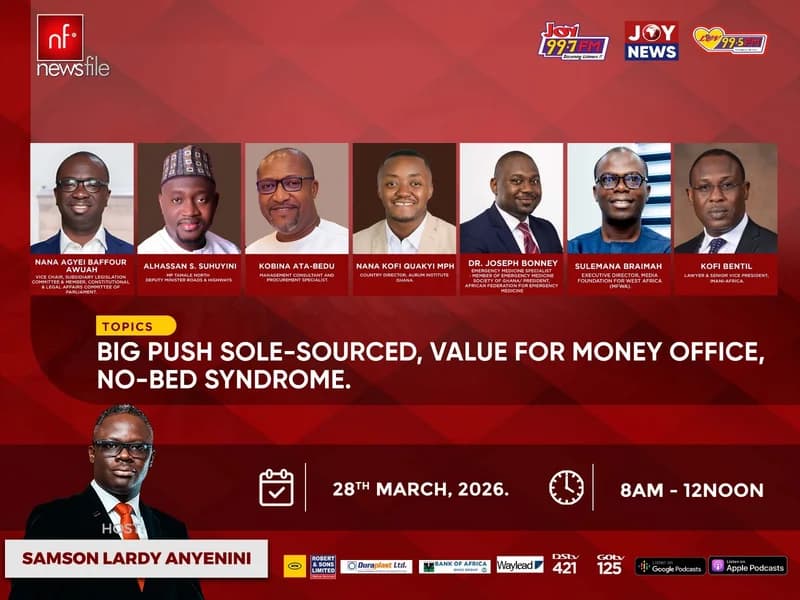
Ghana’s ambitious ‘Big Push’ road infrastructure initiative has become the center of a heated national debate following allegations of extensive procurement irregularities and a lack of competitive bidding. The National Democratic Congress (NDC) administration has championed the program as a groundbreaking solution to decades of road neglect, aiming to enhance inter-city transport and economic activity. However, reports from The Fourth Estate and the Media Foundation for West Africa (MFWA) have raised alarms over the awarding of 107 contracts valued at over GHS 73 billion. Critics allege that these contracts were awarded through sole-sourcing without competitive tenders, potentially leading to inflated costs and compromised transparency in the management of public funds.

Sulemana Braimah, Executive Director of the MFWA, revealed that official data from the Ministry of Roads and Highways’ own Master Register—obtained only after a Right to Information (RTI) appeal—shows that none of the 107 contracts underwent competitive bidding. Investigative findings further suggest that some firms awarded these multi-million cedi contracts were established as recently as January 2025, while others operate with as few as one to four employees. These revelations have sparked concerns among procurement specialists and civil society groups, such as IMANI Africa, who argue that the systemic abuse of sole-sourcing undermines public trust and creates an environment ripe for corruption. Senior Vice President of IMANI Africa, Kofi Bentil, has called for a total abolition of sole-sourcing, attributing the current crisis to leadership failures rather than deficiencies in existing laws.

In response to these allegations, Deputy Minister for Roads and Highways, Alhassan Suhuyini, and Minister Governs Kwame Agbodza have firmly defended the government’s record. While acknowledging that sole-sourcing occurs, they dispute the scale of the claims, asserting that only 44% of major ‘Big Push’ contracts were sole-sourced. Suhuyini emphasized that the administration is actually reforming a procurement system they inherited, which they claim was fully reliant on sole-sourcing under previous leadership. He further issued a stern warning to contractors that underperformance or delays would result in immediate contract termination, insisting that the government is committed to delivering tangible results for the Ghanaian taxpayer under President John Dramani Mahama’s oversight.

The controversy coincides with significant legislative and legal developments in the procurement sector. Parliament recently passed the Value for Money Office Bill 2026, intended to tackle inefficiencies in public spending. However, the law has faced sharp criticism from procurement specialists like Kobina Ata-Bedu, who label it as “useless” and a redundant duplication of the Public Procurement and Public Financial Management Acts. Meanwhile, the Office of the Special Prosecutor (OSP) continues to pursue accountability in the courts, recently closing its case against the former Chief Executive of the Public Procurement Authority, Adjenim Boateng Adjei, who faces charges for abuse of office and procurement manipulation.

As the ‘Big Push’ projects continue across the country, their success and transparency are expected to be pivotal issues in the upcoming electoral cycle. While the government maintains that these infrastructure investments are essential for national development, the growing calls for collaboration between the media, judiciary, and anti-corruption bodies highlight a heightened demand for accountability. The resolution of these procurement disputes will likely determine whether the ‘Big Push’ is remembered as a transformative development milestone or a cautionary tale of governance and fiscal management in Ghana.

Our Take

From the Team

Coming Soon

Our team will add key insights, trends, and actionable takeaways to help you stay informed faster.

This story touches markets covered on Anansi Intelligence ↗.

Related topic

NDC (National Democratic Congress): Latest News →

Live rates

Dollar to cedi rate →

More from politics

Continue exploring similar stories

Dr Cassiel Ato Forson (right), and Kenneth Gilbert Adjei, newly appointed Defence Minister, signing documents to formalise the handover of the Ministry of Defence. With them is Ernest Brogya Genfi, the Deputy Minister of Defence
politics|20th August

Minister Adjei Pledges Defence Modernization as Adamus Resources Challenges Ghana’s Mining Lease Revocation

Kenneth Gilbert Adjei has officially assumed office as Ghana’s Minister of Defence, pledging to prioritize the modernization of the Ghana Armed Forces (GAF) to address evolving security threats, including violent extremism and cybercrime. During a handover ceremony following his reassignment by President John Mahama, Adjei emphasized that modernization must encompass strategic investments in personnel welfare, maintenance, and logistics rather than just equipment acquisition. He expressed gratitude to his predecessor, Dr. Cassiel Ato Forson, and paid tribute to the late Dr. Edward Kofi Omane Boamah, promising an open-door policy for collaboration across national and international security agencies. This administrative transition comes as Ghana seeks to fortify its defense posture in an increasingly complex regional environment. While the Ministry of Defence focuses on security, the Ghanaian government faces a major legal confrontation in the mining sector as Adamus Resources Company Limited challenges the revocation of its mining leases. Ekow Taylor, the company’s Head of Geology and Exploration, has refuted government allegations that Adamus sublet its leases without approval or failed to address operational breaches. Adamus contends that it was never formally notified of significant violations prior to the revocation and intends to challenge the decision in court, labeling the government's move as unlawful and contrary to the country’s mining laws. The dispute centers on whether due process was followed after a Ministerial Review Committee upheld the revocation, which has now seen the Minerals Commission take control of the affected sites. On the international stage, political and humanitarian tensions are escalating significantly. Russian forces recently launched a devastating aerial assault on Kyiv, killing at least 15 people and causing widespread destruction to residential areas and medical facilities. President Volodymyr Zelenskyy has intensified his calls for Western allies to provide more Patriot air defense interceptors, as Ukraine’s current stockpiles are critically low. Simultaneously, a coalition of Western powers, including the UK, France, Germany, Italy, and Canada, has condemned Israel’s decision to tender for 1,200 new settlement homes in the E1 area of the West Bank. International leaders, echoed by the UN Secretary-General, warn that such expansion poses an "existential threat" to the viability of a two-state solution. The intersection of governance, tech, and corporate accountability also remains a focal point of global political discourse. In the United States, President Donald Trump has urged Congress to pass the "Clarity Act" to provide a regulatory framework for the cryptocurrency sector, even as his administration faces legal action from ABC and Disney over alleged intimidation and interference with broadcast licenses. Additionally, Meta CEO Mark Zuckerberg is under fire following testimony from former executive Arturo Bejar, who claimed the company knowingly prioritized growth and user engagement over the safety and mental health of young users on Facebook and Instagram. Broader institutional and social shifts continue to shape the current political landscape. In the world of sports governance, internal friction has emerged at FIFA as a Vice President withdrew support for Gianni Infantino following the controversial dismissal of a high-ranking official. Meanwhile, in the UK, the Duke and Duchess of Sussex, Prince Harry and Meghan, have announced plans to relocate to a non-royal residence, with their security arrangements being classified as a private matter by Prime Minister Andy Burnham. From the detention of French journalists in Togo to the combative testimonies in the high-profile Tupac Shakur murder trial, these developments underscore a period of intense legal and institutional scrutiny across the globe.

Mustapha Gbande — Deputy General Secretary, NDC
politics|20th August

NPP and NDC Clash Over 24-Hour Economy Implementation as Mahama Administration Reaches Performance Milestones

The implementation of President John Mahama's signature 24-hour economy policy has become a central flashpoint in Ghanaian politics, with the New Patriotic Party (NPP) accusing the ruling National Democratic Congress (NDC) of failing to deliver on its 2024 campaign promises. Michael Okyere Baafi, the Ranking Member on the Trade and Industry Committee, and Seidu Musah, the NPP's Oti Regional Communication Director, have both alleged that the government is using "24-hour market" projects to mask its inability to roll out the broader economic policy. They further criticized the administration for failing to provide automatic postings for newly trained teachers and nurses, arguing that the youth remain marginalized despite the government's rhetoric on job creation. In response to these criticisms, Goosie Tanoh, the Presidential Adviser on the 24-Hour Economy, clarified that the 24-hour Markets project is distinct from the broader 24-hour Economy policy. Speaking at a media briefing, Tanoh emphasized that his secretariat has no jurisdiction over market development, which falls under the Ministry of Local Government, Chieftaincy, and Religious Affairs. He noted that the secretariat has even faced legal challenges regarding demolitions at market sites, despite having no involvement in those decisions. Meanwhile, within the NDC, Tetteh Laryea Cyril of the Youth Employment Agency scored the Mahama administration's performance at 85%, citing significant progress in education, energy, and youth programs in less than two years since the January 2025 inauguration. Internal party dynamics are also coming to the fore as both major parties look toward the 2028 elections. NDC Deputy General Secretary Mustapha Gbande has warned party members against "jealousy and internal sabotage," suggesting that some individuals are attempting to undermine colleagues who have seen success since the party regained power. Gbande also dismissed the NPP's credibility for the 2028 cycle, arguing that the opposition has yet to take responsibility for past economic mismanagement. This political sparring comes amid efforts by the NDC to consolidate its base and project a unified front as they attempt to rectify the economic challenges inherited from the previous administration. Beyond the partisan divide, governance and institutional reforms continue to move forward. In Cape Coast, Metropolitan Chief Executive George Justice Arthur announced an ambitious eight-year development plan, including the redevelopment of the Metro Hospital and the establishment of a Black Museum to boost tourism. Simultaneously, the Ghana Police Service under IGP Christian Tetteh Yohuno has promoted over 13,000 officers in a move to boost morale and recognize bravery. In the media sphere, veteran journalist Kwesi Pratt Jnr cautioned against the erosion of professional standards, criticizing television stations for using social media followings as a primary metric for recruitment, while MP John Dumelo addressed public misconceptions by stating there is no significant financial gain in being a Member of Parliament. As the Mahama administration nears the end of its second year, the political landscape is defined by a sharp contrast between the government's reported successes and the opposition's rigorous scrutiny of its flagship policies. The ability of the NDC to successfully decouple the 24-hour economy policy from localized market disputes, while maintaining internal unity, will likely determine the political narrative heading into the next election cycle. For now, the government remains focused on its structural reforms and infrastructure projects, even as the NPP remains vocal about perceived gaps in the administration's delivery on its electoral mandates.

Mayor Allotey Deploys AMA Taskforce to Enforce Transport Fares and Safety Regulations in Accra
politics|20th August

Mayor Allotey Deploys AMA Taskforce to Enforce Transport Fares and Safety Regulations in Accra

The Accra Metropolitan Assembly (AMA) has launched a multi-pronged initiative to sanitize the transport sector in the capital, focusing on fare compliance and enhanced road safety. Mayor Michael Nii Kpakpo Allotey announced the deployment of a specialized task force to the Central Business District (CBD) to monitor commercial transport operators, including trotros, taxis, and ride-hailing services. The move is designed to curb arbitrary fare increases during peak hours and protect commuters from undue financial burdens. Mayor Allotey warned that any driver found charging above the approved rates would face legal consequences under established assembly bylaws, emphasizing that transport costs must remain stable to prevent a ripple effect on the price of essential goods. Simultaneously, the AMA has introduced strict new regulations for motorized tricycle operators, popularly known as 'Aboboyaa,' to reduce road accidents. Effective immediately, these tricycles are banned from using the inner lanes of major roads and must instead utilize designated side roads or stick to the outer lanes. The Mayor also set a firm deadline of August 2026 for all tricycle operators to install reflector stickers and for drivers to wear reflective clothing. This directive follows alarming data from the Driver and Vehicle Licensing Authority (DVLA) indicating that over 90% of tricycles currently lack essential safety features like side mirrors and proper lighting. While the AMA acknowledges the vital role of these tricycles in waste collection and local logistics, the assembly insists that road discipline must be prioritized to ensure the safety of all road users. These local enforcement efforts coincide with the introduction of the nationwide Road Traffic Regulations, 2026. The Ghana Police Service, led by Assistant Commissioner of Police Alexander Kweku Obeng, is urging the public and transport stakeholders to familiarize themselves with the new legislative framework, which replaces the 2012 regulations. The 2026 update addresses modern developments in the transport sector, such as the rise of electric vehicles and the implementation of electronic ticketing and digital payment systems for traffic violations. Authorities believe these technological advancements will foster more efficient traffic management and higher levels of compliance across the country. However, the push for transport regulation comes amid growing political concern over the cost of travel. Kennedy Nyarko Osei, the Member of Parliament for Akim Swedru, recently raised alarms regarding the skyrocketing cost of domestic air travel. He noted that return flights between Accra and Kumasi have surged from approximately GH"1,600 in 2024 to as much as GH"5,000 in 2026. Osei questioned the justification for such hikes at a time when the government reports improvements in inflation and exchange rate stability. As the AMA and national authorities tighten regulations, the debate over transport affordability remains a central issue for both commuters and policymakers heading into the latter half of the year.

Methodist Church Ghana calls for stronger action on environmental destruction
politics|20th August

President Mahama Champions Religious Tolerance Amid Economic Tensions and Labor Unrest

President John Mahama has issued a strong call for national unity and religious tolerance, urging Ghanaians not to take the country’s history of peaceful coexistence for granted. Speaking at the 32nd Biennial General Council Meeting of the Assemblies of God Ghana, the President cautioned against the use of faith to provoke violence or hatred, specifically addressing recent tensions between a Muslim cleric and a Christian pastor. Mahama emphasized that religious freedom must not infringe upon the dignity of others and called for interfaith dialogue to remain a cornerstone of Ghanaian society. This plea for stability comes at a time when the administration is being pressured by various sectors to address systemic economic and environmental challenges. Adding to the government's immediate concerns, the Ghana Mineworkers’ Union (GMWU) has intensified its demand for the release of over GH"380 million in locked-up funds. These assets, which include provident funds and severance packages for over 19,000 miners, have been inaccessible since the Bank of Ghana’s financial sector clean-up. Union General Secretary Abdul-Moomin Gbana warned of imminent industrial action, including nationwide strikes and demonstrations, if the central bank and the Ministry of Finance fail to provide a concrete resolution. The union’s petition follows statements from Finance Minister Cassiel Ato Forson indicating a lack of immediate liquidity for direct payouts, further straining labor relations in the mining sector. On the front of regional development and accountability, Minister for Tourism, Culture and Creative Arts, Abla Dzifa Gomashie, has concluded a series of tours through the Bono and Bono East regions. She advocated for stronger public-private partnerships to unlock Ghana's tourism potential and urged local authorities to maintain clean and peaceful environments as a foundation for economic growth. Parallel to these efforts, the Methodist Church Ghana has called on the government to fulfill its campaign promises, particularly regarding youth unemployment and the fight against illegal mining (galamsey). Most Rev. Prof. Johnson Kwabena Asamoah-Gyadu stressed that the church would prioritize environmental stewardship as a vital part of its Christian mission. The national discourse has also been shaped by urgent calls for social justice and security vigilance. The Zonta Clubs of Ghana have demanded parliamentary sanctions against MP Mohammed Yakubu for inappropriate remarks made to a schoolgirl, while gender advocates have slammed the management of Bolgatanga Girls Senior High School over the handling of a reported rape incident involving security guards. Simultaneously, the National Peace Council has alerted residents in the Kassena-Nankana Municipality to remain vigilant against violent extremism, warning that extremist groups are increasingly using online platforms to spread misinformation and radicalize the youth. As Ghana marks the eighth anniversary of the passing of former UN Secretary-General Kofi Annan, his legacy of preventive diplomacy and dialogue remains a focal point for the nation's current leaders. Experts such as Dr. Vladimir Antwi-Danso noted that Annan's principles are more relevant than ever as the country navigates complex internal disputes and environmental crises. The convergence of labor demands, environmental protection efforts, and the need for religious harmony underscores the multifaceted challenges facing President Mahama's administration as it seeks to uphold Ghana's reputation as a beacon of stability in the region.

All
africa
business
education
entertainment
health
news
politics
sports
technology