Anansi News
HomeBriefsAsk GhanaTopicsTools
•
•

Stay Informed

Get AI-curated news briefs from Ghana delivered to your inbox every morning. Free forever, no spam.

Explore

  • Home
  • Briefs
  • About

Categories

  • Politics
  • Business
  • Sports
  • Entertainment
  • Africa

Features

  • Analysis
  • Cedi Rates
  • Dollar to Cedi
  • Ghana Gold Price
  • BoG Policy Rate

Topics

  • Armed Forces Recruitment
  • WAEC Results & News
  • Nana Ama McBrown
  • NDC News
  • All Topics

Legal

  • Privacy Policy
  • Terms of Service
Anansi News© 2026. All rights reserved.
Made withfor Ghana
news

Ghana’s Education Sector Sees Boost from Private Infrastructure Investment and Academic Innovation

26th May•2 min read•3 sources
Ghana’s Education Sector Sees Boost from Private Infrastructure Investment and Academic Innovation
  1. Home
  2. /News
  3. /Ghana’s Education Sector Sees Boost from Private Infrastructure Investment and Academic Innovation

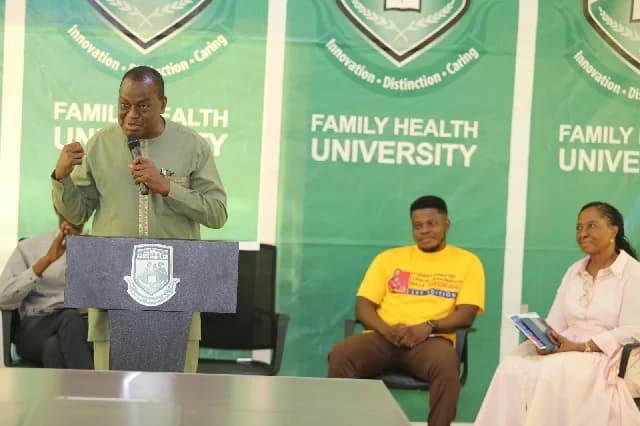
Ghana's educational landscape is experiencing a significant transformation through a combination of private sector infrastructure development and groundbreaking academic contributions from its graduates. In the Eastern Region, Nestlé Ghana Limited and ECOM Ghana Limited have commissioned a modern six-unit classroom block for the Adarkwa Methodist Primary School, a project that marks a turning point for the local cocoa-growing community. Simultaneously, in the field of higher education, Dr. Joseph Adam Dadzie has made history as the first alumnus of Family Health University (FHU) to author a medical textbook, signaling a new era of student-oriented clinical learning in the country.

The new facility at Adarkwa Methodist Primary replaces a dilapidated structure that had served the community for 90 years. Beyond the six classrooms, the modern complex includes essential amenities such as office space, a storeroom, toilet facilities, and access to potable water. This development addresses long-standing infrastructure deficiencies that previously forced some children to travel great distances for basic schooling. Community leaders have hailed the project as a catalyst for increased enrollment, urging parents to bring their children back to the classroom now that a safe and conducive environment has been established. Nestlé Ghana has further signaled its commitment to the region by planning additional educational resources to support sustainable development.

Parallel to these physical improvements, the academic sphere is celebrating the launch of "Student-Oriented Clinical Examination Skills (Medicine)" by Dr. Joseph Adam Dadzie. The textbook is designed to bridge the gap in clinical preparation for medical students, offering simplified explanations and practical, real-world guidance tailored to the African context. During the launch ceremony, Family Health University Vice-Chancellor Professor Enyonam Yao Kwawukume lauded Dr. Dadzie’s achievement as a significant milestone for the institution. Dr. Dadzie credited the university’s mentorship and the support of his peers for the success of the publication, which aims to empower the next generation of medical professionals with accessible and effective study materials.

These developments underscore a holistic approach to national progress, where the modernization of rural primary schools meets the intellectual rigor of university alumni. While the new classroom block provides the foundation for early childhood education in rural Ghana, the publication of localized medical literature ensures that advanced students have the tools necessary to excel in their professional fields. Together, these initiatives highlight the critical roles of corporate social responsibility and academic mentorship in building a resilient educational system that serves all levels of Ghanaian society.

Our Take

From the Team

Coming Soon

Our team will add key insights, trends, and actionable takeaways to help you stay informed faster.

This story touches markets covered on Anansi Intelligence ↗.

More from news

Continue exploring similar stories

NRSA Launches Sensitization Drive in Upper East Region for New Motorbike and Tricycle Regulations
news|Yesterday

NRSA Launches Sensitization Drive in Upper East Region for New Motorbike and Tricycle Regulations

The National Road Safety Authority (NRSA) has commenced a comprehensive sensitization campaign in the Upper East Region to educate commercial motorbike and tricycle operators on the newly enacted Ghana Road Traffic Regulations, 2026 (Legislative Instrument 2519). This legislative framework, which received parliamentary approval in December 2025, represents a significant step toward streamlining the operations of the commercial transport sector, particularly for "Pragia" and "Okada" services. The initiative marks the beginning of a six-month educational transition period designed to ensure that all stakeholders are fully informed of and compliant with the new standards before strict enforcement begins. Under the provisions of L.I. 2519, the regulatory landscape for two- and three-wheeled commercial transport is set to change fundamentally to enhance road safety. Key mandates include a requirement for all operators to belong to a recognized union, a move intended to facilitate better internal supervision, training, and accountability. Furthermore, the law sets a minimum age of 21 for commercial riders and reinforces the mandatory use of crash helmets for both riders and passengers. These measures are specifically targeted at reducing the high rate of road traffic accidents associated with these modes of transport and ensuring that operators possess the necessary maturity and protection to handle the responsibilities of public conveyance. The outreach program has received significant backing from local industry leaders, including the Upper East Regional Chairman of the National Union of Tricycle Operators Ghana. This collaboration between the NRSA and transport unions is seen as critical for the successful implementation of the law across the region. By focusing on education rather than immediate punitive action during this phase, the NRSA aims to foster a culture of voluntary compliance among riders. As the six-month grace period progresses, the Authority expects that these enhanced safety protocols will lead to a measurable decrease in road fatalities and injuries, ultimately creating a safer and more organized transport environment for all Ghanaians.

ECG Announces Scheduled Six-Hour Power Maintenance Outage for Key Ashanti Region Communities
news|Yesterday

ECG Announces Scheduled Six-Hour Power Maintenance Outage for Key Ashanti Region Communities

The Electricity Company of Ghana (ECG) has announced a scheduled power outage affecting several communities in the Ashanti Region on Tuesday, August 25, 2026. The planned interruption is expected to last for six hours, beginning at 9:00 a.m. and concluding at 3:00 p.m. According to the utility provider, this downtime is essential for carrying out critical maintenance work designed to enhance service delivery and improve the overall reliability of the power grid in the region. Residents and businesses in the designated areas are advised to make the necessary arrangements to mitigate the impact of the temporary loss of power. The outage will affect a wide range of residential and commercial enclaves, including Effiduase, Apemso, Asekyerewa, and the Senkyi enclaves. Other areas listed in the maintenance schedule include Asenua, parts of Ahwiaa, Overseas, and Maase. Educational institutions are also expected to be impacted, with Simms Senior High School (SHS) specifically mentioned in the ECG’s announcement. Furthermore, parts of Fawoade, Adumakase Kese, Wawase, and Meduma will experience the six-hour disruption as technical teams work on the infrastructure. This maintenance exercise is part of a broader strategy by the ECG to address potential technical flaws and upgrade existing distribution systems. By performing these scheduled tasks, the company aims to prevent unexpected equipment failure and ensure a more stable electricity supply for the growing population in the Ashanti Region. The ECG has apologized for the inconvenience this maintenance may cause to its customers and has expressed its commitment to restoring power promptly by the 3:00 p.m. deadline. Residents are encouraged to stay informed through official channels for any further updates regarding the power situation.

Rev. Wengam re-elected General Superintendent of Assemblies of God, Ghana
news|Yesterday

Rev. Stephen Yenusom Wengam Re-elected as General Superintendent of Assemblies of God, Ghana with Overwhelming Majority

Rev. Stephen Yenusom Wengam has secured a decisive mandate to continue leading the Assemblies of God, Ghana, following his re-election as General Superintendent. During the church's 32nd Biennial General Council Meeting held on August 21, 2026, Rev. Wengam received an overwhelming endorsement from the delegates, signaling strong confidence in his leadership and the ongoing transformation of the denomination. His victory marks the commencement of a new four-year term dedicated to consolidating the church's growth and expanding its spiritual and social impact across the nation. The election results showcased a significant margin of victory for the incumbent. Rev. Wengam garnered 3,727 votes, representing approximately 89.61% of the total valid votes cast. His contender, Rev. Dr. Kwame B. Bansah, received 432 votes, or 10.39%. Alongside the General Superintendent, the council appointed a refreshed leadership team to support the executive vision. This new administration includes Rev. Dr. Kwadwo Bempah as Assistant General Superintendent and Rev. Dr. Albert Anane as General Secretary, forming a core executive body tasked with administrative and spiritual oversight. In his acceptance remarks, Rev. Wengam expressed profound gratitude for the renewed trust and emphasized a commitment to church unity and aggressive evangelism. A centerpiece of his upcoming tenure is the "MM33" agenda, a strategic focus on global evangelism and church planting. He also highlighted the continued progress of the Centenary City Project, a landmark infrastructure initiative designed to commemorate the church’s upcoming 100th anniversary. Looking ahead, Rev. Wengam called on the congregants and leadership to remain steadfast and united as they prepare for the World Assemblies of God Congress in October 2026. The meeting concluded with prayers for the church's future growth, with the leadership promising to prioritize spiritual revitalization and the completion of major legacy projects that will define the church's influence for the next century.

Madina Residents Raise Alarm Over Dangerous Proximity of High-Voltage Power Lines at Rawlings Circle
news|Yesterday

Madina Residents Raise Alarm Over Dangerous Proximity of High-Voltage Power Lines at Rawlings Circle

Residents and traders at Rawlings Circle in Madina are calling for urgent state intervention as electricity poles and high-voltage power lines increasingly encroach on residential and commercial spaces. Recent investigations have revealed a perilous situation where multiple structures have been erected dangerously close to electrical infrastructure, with some utility poles even passing directly through existing buildings. This encroachment has sparked widespread fears of imminent electrocution and catastrophic electrical fires among the local community, many of whom feel trapped by the surrounding hazards. The risk is far from theoretical, as residents report a high frequency of fire outbreaks linked to substandard electrical installations and the overcrowding of structures near power grids. Kofi, a local shop attendant, emphasized the dire need for authorities to step in before a major tragedy occurs. Technical experts, including fibre-optic engineer Samuel, have highlighted the severe dangers of these encroachments, suggesting that a safety buffer of at least 50 meters should be strictly maintained between buildings and high-tension lines. Currently, many structures stand mere inches away from live wires, representing a blatant disregard for safety margins and standard building regulations. The safety crisis extends beyond Madina, with similar hazardous conditions recently observed at Pokuase ACP. In response to these mounting concerns, the Ga North Municipal Assembly has signaled its intent to take decisive action against unsafe constructions. Municipal Chief Executive (MCE) Akwetey Agbo stated that the Assembly plans to collaborate with relevant state agencies to dismantle structures that pose a clear danger to public safety. This enforcement drive will reportedly be paired with educational campaigns intended to sensitize the public on the legal and physical risks of building near high-voltage equipment. Despite the mounting pressure from residents and local authorities, the Electricity Company of Ghana (ECG) has yet to provide a formal response or a clear timeline for technical interventions. The situation at Rawlings Circle serves as a stark reminder of the broader challenges facing urban planning and utility management in Ghana’s rapidly expanding municipal areas. Moving forward, the success of the Ga North Municipal Assembly’s intervention will depend on consistent enforcement of building codes and regular inspections to ensure that commercial development does not continue to compromise human life.

All
africa
business
education
entertainment
health
news
politics
sports
technology