••
Ghana and EU Launch Massive €6 Million Land Restoration and Reforestation Initiatives to Combat Galamsey and Climate Change
•3 min read•4 sources
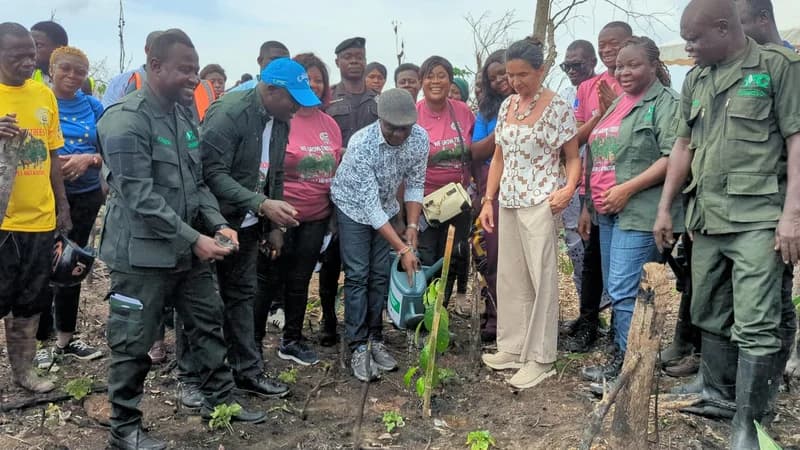
Ghana is significantly intensifying its efforts to combat environmental degradation and climate change through a series of large-scale land restoration and reforestation projects. Backed by a €6 million investment from the European Union (EU) and several national initiatives, the country aims to reclaim thousands of hectares of land lost to illegal mining, known locally as galamsey, and deforestation. These coordinated efforts involve the Ministry of Lands and Natural Resources, the European Forest Institute, and various regional coordinating councils, all focusing on restoring ecological health while securing rural livelihoods.
A cornerstone of this movement is the EU’s "Ghana Forest Restoration Grant Scheme," part of the Sustainable Forest and Cocoa Programme. Scheduled to run from late 2025 through 2027, this €6 million initiative targets the restoration of 14,000 hectares of forest across the High Forest and Savanna ecological zones. The project is designed to empower approximately 20,000 farmers, with a strategic focus on women and youth. By integrating agroforestry and complementary livelihood activities such as beekeeping, the scheme aligns with the government’s ‘Tree for Life’ program to promote deforestation-free cocoa production and enhance climate resilience.
On a regional level, the Ashanti Regional Coordinating Council has already made tangible progress, reclaiming nearly 100 acres of galamsey-degraded land in the Bosome Freho District. This project, supported by National Security and NADMO, involves a rigorous vetting process where 33 approved applicants are overseeing the restoration of abandoned sites. Simultaneously, the Department of Community Development has launched the Green Community Development Initiative in the Ashanti Region. This ambitious program aims to plant one million trees nationwide, starting with 70 trees per district across all 16 regions to foster local environmental stewardship.
Beyond environmental recovery, these initiatives address critical safety and economic concerns. Local officials in the Ashanti Region have highlighted the dangers of abandoned mining pits, which have recently resulted in fatalities. The restoration efforts are returning these lands to a state suitable for agriculture, much to the relief of local farmers. Small-scale miner Matthias Darah and other stakeholders have noted that reclaimed pits can eventually regain the nutrients necessary for farming, provided they are managed correctly. Key officials, including the EU’s Silvia Severi and Western Regional Minister Joseph Nelson, have emphasized that the long-term success of these programs relies on community-led nurturing and the protection of trees beyond the initial planting phase.
As Ghana navigates the dual threats of illegal mining and climate change, the integration of international funding with grassroots community action provides a critical roadmap for ecological recovery. By transitioning from seasonal planting events to a year-round culture of environmental maintenance, the government and its partners hope to secure national food security and restore the nation's forest cover. These efforts represent a vital step toward safeguarding the livelihoods of millions of Ghanaians and ensuring a sustainable environmental legacy for future generations.