••
Ghana Records $2.62bn FDI in 2025 Amidst Calls for Productive Investment and Accountability over Gold Program Losses
•2 min read•3 sources
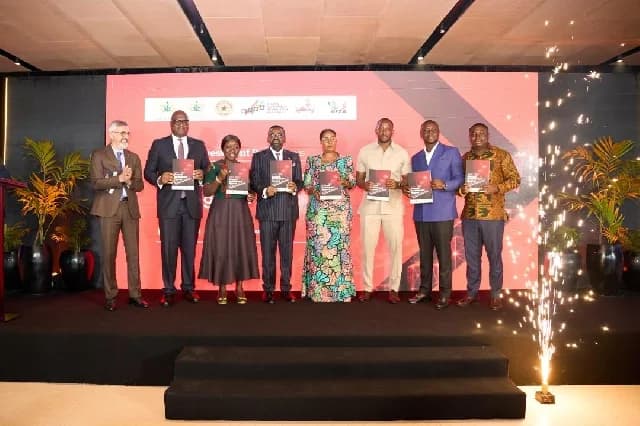
Ghana has reported a significant inflow of $2.62 billion in Foreign Direct Investment (FDI) for the 2025 fiscal year, reflecting sustained international investor confidence. At the launch of the Ghana Investment Promotion Authority’s (GIPA) 2025 Annual Investment Report, Elizabeth Ofosu-Adjare, the Minister for Trade, Agribusiness, and Industry, emphasized that while the capital inflow is positive, the true benchmark of success must be its tangible impact on the domestic economy. This sentiment was echoed by national officials who argued that the focus of investment promotion must now evolve beyond mere capital attraction toward fostering deeper productive capacities.
Latif Abdul Oduro, Deputy Chief Executive Officer of the Ghana Free Zones Authority (GFZA), called for a strategic transition to "productive investments" that prioritize local production, the creation of quality jobs, and the transfer of technology to Ghanaian workers. Minister Ofosu-Adjare further noted that reforms in the regulatory environment are essential to bolster investor confidence and streamline productivity. Supporting this vision, Bank of Ghana Governor Johnson Asiama highlighted a decline in inflation as a critical indicator of restored economic stability, suggesting that the benefits of investment should ultimately be measured by improvements in the living standards and employment rates of citizens.
However, the celebratory tone surrounding the investment report has been tempered by critical analysis from the Institute of Economic Research and Public Policy (IERPP). While welcoming the $2.62 billion FDI figure, IERPP Executive Director Professor Isaac Boadi cautioned that these gains are significantly offset by massive losses within the Domestic Gold Purchase Program (DGPP). According to the IERPP, the program recorded losses of approximately $1.7 billion (GH‵22 billion), a figure representing roughly 65% of the total FDI attracted during the period. The institute argues that celebrating investment successes without addressing such substantial financial mismanagement risks creating a distorted view of the country's economic health.
The IERPP is calling for greater transparency and accountability from state institutions to ensure that resource management aligns with the goal of sustainable economic transformation. Prof. Boadi stressed that long-term investor confidence is built on institutional integrity as much as it is on capital returns. As the government seeks to implement its 2025 investment strategies, the consensus between trade officials and economic watchdogs remains clear: for Ghana to truly benefit from international capital, it must bridge the gap between attracting funds and ensuring those funds contribute to a transparent, productive, and resilient national economy.
Live rates
Ghana gold price →