Ghana News AI
HomeBriefsAsk GhanaTopicsTools
•
•

Stay Informed

Get AI-curated news briefs from Ghana delivered to your inbox every morning. Free forever, no spam.

Explore

  • Home
  • Briefs
  • About

Categories

  • Politics
  • Business
  • Sports
  • Entertainment
  • Africa

Features

  • Analysis
  • Cedi Rates
  • Dollar to Cedi
  • Ghana Gold Price
  • BoG Policy Rate

Topics

  • Armed Forces Recruitment
  • WAEC Results & News
  • Nana Ama McBrown
  • NDC News
  • All Topics

Legal

  • Privacy Policy
  • Terms of Service
Ghana News AI© 2026. All rights reserved.
Made withfor Ghana
news

Central and Western Regions Devastated by Floods: 18 Dead and Thousands Displaced Following Building Collapses

22nd June•2 min read•9 sources
Cape Coast: Toddler and 2 others confirmed dead, 2 injured as rain induced mudslide destroys homes
  1. Home
  2. /News
  3. /Central and Western Regions Devastated by Floods: 18 Dead and Thousands Displaced Following Building Collapses

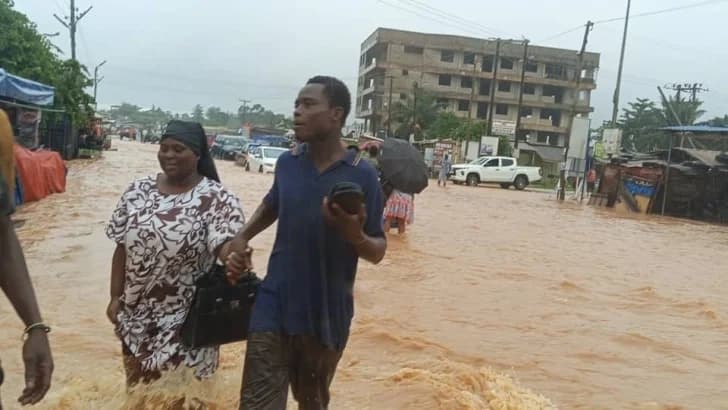
Torrential rainfall has left a trail of destruction across Ghana’s Central and Western regions, resulting in at least 18 fatalities and the displacement of thousands of residents. The National Disaster Management Organisation (NADMO) reports that the Central Region has been particularly hard-hit, with 58 building collapses recorded across 15 districts. The disasters, triggered by persistent heavy downpours, have affected over 5,000 individuals, many of whom have lost their homes, belongings, and livelihoods. In the Western Region town of Samreboi, the situation is equally dire, with over 2,000 people displaced as overflowing rivers submerged entire neighborhoods.

The human toll of the disaster has been profound, marked by the tragic death of 20-month-old Hanson Mensah in a rain-induced mudslide at Tantri, Cape Coast. Other casualties include 12-year-old Anastasia Abakah and 40-year-old Adwoa Baduwa, who were killed when their home collapsed. NADMO officials have identified human activities as a primary driver of the severity of these floods. Emmanuel Kwesi Dawood, a NADMO Director, noted that encroachment on natural water channels and the blockage of drainage systems with refuse have prevented the free flow of water, leading to unprecedented flooding in urban centers like Cape Coast.

In the Western Region, Western Regional Minister Joseph Nelson has attributed the flooding in Samreboi to environmental degradation caused by illegal mining activities, known locally as galamsey. Despite the scale of the displacement, the Minister assured the public that a coordinated response between the district assembly and NADMO is underway. Relief items, including food, mattresses, and bedding, are being distributed to the 2,000 displaced persons currently seeking refuge in local schools and temporary shelters. However, local residents continue to express concern over the lack of long-term infrastructure to manage the recurring threat of seasonal floods.

In response to the crisis, NADMO has issued a final 14-day evacuation order for occupants of structurally weak and dilapidated buildings across the Central Region. Authorities have warned that buildings identified as unsafe will be demolished at the owners' expense if they are not vacated voluntarily. While NADMO is coordinating with state agencies to fumigate affected areas and prevent disease outbreaks, the organization has admitted that a lack of adequate funding is hindering comprehensive disaster prevention measures. Moving forward, authorities are under increasing pressure to enforce building regulations and improve national drainage systems to mitigate the impact of future weather events.

Our Take

From the Team

Coming Soon

Our team will add key insights, trends, and actionable takeaways to help you stay informed faster.

This story touches markets covered on Anansi Intelligence ↗.

More from news

Continue exploring similar stories

Woman Seeks Urgent Advice After Accidental Stabbing of Fiancé Triggers Retaliatory Threats from Family
news|Yesterday

Woman Seeks Urgent Advice After Accidental Stabbing of Fiancé Triggers Retaliatory Threats from Family

A woman has reached out to a public platform to seek advice and support following a domestic incident in which she reportedly stabbed her fiancé by accident. In her plea, the woman expressed deep distress, noting that the situation has escalated beyond the initial tragedy to include direct threats against her life. She claims that her fiancé’s family members are now pursuing her in what appears to be an attempt at retribution, leaving her feeling overwhelmed and fearful for her safety. The incident highlights the volatile nature of domestic accidents and the speed with which personal tragedies can transform into broader safety crises involving extended family members. While the specific details surrounding the stabbing remain sparse, the woman’s decision to seek help publicly suggests a lack of immediate support or protection. Experts in domestic affairs often point out that when such incidents occur, the emotional fallout can lead to extrajudicial attempts at justice by aggrieved relatives. This highlights a critical need for individuals caught in such circumstances to move beyond informal advice and seek structured protection. From a legal and safety perspective, observers note that public admissions of this nature carry significant implications. By confessing to the act on a public forum, the individual may face legal challenges during any subsequent investigation. The situation underscores the importance of involving the Domestic Violence and Victim Support Unit (DOVVSU) or the police service immediately. Relying on public forums for guidance in a life-threatening situation is often insufficient, and the primary focus must remain on securing legal counsel and physical protection to prevent further violence or loss of life in the wake of the accidental injury.

EOCO and QNET Facilitate Repatriation of 33 Burkinabe Nationals Rescued from Travel Scam Syndicate
news|Yesterday

EOCO and QNET Facilitate Repatriation of 33 Burkinabe Nationals Rescued from Travel Scam Syndicate

In a significant collaborative effort to combat human trafficking, the Economic and Organised Crime Office (EOCO) has partnered with QNET to facilitate the safe repatriation of 33 Burkinabe nationals. These individuals were part of a larger group of 44 foreign nationals rescued during a targeted anti-trafficking operation conducted on July 21, 2026. The crackdown was aimed at dismantling a suspected travel scam syndicate that had been operating within Ghana, preying on individuals from across the West African sub-region with false promises of employment and economic advancement. The rescue operation was the culmination of intelligence gathering aimed at identifying the locations where the syndicate held its victims. Investigations revealed that the apprehended individuals were often lured into the country under the guise of legitimate business opportunities, only to find themselves trapped in a network of exploitation. By neutralizing this syndicate, EOCO has sent a clear message regarding the government’s zero-tolerance policy toward organized crime under the current administration. The inclusion of private sector support in the aftermath of the operation highlights a multi-sectoral approach to humanitarian crises resulting from criminal activities. QNET’s involvement in the repatriation process reflects a proactive stance against the misuse of its brand by fraudulent entities. By assisting with the logistics and costs associated with returning the 33 Burkinabe nationals to their home country, the company provided critical support to EOCO, which often faces resource constraints in high-volume repatriation cases. This partnership underscores the importance of corporate responsibility in addressing the social impact of scams that target vulnerable populations across borders. As the 33 Burkinabe citizens return home, Ghanaian authorities are continuing their investigation into the remaining individuals apprehended during the July operation. The Economic and Organised Crime Office is expected to work closely with international law enforcement agencies to track the financial trails of the syndicate and ensure those responsible face the full rigors of the law. This case serves as a reminder of the persistent threat of human trafficking and the necessity of regional cooperation to protect citizens from organized criminal networks in West Africa.

Respected Lady Sis. Cynthia Prah (right), the Regional Noble Lady, presenting a gift to Very Rev. Fr Jean De Dieu Ahorloo, SMA. With them is Worthy Brother William Ashaley (middle), the Regional Grand Knight of Accra East Region. Picture: ESTHER ADJORKOR ADJEI
news|Yesterday

Accra East Marshallans Install New Leadership Amid Spiritual Revelations and Social Shifts in West African Faith Communities

The religious landscape in West Africa has seen a series of significant developments, ranging from institutional leadership transitions within the Catholic community to profound spiritual testimonies and personal shifts among gospel icons. In Accra, the Noble Order of the Knights and Ladies of Marshall has inaugurated a new executive body for its Accra East Region, marking a pivotal moment in its centenary celebrations. Simultaneously, the Ghanaian religious community has been captivated by a spiritual narrative from Archbishop Nicholas Duncan-Williams, while fans of Nigerian gospel music process the news of a high-profile marital dissolution involving singer Asu Ekiye. The Accra East Region of the Marshallans officially installed Worthy Brother William Ashaley as the Regional Grand Knight and Respected Lady Sister Cynthia Prah as the Regional Noble Lady. This installation, which occurred during a thanksgiving Mass at Our Lady Queen of Peace Catholic Church in Madina on August 9, 2026, served as a highlight of the order’s two-day centenary conference. In his acceptance speech, Brother Ashaley underscored the organization's century-long legacy of humility and service, emphasizing that the new leadership's journey would be defined by a commitment to the church and the broader community. Respected Lady Sister Prah further expressed her gratitude for the community's support, signaling a focus on strengthening ties within the Noble Order. While formal institutions are undergoing transitions, individual spiritual experiences continue to define the charismatic movement in Ghana. Archbishop Nicholas Duncan-Williams, the founder and leader of Action Chapel International, recently shared a striking testimony with his congregation regarding a spiritual encounter. The Archbishop recounted a narrative in which he was purportedly taken to heaven for approximately one hour and 45 minutes. Describing the event during a sermon, he detailed the experience of leaving his body and returning after nearly two hours in the celestial realm, a narrative that has since sparked significant conversation regarding spiritual depth and divine encounters within the Pentecostal tradition. In a more somber development within the West African gospel music scene, Nigerian singer Asu Ekiye, popularly known as the 'Prince of the Niger Delta,' has announced the end of his 28-year marriage to Kunemofa Asu. The announcement came via a 'Public Notice' shared on the artist's Facebook page on Thursday. Ekiye, a prominent figure whose influence extends across the sub-region, provided little detail regarding the reasons for the split but confirmed the conclusion of a nearly three-decade union, highlighting the personal challenges faced even by those in high-profile spiritual and creative ministries. These disparate events reflect the multi-faceted nature of faith and public life in the region. As the Marshallans look forward to a new era of service under Brother Ashaley and Sister Prah, and as the followers of Archbishop Duncan-Williams reflect on his spiritual journey, the wider community remains engaged with both institutional growth and the personal realities of religious figures. Together, these stories underscore a period of significant transition and reflection for believers across West Africa as they navigate the complexities of modern ministry and communal responsibility.

Public Confrontations and Digital Accountability: Driver Assaults Officer as Social Media Safety Concerns Grow
news|Yesterday

Public Confrontations and Digital Accountability: Driver Assaults Officer as Social Media Safety Concerns Grow

A series of disturbing public confrontations and incidents of social friction have surfaced across social media, highlighting a growing trend of physical violence and interpersonal disputes. In Ghana, a viral video has captured a man, believed to be a driver, allegedly slapping an officer from the Motor Traffic and Transport Department (MTTD) of the Ghana Police Service. The footage depicts a heated exchange that rapidly escalated into physical assault, sparking widespread condemnation online regarding the safety and respect afforded to law enforcement officers in the line of duty. Domestic and communal tensions have also been spotlighted through various viral recordings. One widely circulated video captures two parents engaged in a violent physical altercation during the evening, seemingly oblivious to their young child who was seen crying helplessly nearby. The distress of the child has raised significant concerns regarding child welfare and the impact of domestic violence on minors. Meanwhile, a dispute in a shared residence escalated to a physical confrontation between two elderly women. This conflict reportedly centered on a breach of communal sanitation standards, with one resident accusing the other of habitually disposing of human waste in the compound’s general dustbin, creating a public health hazard and significant discomfort for neighbors. While these local incidents underscore the immediate dangers of public and domestic disputes, the role of digital platforms in hosting and potentially glorifying dangerous behavior has reached a point of international friction. In a related development concerning social accountability, TikTok has declined an invitation to appear before an Irish parliamentary committee. The committee sought to discuss the platform's role in the dissemination of dangerous driving content following a tragic motorway accident in County Kildare that claimed the lives of five teenagers. TikTok cited ongoing investigations as the reason for its absence, a move that has drawn sharp criticism from committee chair Alan Kelly and highlighted the difficulties governments face in regulating social media content that reflects or encourages illegal activities. These collective incidents emphasize a pressing need for both institutional accountability and a restoration of civic decorum. From the assault on a police officer to the refusal of tech giants to engage with legislative bodies, there is a clear tension between individual or corporate actions and the public interest. As the Ghana Police Service and various social agencies continue to monitor these developments, the growing prevalence of such confrontations on digital platforms serves as a stark reminder of the urgent need for enhanced public safety measures, robust child protection interventions, and stricter oversight of the digital spaces that broadcast these events.

All
africa
business
education
entertainment
health
news
politics
sports
technology