••
Ghana’s Food Security Threatened by Rising Striga Infestation and Illegal Sand-Winning Activities
•2 min read•2 sources
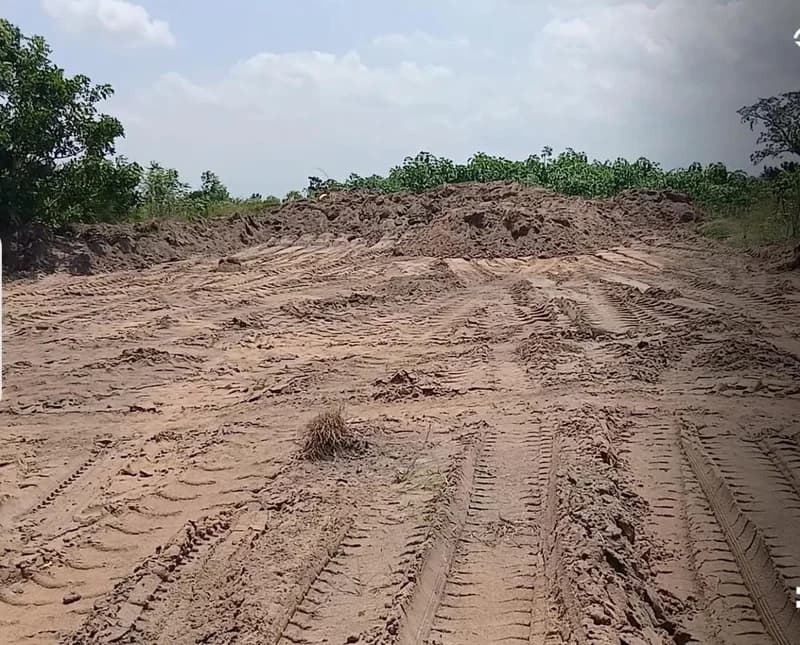
Ghana's agricultural landscape is currently grappling with a dual crisis that threatens the nation's food security: a devastating "witchweed" infestation in the north and unregulated sand-winning operations in the south. In Northern Ghana, the parasitic weed Striga is reportedly causing cereal crop losses of up to 60 per cent, while in Tsumkpo, within the Shai Osudoku District, illegal sand excavations have already decimated over 50 acres of prime farmland. Together, these biological and industrial threats are undermining the livelihoods of thousands of smallholder farmers and jeopardizing the production of essential staples like maize, sorghum, and millet.
Mr. Sumaila Seidu Saaka, the Executive Director of the Forum for Natural Regeneration (FONAR), has sounded a critical alarm regarding the Striga infestation. Speaking during a Control Awareness Campaign funded by the Awaken Trees Association of Austria, Mr. Saaka highlighted that the weed, which targets sorghum, millet, maize, and upland rice, is particularly difficult to eradicate because a single plant can produce 100,000 seeds that can remain dormant in the soil for 20 to 30 years. The campaign, part of the broader Trans-Sahara Project, is educating farmers in the Nabdam District on integrated soil management and agroforestry techniques to combat the weed's spread, which is increasingly linked to climate challenges.
Simultaneously, farmers in Tsumkpo are facing a man-made catastrophe as sand-winning activities destroy fields of maize, groundnuts, pepper, and cassava. Local residents, including 92-year-old farmer Samuel Kateinor and pastor-farmer Godwin Adjaotor, have expressed desperation over the unannounced destruction of their crops. Investigations into these operations revealed a pattern of illegality; while some operators claimed to hold permits, local authorities and the District Chief Executive confirmed that such licenses were either expired or issued for entirely different locations. The deep excavations left behind have not only destroyed current yields but have rendered once-fertile soil unusable for future planting.
These developments have sparked urgent calls for both community-led intervention and stricter government regulation. While FONAR continues to push for sustainable agroforestry and crop rotation to build resilience against biological threats like Striga, farmers in the Shai Osudoku District are demanding the immediate enforcement of land-use laws to halt further environmental degradation. As Ghana strives to maintain its agricultural output under the leadership of President John Mahama, the success of these efforts will depend on balancing industrial demand with the fundamental need to protect the nation's arable land and the livelihoods of those who till it.
Related topic
John Mahama: Latest News & Updates →