••
Government expenditure falls 16.4% below target in first seven months
•2 min read•3 sources
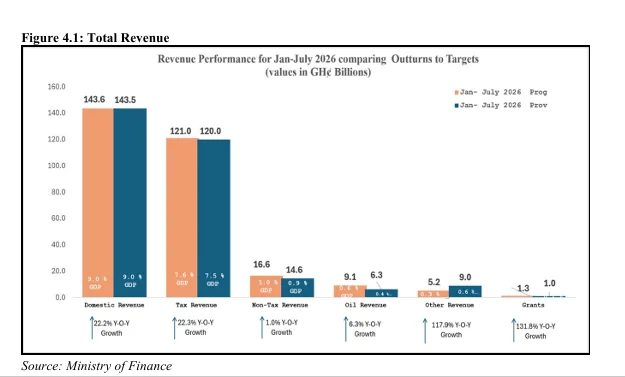
The Ghanaian government reported a total expenditure and net lending of GH₵147.077 billion for the first seven months of 2026, representing a 16.4% shortfall from the programmed target of GH₵175.932 billion. According to the Bank of Ghana, this fiscal performance reflects a focus on expenditure efficiency and shifting macroeconomic conditions. While spending categories like employee compensation and interest payments remained below their specific targets, the period saw a significant 157.9% year-on-year surge in capital expenditure, which reached GH₵24.228 billion despite missing its own targeted projection by 25%.
Revenue performance for the same period remained relatively stable, with total revenue and grants reaching GH₵144.571 billion. This figure represents approximately 9.1% of GDP and missed the government's target of GH₵144.951 billion by a narrow margin of 0.3%. Domestic revenue accounted for GH₵143.522 billion of the total, with tax revenue contributing GH₵120.008 billion. The revenue stream was bolstered by higher corporate income taxes from mining companies and increased mineral royalties driven by rising global gold prices, though these gains were partially offset by lagging performance in the import and petroleum sectors.
Specific expenditure items showed varied trends compared to the previous year. Compensation for employees stood at GH₵50.553 billion, which is 4.5% below the target but marks a 12.6% increase over the same period in 2025. Conversely, interest payments fell to GH₵25.171 billion, a 12.3% decline year-on-year, largely attributed to reduced external interest costs. Spending on goods and services, while below target at GH₵5.482 billion, experienced a sharp 63.4% increase compared to 2025, signaling a shift in operational spending.
Overall, the fiscal data suggests a tightening of government spending alongside a strategic push for infrastructure development through capital expenditure. The Bank of Ghana noted that improved macroeconomic conditions and operational changes in project financing have played a critical role in managing these outturns. As the government continues to navigate its fiscal targets for the remainder of the year, the performance of the mining sector remains a key pillar for domestic revenue, while the narrowing deficit reflects ongoing efforts to align national spending with available resources.
Live rates
Ghana gold price →