Ghana News AI
HomeBriefsAsk GhanaTopicsTools
•
•

Stay Informed

Get AI-curated news briefs from Ghana delivered to your inbox every morning. Free forever, no spam.

Explore

  • Home
  • Briefs
  • About

Categories

  • Politics
  • Business
  • Sports
  • Entertainment
  • Africa

Features

  • Analysis
  • Cedi Rates
  • Dollar to Cedi
  • Ghana Gold Price
  • BoG Policy Rate

Topics

  • Armed Forces Recruitment
  • WAEC Results & News
  • Nana Ama McBrown
  • NDC News
  • All Topics

Legal

  • Privacy Policy
  • Terms of Service
Ghana News AI© 2026. All rights reserved.
Made withfor Ghana
africa

Ghana Development Digest: Tackling Healthcare Strain, Boosting Food Security, and Advancing Industrial Skills

26th March•3 min read•35 sources
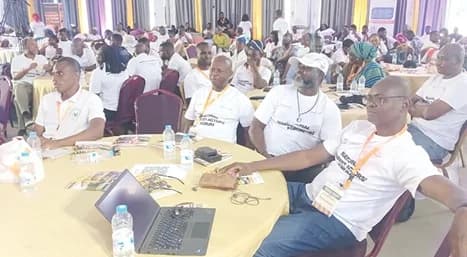
A section of participants in the forum
  1. Home
  2. /Africa
  3. /Ghana Development Digest: Tackling Healthcare Strain, Boosting Food Security, and Advancing Industrial Skills

Ghana is currently navigating a complex developmental landscape marked by significant strides in agriculture and industry, tempered by persistent crises in the healthcare and transportation sectors. While the country celebrates new international partnerships—such as the World Bank’s $21 million grant to revitalize the tomato sector and the Regional Maritime University’s landmark accreditation as Africa’s sole Canadian Welding Bureau test center—public health facilities are grappling with a severe "no bed syndrome." Board Chair Titus Beyuo recently revealed that Korle Bu Teaching Hospital’s functional bed capacity has dwindled to approximately 1,500, while the Komfo Anokye Teaching Hospital (KATH) reports even greater pressure as the primary referral center for 13 regions. These systemic strains are further highlighted by the plight of individuals like 13-year-old Florence Acquah, who is seeking GH¢1.4 billion for life-saving heart surgery, illustrating the gap between institutional capacity and individual medical needs.

To bolster food security and reduce import dependency, the government and various municipal assemblies have launched aggressive agricultural initiatives. Beyond the World Bank’s investment in tomatoes, the Yilo Krobo Municipal Assembly has begun distributing 10,000 local chickens under the "Nkoko Nkitinkitin" program to empower smallholder farmers and youth. Simultaneously, participants at a national market actors’ forum in Tamale have urged the government to prioritize irrigation systems to ensure year-round farming. On the industrial front, the "ShePower" summit and stakeholders in the TVET sector are advocating for enhanced mentorship to bridge the gender gap in engineering and energy, noting that only 39 technician engineers registered in 2025 were male. These efforts are complemented by a high-level visit from 21 German university leaders aimed at doubling academic cooperation and research ties.

Local infrastructure and sanitation are also seeing targeted interventions, though safety concerns remain high. The Sekondi-Takoradi Metropolitan Assembly (STMA) recently procured new tricycles and refuse containers to advance its "smart city" agenda, while AngloGold Ashanti and Asante Gold Mines have commissioned water systems and schools for catchment communities. However, these gains are shadowed by tragedies, including a fatal police truck crash on the notorious Aseseso hill and a microlight aircraft crash in Tema that led to the temporary closure of a daycare center. Additionally, while the 2025 IQAir report suggests slight improvements in air quality, pollution levels remain four times above WHO safe limits, contributing to an estimated 28,000 annual deaths in Ghana. In rural Atwima Mponua, delays in electrification are turning communities into "ghost towns" as youth migrate in search of basic amenities.

Amidst these domestic challenges, Ghana continues to engage on the global stage and refine its social fabric. First Lady Lordina Mahama recently championed digital child safety at a global summit in Washington, D.C., highlighting Ghana’s "Safer Digital Ghana" campaign. Domestically, a groundbreaking report from Blueprint DNA revealed that 42% of paternity tests in the country exclude the alleged father, sparking national discourse on family identity and genetic health diagnostics. As the UK High Commission strengthens ties with the Ministry of Gender to enhance the Livelihood Empowerment Against Poverty (LEAP) program, the convergence of these social, economic, and safety narratives underscores a nation in transition—striving for modernization and industrial growth while working to resolve deep-seated infrastructure and healthcare deficits.

Our Take

From the Team

Coming Soon

Our team will add key insights, trends, and actionable takeaways to help you stay informed faster.

This story touches markets covered on Anansi Intelligence ↗.

Live rates

Ghana gold price →

More from africa

Continue exploring similar stories

Ceuta Migration Crisis and Tigray Security Fears Highlight Regional Humanitarian Challenges as Ghana Mourns CLOGSAG Leader
africa|Yesterday

Ceuta Migration Crisis and Tigray Security Fears Highlight Regional Humanitarian Challenges as Ghana Mourns CLOGSAG Leader

The humanitarian situation at the border of the Spanish enclave of Ceuta remains critical as thousands of Moroccan families continue to search for missing relatives following a massive migration surge in late July 2026. This crisis, which saw over 70,000 individuals attempt the crossing between July 30 and 31, has resulted in a confirmed death toll of at least 91, though some non-governmental organizations estimate the number could be as high as 141. Currently, between 2,000 and 5,000 migrants remain within Ceuta, while families navigate a complex network of hospitals, police stations, and social media platforms for information. Local authorities have established a specialized office for missing persons and are utilizing DNA comparison to help identify those who perished during the crossing. In East Africa, security concerns have forced the cancellation of one of Ethiopia's most significant cultural and religious events. The Ashenda festival, which celebrates women and the Virgin Mary in the northern Tigray region, was called off in Mekelle due to the imminent threat of drone strikes. Typically, the festival attracts thousands of young women in traditional attire for a major gathering at the city’s stadium. However, the risk to public safety prompted organizers to prioritize security over tradition, highlighting the ongoing instability and the persistent threat of aerial warfare in the region. Meanwhile, in West Africa, Ghana is mourning the loss of a pivotal figure in labor relations. Dr. Isaac Bampoe Addo, the Executive Secretary of the Civil and Local Government Staff Association, Ghana (CLOGSAG), passed away on August 21, 2026, following a brief illness. Dr. Addo was instrumental in national negotiations and a fierce advocate for public sector workers. His passing marks a significant loss for the Ghanaian workforce under the administration of President John Mahama, as the nation awaits details regarding his final funeral arrangements. The traditional community in Ghana is also observing a period of mourning for Obaahemaa Nana Aframoa Fri, the Queen Mother of Akyem Tafo. Daasebre Adusei Pease IV and the Aduana abusua have announced that the funeral rites will take place from August 22 to 23, 2026, with the lying-in-state at the Awansa Palace. These concurrent losses in Ghana, combined with the security disruptions in Ethiopia and the migration crisis in Ceuta, underscore a complex week of humanitarian, political, and cultural developments across the African continent.

Karpowership Ghana trains fisherfolk on fire safety, hygiene and financial management
africa|Yesterday

Parah Foundation and Karpowership Ghana Spearhead Strategic Community Development Initiatives Across Ghana

Community development across Ghana has received a significant boost through two major interventions aimed at improving local infrastructure and building human capacity. In the Eastern Region, the Parah Foundation, an arm of Remi Gharbin Ministries, has commissioned a GH"60,000 mechanised water project to serve over 300 families in Adeiso-Domeabra. Simultaneously, in the Western Region, Karpowership Ghana has implemented a comprehensive training program for fishing communities in Sekondi and Essikado, focusing on safety, hygiene, and financial literacy to strengthen the resilience of the local economy. The Adeiso-Domeabra water project addresses a long-standing challenge of water scarcity by providing a sustainable alternative to unreliable local streams. The facility features a borehole, an electric pumping system, a 10,000-litre overhead storage tank, and a network of collection pipelines. During the commissioning, Rev. Remi Gharbin emphasized that the project serves as a symbol of hope and a tangible solution to a critical community need. To ensure the long-term viability of the installation, a Community Water Management Committee has been established to oversee its daily operation and maintenance. While infrastructure remains vital, Karpowership Ghana's initiative highlights the importance of knowledge transfer in rural development. Partnering with the Ghana National Fire Service and the Fisheries Commission, the company organized capacity-building sessions to educate fishermen and fishmongers on fire prevention and hygienic fish handling. These sessions were particularly timely following recent fire incidents at the Sekondi fishing harbour. Additionally, Fidelity Bank was engaged to provide financial education, equipping participants with the necessary tools to manage their earnings effectively and build financial security within the volatile fishing industry. These diverse initiatives underscore the growing role of non-governmental organizations and private entities in addressing essential needs such as clean water and economic empowerment. By combining physical infrastructure like the Parah Foundation's water system with the skill-based training provided by Karpowership, these projects create a more holistic approach to community growth. As these regions continue to develop, the focus on local sustainability through management committees and technical education will be essential in ensuring that the benefits of these investments are preserved for future generations.

Most Rev. Prof. Johnson Kwabena Asamoah-Gyadu, Presiding Bishop, the Methodist Church Ghana, addressing the conference
africa|Yesterday

ACEP and Methodist Church Lead Calls for Sustainable Resource Governance and Environmental Stewardship Across Africa

Africa stands at a critical juncture where the management of its vast natural resources intersects with the urgent need for environmental protection and disaster mitigation. From high-level policy discussions at the AFREIKH Summer School to the moral calls for stewardship from the Methodist Church of Ghana, the continent is witnessing a concerted effort to shift from mere resource extraction to sustainable, value-added development. These efforts are underscored by the sobering lessons of history, such as the 1986 Lake Nyos disaster in Cameroon, which serves as a reminder of the catastrophic consequences of environmental neglect and the necessity of scientific monitoring. The Africa Centre for Energy Policy (ACEP), in collaboration with the Natural Resource Governance Institute (NRGI) and GIZ, recently launched the 2026 Summer School on Managing Africa’s Extractives. ACEP Executive Director Benjamin Boakye emphasized that Africa must move beyond its history of raw material exports to leverage resource wealth for job creation and industrial growth. NRGI’s Africa Director, Nafi Quarshie, and Magdalena Wst from the Swiss Embassy echoed this sentiment, urging the development of institutional capabilities and learning from past failures to ensure that the global energy transition benefits African economies rather than depleting them without return. Parallel to these policy initiatives, the Methodist Church Ghana is framing environmental protection as a fundamental Christian duty. Most Rev. Prof. Johnson Kwabena Asamoah-Gyadu, the Presiding Bishop, called for stronger action against environmental destruction and illegal small-scale mining during the church’s 52nd Conference in Tema. Attributing recent devastating floods to poor stewardship, the Bishop urged the church to engage deeply with issues affecting community wellbeing. This advocacy emphasizes that the future of the youth depends not only on spiritual guidance but also on the preservation of arable lands and clean water bodies, which are currently threatened by unregulated extractive activities. The importance of proactive environmental management is perhaps most poignantly illustrated by the ongoing safety efforts at Lake Nyos in Cameroon. Decades after an "invisible avalanche" of carbon dioxide killed over 1,700 people in 1986, the lake has become a global case study for disaster prevention through de-gassing techniques. Together, these developments highlight a multi-faceted approach to Africa’s future: one that combines scientific vigilance, rigorous policy reform in the extractive sector, and moral leadership from the faith community. The path forward requires transforming resource wealth into lasting economic benefits while safeguarding the natural environment for future generations.

Fire on The Runway turns Ghana village into fashion stage
africa|Yesterday

Minister Dzifa Gomashie and Chief of Staff Alex Segbefia Headline Ghana’s 2026 Cultural Heritage and Creative Economy Push

Ghana is positioning itself as the continent's cultural hub as the government intensifies efforts to leverage heritage for economic development. The Minister for Tourism, Culture and Creative Arts, Abla Dzifa Gomashie, has announced that Ghana will host the inaugural African Festival of Arts, Culture and Creatives (AFESTACC) from December 9 to 12, 2026. This landmark event, organized in partnership with the African Union Development Agency (AUDA-NEPAD), is expected to benefit over 20,000 Ghanaians in the arts and tourism sectors. Minister Gomashie emphasized that AFESTACC will showcase Africa's diverse creative output and foster cultural diplomacy, serving as a significant driver for economic growth, particularly for youth and women. Complementing this international outlook, local heritage projects are reaching critical milestones across the country. In the Volta Region, the Agotime Kente Festival 2026 recently concluded with a grand durbar in Kpetoe under the theme "Agotime Kente – Honouring Our Heritage, Safeguarding Our Future." Chief of Staff Alex Segbefia, representing the presidency, highlighted the cultural significance of the kente cloth and commended the ongoing Kente Village and Centre of Excellence project. He called for increased support from development partners to provide the necessary infrastructure for local artisans. Meanwhile, in the Bono East Region, Minister Gomashie pledged that the TanoBoase Sacred Grove, a unique eco-tourism and spiritual site, will be commissioned and opened to the public before the end of 2026. Historical preservation and reconciliation are also taking center stage through new monuments and academic dialogues. In Atebubu, the Nananom of the Piabire Palace recently unveiled a statue of Osahene Ampon Yirenkyi, the legendary warrior-king and founder of Atebubuman. Ohempon Dr. Yeboah Asiamah noted that the monument serves as a call for contemporary citizens to embody the values of courage and service. This spirit of honoring the past was mirrored at the Accra Convening, organized by the Deyaanga Museum Initiative and the University of Ghana. Scholars and traditional leaders at the event discussed shifting the narrative of slavery from mere remembrance to active healing, proposing a Museum of Healing and Reconciliation to prioritize the stories of resistance within inland communities. Innovation in the creative sector is further evidenced by projects like the "Village Series" produced by Fire on The Runway International. This initiative, led by Taneka “Neka” Sawadogo, transforms traditional Ghanaian villages into fashion stages, blending high fashion with everyday rural life. By showcasing African craftsmanship in its authentic cultural context, the project aligns with the broader national goal of treating the creative arts as a development driver rather than mere decoration. Collectively, these initiatives—ranging from local fashion runways to major international festivals—underscore a unified national strategy to safeguard Ghana's rich heritage while building a robust, modern creative economy.

All
africa
business
education
entertainment
health
news
politics
sports
technology