••
Ghana Navigates Diplomatic Tensions with South Africa While Expanding Strategic Partnerships with Vietnam, Russia, and Canada
•3 min read•13 sources
Ghana is currently managing a complex diplomatic landscape, marked by a deepening standoff with South Africa and the simultaneous expansion of strategic ties with Vietnam, Russia, and Canada. At the forefront of national concern is a diplomatic impasse following the death of Bashiru Isak, a Ghanaian national, in Cape Town. While the Ghanaian government has officially condemned the incident as a result of xenophobic violence, South African authorities have rejected this narrative, asserting the death was a criminal act unrelated to anti-migrant protests. In response to the escalating friction, Samuel Abdulai Jinapor, the Ranking Member of Parliament's Foreign Affairs Committee, has urged direct presidential intervention between President John Dramani Mahama and President Cyril Ramaphosa to restore trust and ensure the safety of Ghanaians living in South Africa.
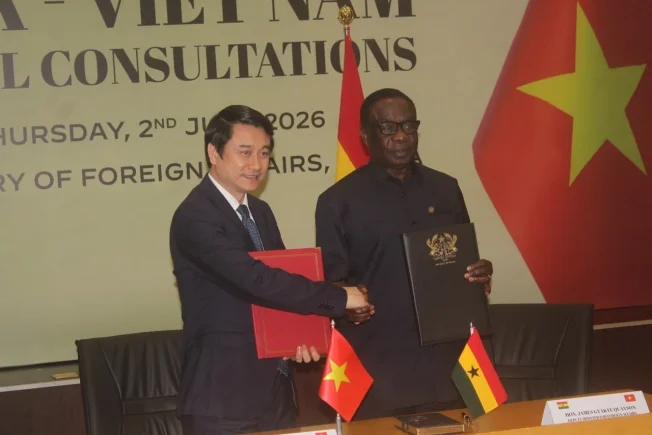
In contrast to these regional tensions, Ghana has successfully deepened its bilateral relations with Vietnam through a landmark visa waiver agreement for diplomatic, service, and official passport holders. Signed during the inaugural Ghana-Vietnam Political Consultations in Accra, the agreement aims to facilitate official exchanges and bolster a trade relationship that exceeded $1 billion in 2025. Deputy Foreign Minister James Gyakye-Quayson highlighted the deal as a foundation for future cooperation in agriculture, education, and potentially broader visa exemptions for ordinary citizens. This pivot toward Asian partnerships is mirrored by new environmental initiatives with North America, as Energy Minister John Abdulai Jinapor pledged to implement a waste-to-energy Memorandum of Understanding with a Canadian firm to address Ghana’s solid waste management challenges.
On the political front, Ghana’s governing National Democratic Congress (NDC) has formalized a cooperation agreement with Russia’s ruling United Russia party. Finalized in Saint Petersburg by NDC Chairman Johnson Asiedu Nketia and Andrei Klimov, the agreement seeks to enhance inter-party collaboration and political engagement across West Africa ahead of the third Russia-Africa Summit. During the engagement, Asiedu Nketia emphasized that African liberation from neocolonialism requires actionable development steps rather than mere rhetoric. This diplomatic momentum extends to North Africa, where Ghana’s newly accredited Ambassador to Egypt, Prof. J. S. Korantwi-Barimah, has pledged to prioritize economic diplomacy, specifically seeking Egyptian investment in renewable energy and tourism.
Adding to the flurry of diplomatic activity, Sierra Leone’s President and ECOWAS Chairman, Julius Maada Bio, conducted a state visit to Accra to express solidarity following devastating floods in the Greater Accra Region. The visit, which focused on regional cooperation for disaster preparedness, saw President Bio commiserate with families affected by the destruction. In response to the crisis, President Mahama has mobilized the Ghana Armed Forces and a Joint Task Force to clear waterways and restore normalcy. These diverse engagements—from crisis management in South Africa to strategic economic pacts in Vietnam and Russia—underscore Ghana’s multifaceted approach to maintaining its influence and stability on the global stage.
