••
GIPA identifies 48 investment opportunities in Upper West Region
•2 min read•2 sources
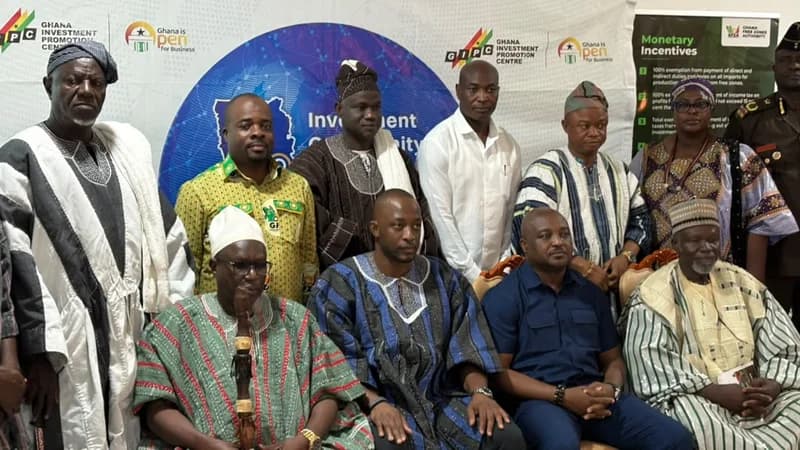
The Ghana Investment Promotion Authority (GIPA) has identified 48 specific investment opportunities in the Upper West Region to stimulate economic growth and address the investment imbalance between northern and southern Ghana. Announced during the Upper West Regional Investment Forum, these projects focus on the region's competitive advantages in agriculture, livestock, renewable energy, and tourism. The initiative aims to transform the region's vast raw resources into commercial enterprises by attracting both domestic and foreign direct investment.
To attract credible investors, the government is offering significant fiscal incentives, including a 1% corporate tax rate for the first five years for agro-processing businesses, which will eventually increase to 5%. Other benefits include corporate tax holidays and import duty exemptions through the Ghana Free Zones Authority for export-oriented businesses. Yussif Mustapha from GIPA highlighted ready-to-invest projects worth millions of cedis, including a proposed Industrial Park and a dedicated renewable energy facility, leveraging the region's solar potential and arable land.
Regional Minister Charles Lwanga Puozuing urged local stakeholders to move beyond merely acknowledging the region's potential and instead focus on developing actionable plans supported by reliable data and infrastructure. Lawra Member of Parliament, Bede Anwataazumo Ziedeng, echoed these sentiments, calling for the active marketing of specific sectors like shea and cereals to global markets. The forum emphasized that credible data and well-structured projects are essential for convincing international investors of the viability of local opportunities.
The identification of these 48 projects is part of a broader national strategy launched in 2025 to showcase Ghana’s diverse investment landscape. GIPA intends to present these regional opportunities on a larger stage during a major Ghana Investment Forum scheduled for November 2026 in Accra. By involving local youth through educational initiatives and infrastructure support, officials hope to ensure that the anticipated economic transformation directly improves the livelihoods of communities within the Upper West Region.
