Ghana News AI
HomeBriefsAsk GhanaTopicsTools
•
•

Stay Informed

Get AI-curated news briefs from Ghana delivered to your inbox every morning. Free forever, no spam.

Explore

  • Home
  • Briefs
  • About

Categories

  • Politics
  • Business
  • Sports
  • Entertainment
  • Africa

Features

  • Analysis
  • Cedi Rates
  • Dollar to Cedi
  • Ghana Gold Price
  • BoG Policy Rate

Topics

  • Armed Forces Recruitment
  • WAEC Results & News
  • Nana Ama McBrown
  • NDC News
  • All Topics

Legal

  • Privacy Policy
  • Terms of Service
Ghana News AI© 2026. All rights reserved.
Made withfor Ghana
politics

Global Political Volatility: Crackdowns on Dissent and Transparency Scandals Shape International Landscape

16th February•3 min read•5 sources
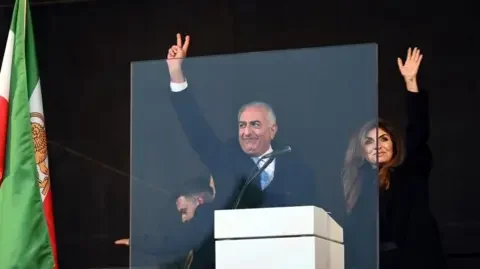
EPA Reza and Pahlavi and his wife wave to crowds on stage. They appear to be standing behind a glass screen. A red, green and white flag can be seen on the left.
  1. Home
  2. /Politics
  3. /Global Political Volatility: Crackdowns on Dissent and Transparency Scandals Shape International Landscape

The international political landscape is facing a period of intense volatility as reports emerge of state-sponsored assassinations, mass global protests, and systemic crackdowns on opposition leaders. UK and European officials have recently concluded that Russian opposition figure Alexei Navalny, who collapsed in a Siberian penal colony after three years of imprisonment, was murdered using epibatidine—a rare and potent toxin derived from South American poison dart frogs. While the Kremlin has dismissed these findings as propaganda, Western officials assert that only the Russian state possessed the means to deploy such a sophisticated biological weapon, further straining relations between Moscow and the international community.

Simultaneously, the struggle for democratic representation is intensifying across the Middle East and North Africa. In Tunisia, police recently detained Olfa Hamdi, leader of the Third Republic party and a vocal critic of President Kais Saied, upon her arrival at the airport. This arrest is seen by human rights advocates as a continuation of a broader crackdown on dissent that began in 2021. Meanwhile, hundreds of thousands of demonstrators took to the streets in Munich, Los Angeles, and Toronto following a call for a "global day of action" by Reza Pahlavi. These protests against the Iranian government highlight the growing toll of civil unrest, with activists reporting over 6,800 fatalities linked to the ongoing struggle for economic and political freedom in Iran.

In the United States, government agencies are facing sharp criticism over transparency and the rule of law. The Department of Justice (DoJ) is under fire from lawmakers, including Representative Thomas Massie, who argue that the recent release of the Epstein files was inadequate and lacked critical internal memos. Although the files mentioned high-profile figures like Donald Trump and Bill Gates without implying wrongdoing, critics claim the DoJ is obfuscating details to protect public figures. This controversy coincides with reports of a secret operation by the Trump administration on January 14, where nine individuals were deported to Cameroon despite holding U.S. court protections. The deportees were reportedly kept in the dark about their destination until their arrival, raising significant legal and ethical concerns regarding immigration enforcement.

These disparate events underscore a troubling global trend of eroding human rights and the increasing use of state power to silence political opposition. Whether through the alleged use of rare toxins, the detention of party leaders, or the lack of transparency in judicial proceedings, the demand for accountability is reaching a fever pitch. As international bodies and global citizens continue to pressure these governments, the coming months will be pivotal in determining whether democratic norms can be upheld or if the shift toward authoritarian tactics will continue to escalate on the world stage.

Our Take

From the Team

Coming Soon

Our team will add key insights, trends, and actionable takeaways to help you stay informed faster.

This story touches markets covered on Anansi Intelligence ↗.

More from politics

Continue exploring similar stories

Alfred Sakyi elected Lay President of Methodist Church Ghana to take over from  Attah-Antwi
politics|Yesterday

Bawumia Praises Adwoa Safo Amid NPP Dynamics and Calls for Government Accountability

Dr. Mahamudu Bawumia, the flagbearer of the New Patriotic Party (NPP), has publicly lauded Sarah Adwoa Safo, the daughter of the late Apostle Kwadwo Safo Kantanka, for her resilience in managing her father's funeral amid intense family disputes. This endorsement comes at a pivotal time for the Dome-Kwabenya constituency, where current NPP parliamentary candidate Mike Oquaye Jnr has addressed rumors of Safo’s potential return to the race for the 2028 elections. While flyers suggesting her candidacy have circulated online, Oquaye Jnr emphasized the need for party consensus and stated he is awaiting direct confirmation from Safo herself. Safo has also shared that her father foresaw the legal and traditional battles currently splitting their family and church, describing the "Woman King" title given by Bawumia as a recognition of her strength during these trials. In the broader political and social sphere, the relationship between governance and the media has come under scrutiny. During the Ghana Journalists Association’s 77th anniversary, Minister of State for Government Communications Felix Kwakye Ofosu and veteran journalist Kwesi Pratt Jnr highlighted the essential role of ethical journalism in Ghana’s democracy. Pratt urged media practitioners to resist the digital-age pressure for sensationalism, arguing that the profession’s integrity depends on serving public needs rather than competing for social media attention. This call for professional standards is mirrored in the religious sector, where the Presiding Bishop of The Methodist Church Ghana, Most Rev. Prof. Johnson Kwabena Asamoah-Gyadu, has challenged the government to deliver on its campaign promises, stating that voters expect tangible improvements rather than excuses based on the failures of previous administrations. Leadership transitions have also been observed across religious and military institutions. Rev. Stephen Yenusom Wengam was overwhelmingly re-elected as the General Superintendent of the Assemblies of God, Ghana, securing nearly 90% of the vote. Similarly, the Methodist Church Ghana endorsed Alfred Sakyi as its new Lay President. In the security sector, Commodore Stephen Billings Nyam has officially taken command of the Western Naval Command, succeeding Commodore Samuel Ayelazono. Meanwhile, local traditional governance faced upheaval as the Wenchi Traditional Council indefinitely suspended Twafohene Nana Akora Tua Adutwum Kyeremeh Siasaa Kufour IV due to alleged breaches regarding land administration, signaling a crackdown on authority violations within traditional structures. On the international front, several significant events are shaping the global political landscape. Tanzanian opposition leader Tundu Lissu is set to face a treason trial for allegedly inciting election boycotts, while in North America, Canadian Prime Minister Mark Carney faces mounting pressure to secure favorable terms in a trade dispute with the United States. Additionally, the FBI is seeking to keep records secret regarding a drug-trafficking probe involving President Bola Tinubu. As these domestic and international narratives unfold, Regal Prophet Bismark Nana Boateng has issued a spiritual warning to Ghanaian parliamentarians, advising them to seek guidance to avert potential attacks and subsequent by-elections. These converging stories highlight a period of intense scrutiny, transition, and accountability for leaders across Ghana and beyond.

Energy Minister Dr. John Jinapor Unveils Grid Stability Roadmap and New PURC Headquarters Amid Climate Diplomacy Push
politics|Yesterday

Energy Minister Dr. John Jinapor Unveils Grid Stability Roadmap and New PURC Headquarters Amid Climate Diplomacy Push

Ghana’s Minister for Energy and Green Transition, Dr. John Abdulai Jinapor, has announced a definitive timeline for the restoration of the original power transmission arrangement at the Akosombo control station, targeting completion by next month. This move is intended to resolve recent nationwide system disturbances caused by a fragile temporary setup implemented after a previous fire incident. The Minister explained that while a temporary solution was necessary to avoid a total six-month shutdown of the Akosombo facility, the current arrangement has proven susceptible to transmission line trips. With four out of six critical components now restored, the Ministry expects the finalized repairs to significantly enhance the resilience of the national grid. Parallel to these infrastructure repairs, Dr. Jinapor inaugurated a new head office for the Public Utilities Regulatory Commission (PURC) in Accra, marking a significant milestone in the commission’s 25-year evolution. The modern facility is equipped with specialized monitoring rooms and training areas designed to strengthen regulatory oversight across the electricity, water, and natural gas sectors. During the ceremony, the Minister emphasized that the PURC must look beyond mere tariff reviews to rigorously evaluate the commercial performance of utility providers, specifically the Electricity Company of Ghana (ECG), to ensure financial sustainability and improved service delivery for consumers. However, the government’s efforts face scrutiny from civil society. Kofi Bentil, Vice President of IMANI Africa, has asserted that the persistent power outages are a solvable technical challenge that requires better leadership prioritization rather than just engineering fixes. Speaking on the impact of the blackouts, Bentil highlighted the life-threatening risks posed to essential services, citing recent outages at the Korle Bu Teaching Hospital. He urged the administration to realign its spending priorities to ensure that reliable electricity—a cornerstone of both economic activity and public health—is maintained through consistent resource allocation to the nation’s engineers. On the international stage, Ghana is simultaneously bolstering its strategic position ahead of the COP31 climate summit in Türkiye. The Environmental Protection Authority (EPA) has launched the National Roster of Experts on Climate Negotiations to institutionalize the country's negotiation capacity and secure greater access to international climate finance. This initiative aims to address existing challenges in developing bankable project proposals that meet stringent international standards. By unifying national positions and mobilizing diverse stakeholders, Ghana intends to advocate more effectively for developed nations to honor their funding commitments, ensuring that the country’s green transition remains financially viable and inclusive of its most vulnerable sectors.

Foreign Affairs Ministry warns Tijjaniya pilgrims against road travel, advises air travel to Senegal
politics|Yesterday

Ablakwa and Mubarak Lead Major Policy Shifts in Foreign Relations, National Security, and Humanitarian Support

In a series of decisive moves by the Mahama administration, the Ministries of Foreign Affairs and the Interior have rolled out new measures to safeguard Ghanaian lives at home and abroad. Foreign Affairs Minister Samuel Okudzeto Ablakwa confirmed a critical agreement with the Russian government to halt the illegal recruitment of Ghanaian youth into the Russia-Ukraine conflict, following reports of significant casualties among citizens. Simultaneously, Interior Minister Muntaka Mubarak has issued a stern directive to the Ghana Police Service to dismantle all unauthorized vigilantism and self-defence groups, emphasizing a zero-tolerance approach to illegal security structures that threaten national stability. The situation regarding the Russia-Ukraine war has become a matter of urgent concern, with Minister Ablakwa revealing that up to 62 Ghanaians have died and 15 remain missing due to illicit recruitment efforts. Beyond addressing these tragedies, the Minister’s bilateral engagements with Russia have yielded positive diplomatic outcomes, including a pledge from Moscow to double scholarships for Ghanaian students and a commitment to cooperate on nuclear energy development and other global issues. These developments signify a push for stronger mutual benefits while prioritizing the protection of citizens from foreign military exploitation. On the domestic front, Interior Minister Muntaka Mubarak has prioritized national peace by ordering a crackdown on vigilantism, particularly those groups formed by political parties, traditional authorities, and private individuals. Invoking the Vigilantism and Related Offences Act, 2019 (Act 999), Mubarak warned that these groups pose a direct threat to the state’s authority and public safety. The Minister also raised alarms over the unauthorized sharing of security training materials on social media, directing police commanders to enforce stricter controls to preserve the professional integrity and tactical secrecy of Ghana's security forces. To support humanitarian and regional stability, the Ministry of Foreign Affairs has also provided essential logistical aid to the Ghana Refugee Board. Minister Ablakwa oversaw the donation of decommissioned passport-processing equipment—including printers, cameras, and lamination machines valued at GH"539,574—to bolster the Board’s operations following funding cuts from the UNHCR. This support coincides with a new travel advisory issued on August 21, 2026, urging Tijjaniya Muslim pilgrims to fly to Senegal instead of using road corridors, citing heightened security risks in West African overland routes. These combined efforts reflect the government’s multifaceted strategy to navigate regional instability while maintaining its historical commitment to service and security.

2027 Budget Statement must pivot around job creation, greater transparency - CSOs to government
politics|Yesterday

CSOs Demand Transparency and Job Creation as Finance Minister Dr. Cassiel Ato Forson Prepares 2027 Budget Statement

As the November presentation of the 2027 Budget Statement and Economic Policy approaches, civil society organizations (CSOs) are intensifying calls for the government to prioritize job creation, revenue mobilization, and fiscal transparency. Led by the Economic Governance Platform and the Tax Justice Coalition, these groups have urged Finance Minister Dr. Cassiel Ato Forson to leverage current macroeconomic stability to enhance public welfare. Key recommendations presented to the Ministry of Finance include closing tax loopholes, managing mineral revenues through a unified framework, and incentivizing contributions from the artisanal mining sector to curb illicit financial flows. Parallel to these fiscal demands, the Ghana Anti-Corruption Coalition (GACC) has raised alarms over a significant spike in financial irregularities within public institutions, which surged to GH¢20.49 billion according to the 2025 State of Corruption Report. To address these systemic vulnerabilities, CSOs are advocating for the immediate passage of the Conduct of Public Officers (CoPO) Bill. This legislation is seen as vital for strengthening asset declaration compliance and enhancing whistleblower protections. This push for accountability is echoed by the Public Interest and Accountability Committee (PIAC) as it celebrates its 15th anniversary. Government officials and stakeholders, including Prof. Francis Dodoo and Isaac Adongo, Chairman of the Parliamentary Select Committee on Finance, are calling for PIAC’s mandate to be expanded beyond petroleum to include critical minerals and the global energy transition. Proponents argue that broadening this oversight and ensuring PIAC's financial independence are essential for translating natural resource wealth into sustainable developmental outcomes like infrastructure and permanent jobs. Regarding the implementation of flagship policies, Presidential Advisor on the 24-Hour Economy Augustus Goosie Tanoh has provided critical clarifications on the jurisdiction of the 24-Hour Economy Authority. Mr. Tanoh noted that while 262 Metropolitan, Municipal, and District Assemblies (MMDAs) are currently operating 24-hour markets, these initiatives fall under the Ministry of Local Government and are funded via the District Assemblies Common Fund rather than the Authority itself. Despite this distinction, the 24-Hour Economy Authority has faced legal challenges over the market programs. Mr. Tanoh emphasized that the Authority's focus remains on enhancing supply-chain efficiency and infrastructure, such as cold storage, to support the broader national economic agenda. Governance reforms also remain a point of contention, particularly concerning local government autonomy and the protection of digital rights. The Institute for Democratic Governance (IDEG) has formally expressed opposition to the government's proposal for the President to nominate candidates for District Chief Executives (DCEs), arguing that direct elections are necessary to ensure true democratic accountability. Meanwhile, the Data Protection Commission is ramping up its regulatory capacity, designating 2026 as the "Year of Enforcement." With the acquisition of new specialized vehicles, Deputy Minister of Communications Mohammed Adams Sukparu stated that the Commission will expand its regional presence to ensure stricter compliance with the Data Protection Act. Together, these developments highlight a complex political landscape where the Mahama administration must balance ambitious economic programs with increasing demands for institutional integrity and democratic decentralization.

All
africa
business
education
entertainment
health
news
politics
sports
technology