••
President Hakainde Hichilema Secures Second Term in Zambia Amid Economic Hopes and Opposition Disputes
•3 min read•7 sources
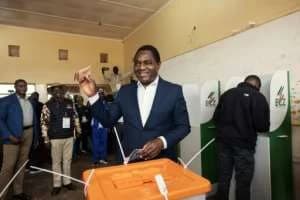
Zambia’s President Hakainde Hichilema has been re-elected for a second five-year term, securing a decisive victory with approximately 60.49% of the total vote. According to the Electoral Commission of Zambia, Hichilema, representing the United Party for National Development (UPND), garnered 2,965,326 votes. His primary challenger, Brian Mundubile of the National Reconciliation Party for Unity and Prosperity, received 1,856,217 votes, accounting for approximately 37.87% to 38% of the ballots. The election saw a voter turnout of 57.23% among the country’s 8.7 million registered voters, granting Hichilema a renewed mandate that extends his leadership until 2031.
In his victory address, President Hichilema expressed deep gratitude to the Zambian people, characterizing the election results as a testament to the nation’s commitment to democratic values. Often referred to by his initials "HH" and known for his humble beginnings as a "cattle boy" before becoming a successful businessman, Hichilema campaigned heavily on his administration's record of economic recovery. Since first taking office in 2021, he has been credited with restructuring Zambia’s significant national debt, improving relations with international lenders, and implementing social policies such as free primary and secondary education. Looking forward, the President has set ambitious targets to significantly boost copper production as a cornerstone of his second-term economic strategy.
Despite the clear margin of victory, the electoral process has faced criticism and formal challenges from the opposition. Brian Mundubile has contested the results, alleging discrepancies in the count and claiming military interference influenced the outcome. Furthermore, some international observers raised concerns regarding media bias and instances of intimidation against polling staff during the campaign period. Allegations of foreign involvement in the electoral process, specifically directed toward Tanzania, were also noted, though the Tanzanian government has categorically denied any such interference. Critics of the administration continue to highlight concerns over political dissent and the persistent poverty affecting over 70% of the population who live on less than $3 a day.
As President Hichilema prepares for his second term, the focus remains on whether his corporate management style can bridge the gap between macroeconomic restructuring and the daily struggles of ordinary Zambians. While his supporters celebrate the stability and growth prospects he brings to the region, the administration faces the dual challenge of addressing income inequality and navigating the friction with opposition forces. This victory reinforces Zambia's position as a key democratic player in the Southern African Development Community (SADC), even as the region grapples with broader challenges such as migration and political stability.