••
Ho Technical University launches Euro 54,000 project to map baobab trees
•2 min read•1 source
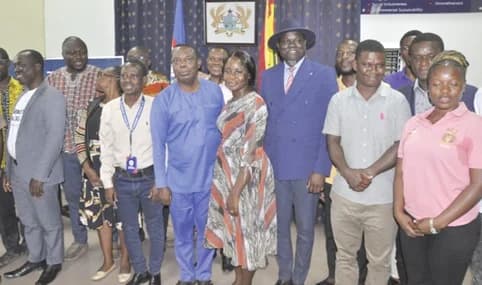
Ho Technical University (HTU) has officially launched the BAOMAP Project, a Euro 54,000 research initiative focused on conducting a comprehensive census of baobab trees across Ghana. Funded by the German government, the project utilizes advanced remote sensing technology combined with ground-level verification to create a detailed map of the species' population. The initiative marks a significant step toward understanding the ecological distribution and economic potential of one of the region's most iconic and resilient tree species. The project is a tripartite collaboration involving HTU, the Council for Scientific and Industrial Research (CSIR), and Rhine-Waal University of Applied Sciences in Germany. By integrating satellite imagery with physical site inspections, researchers aim to develop an accurate database of Ghana's baobab resources. Vice Chancellor Professor Ben Q. Honyenuga, speaking at the launch, highlighted that the project seeks to build a robust knowledge base regarding the genetic resources of the baobab, which remains under-documented despite its widespread presence in the savannah regions. Beyond academic research, the BAOMAP Project is designed to support the sustainable commercial utilization of the baobab tree. Often referred to as the "tree of life," the baobab offers significant value through its fruit, bark, and leaves, which are used in food, medicine, and cosmetics. Professor Honyenuga emphasized that the project's findings would be instrumental in national development, providing the necessary data to balance industrial exploitation with environmental protection, ensuring that the species remains a viable resource for future generations. The mapping exercise is expected to be completed by the end of 2025. Once finished, the data will serve as a foundation for long-term conservation strategies and inform policy decisions regarding biodiversity management. By establishing a clear picture of the current baobab population, the project partners hope to foster an environment where local communities can benefit from the tree's economic potential while maintaining the ecological integrity of Ghana’s natural landscapes.
Live rates
Euro to cedi rate →