••
ISSER urges government to widen tax net to fund development
•2 min read•3 sources
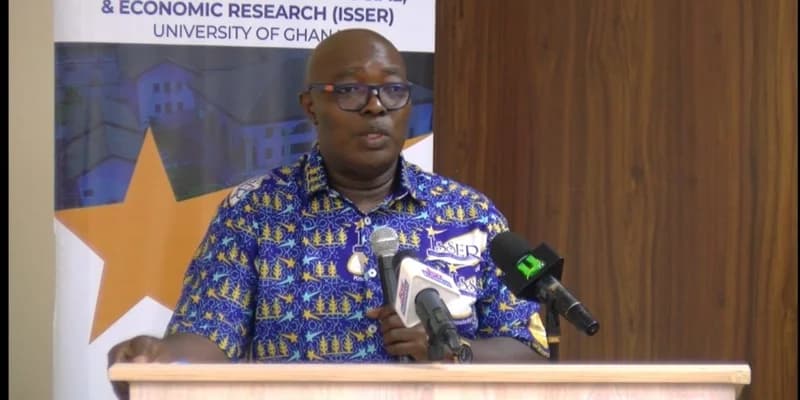
The Institute of Statistical, Social and Economic Research (ISSER) has warned that Ghana’s current tax revenue levels are insufficient to support the country's development ambitions. According to the State of the Ghanaian Economy Report 2025, the nation’s tax revenue stands at approximately 30% of Gross Domestic Product (GDP), a figure that remains below the sub-Saharan African average. The institute cautioned that without a significant boost in domestic revenue mobilisation, the government may struggle to finance critical infrastructure and public services without resorting to further spending cuts.
Speaking on the report's findings, ISSER Director Professor Robert Darko Osei emphasized that the solution lies in broadening the tax base rather than increasing the burden on those already paying taxes. He noted that the current system relies too heavily on a narrow group of taxpayers, which limits the government's fiscal capacity. By including more individuals and businesses into the tax net, particularly those currently outside the formal system, the state could generate the necessary funds to sustain economic recovery and support long-term economic diversification.
The report further highlights that the projected tax-to-GDP ratio could face downward pressure due to economic re-basing, making it even more urgent to fortify domestic revenue streams. ISSER warned that relying solely on expenditure controls will not address the long-term financing gap. Instead, a strategic rethink of spending priorities combined with more effective revenue collection is required to maintain the momentum of Ghana's growth. The institute suggested that strengthening these revenue streams is essential to ensuring that the state can meet its obligations without overextending its current tax-paying population.
