••
Energy Minister John Jinapor Outlines Major Reforms: $1.47 Billion Debt Cleared and $3.5 Billion Upstream Investment Pipeline Secured
•3 min read•4 sources
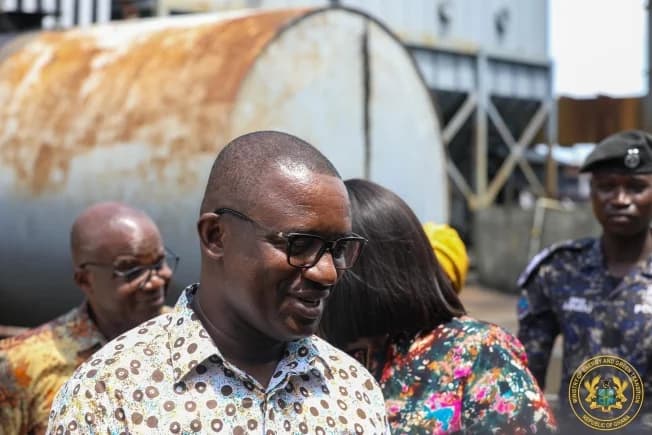
The Minister of Energy and Green Transition, Dr. John Abdulai Jinapor, has announced a significant breakthrough in the country’s energy sector, confirming the clearance of approximately $1.47 billion in legacy debts. This financial milestone is part of a broader suite of reforms aimed at stabilizing the sector and ensuring long-term energy security under the current administration. Speaking at recent industry forums, Dr. Jinapor detailed how the government is navigating both immediate financial challenges and the long-term need for a diversified, sustainable energy mix to support Ghana’s growing industrial demand.
Beyond debt clearance, the government has realized substantial cost savings through strategic operational shifts. Dr. Jinapor revealed that transitioning power generation from expensive liquid fuels to natural gas has saved the nation roughly $500 million. Additionally, the Ministry successfully renegotiated contracts with Independent Power Producers (IPPs), yielding a further $250 million in savings. These measures are designed to reduce the high cost of thermal generation, which has become increasingly burdensome as hydroelectric resources from the Akosombo Dam—originally designed for a 300-megawatt peak—struggle to meet a national demand that has now surged to 4,500 megawatts.
While the midstream sector sees financial recovery, the upstream petroleum sector faces the dual challenge of declining production and reserve depletion. To counter this, the government is moving to revitalize exploration and production through collaboration with the Ghana National Petroleum Corporation (GNPC) and the Petroleum Commission. Dr. Jinapor highlighted the importance of projects such as Pecan and Eban-Akoma, alongside the need to develop marginal resources and explore frontier areas. These efforts are being bolstered by the resolution of long-standing disputes with key oil and gas operators. Emeafa Hardcastle, CEO of the Petroleum Commission, noted that these settlements have paved the way for a $3.5 billion investment pipeline, creating a more predictable and attractive environment for global capital.
Looking toward the future, the government is prioritizing nuclear energy as a cornerstone of Ghana’s low-carbon transition. At the third US-Africa Nuclear Energy Summit in Accra, Dr. Jinapor emphasized the goal of integrating 1,000 megawatts of nuclear power into the national grid by 2030. This initiative aims to provide the affordable and reliable electricity necessary for large-scale industrialization. To ensure success, the Ministry is focusing on developing a skilled nuclear workforce and adhering to international safety standards, supported by cooperation and training from the United States. This multifaceted approach—addressing legacy debt, boosting upstream investment, and embracing nuclear technology—is intended to secure Ghana’s energy independence for decades to come.