••
Jonathan the 194-year-old tortoise offers genetic clues to long life
•2 min read•1 source
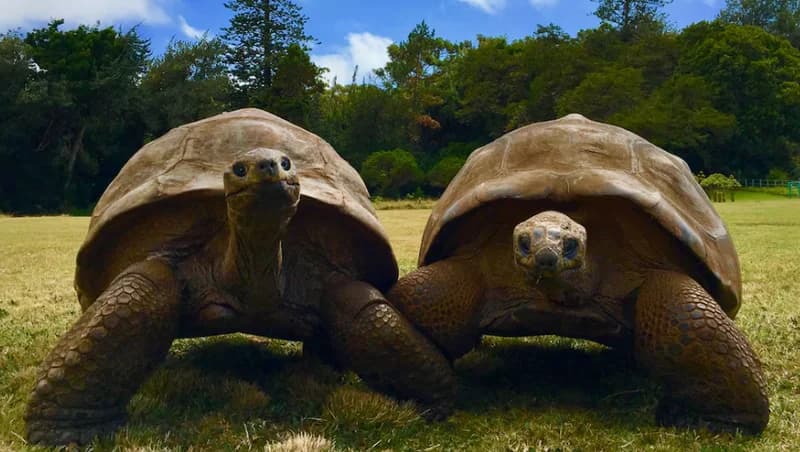
Scientists are studying the genome of Jonathan, a 194-year-old Aldabra giant tortoise, to uncover the biological secrets behind his remarkable longevity. As the world’s oldest-known living terrestrial animal, Jonathan resides on the island of St Helena, where he has lived since his arrival in 1882. This research seeks to identify how his unique genetic makeup has allowed him to survive nearly two centuries, potentially offering breakthrough insights into human aging and cellular resilience.
The genetic analysis has revealed specific variations that set Jonathan apart from shorter-lived species. Researchers identified unique traits related to DNA repair mechanisms, mitochondrial function, and the protection of telomeres—the protective caps at the ends of chromosomes that typically shorten as organisms age. These findings suggest that Jonathan’s cellular systems are exceptionally efficient at resisting the cumulative damage that usually leads to biological decline in most animals.
Despite his advanced age, Jonathan remains a symbol of endurance. While he is now largely blind due to cataracts and has lost his sense of smell, his health otherwise remains stable, and he maintains a robust appetite. His documented history on St Helena provides a rare, verified timeline for scientists, making him a unique subject for longitudinal aging studies. He has lived through significant historical shifts, outlasting numerous generations of humans while remaining a beloved figure on the island.
The implications of this research extend beyond veterinary science, as understanding how Jonathan’s cells manage stress could eventually inform new treatments for age-related diseases in humans. By mapping the genetic architecture of the world's longest-lived land animal, scientists hope to identify pathways that could be stimulated in human cellular biology to combat aging. For now, Jonathan continues his quiet life on St Helena, serving as a living laboratory for the mysteries of time and biology.