••
Kenya Joins Global Offshore Wind Alliance as 15 Nations Adopt Mombasa Declaration to Combat Illegal Fishing
•3 min read•2 sources
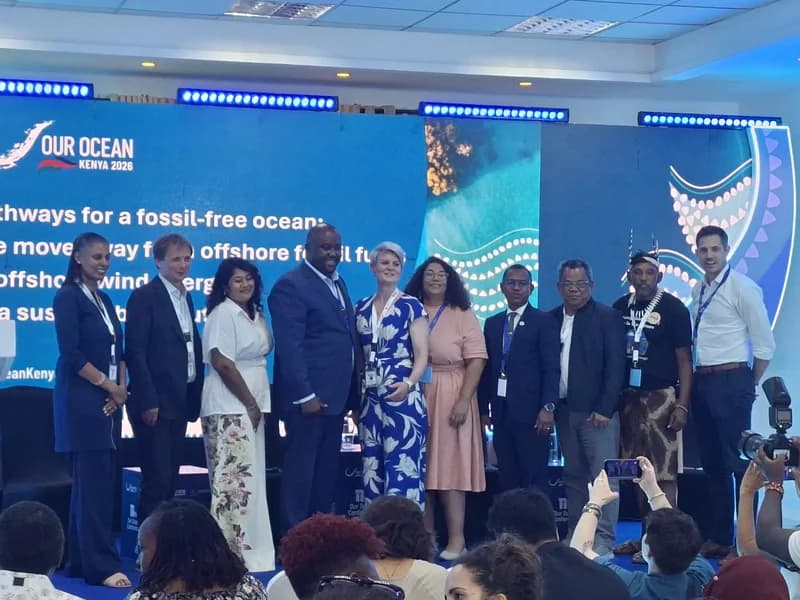
At the 11th Our Ocean Conference held in Mombasa, Kenya took a decisive step toward becoming a regional leader in the "blue economy" by officially joining the Global Offshore Wind Alliance (GOWA). This move, announced alongside the adoption of the Mombasa Declaration by 15 national governments, signals a significant shift in how African coastal nations are leveraging maritime resources for both environmental sustainability and economic growth. The dual focus on renewable energy expansion and the protection of marine life through improved fisheries transparency underscores a comprehensive approach to ocean governance on the continent.
Kenya's membership in GOWA marks a historic milestone for Africa’s renewable energy landscape, providing the nation with access to a vast network of international expertise and investment opportunities. Rikke Povlsen, GOWA’s Director of Operations, praised the move as a "new chapter" for the region, highlighting Kenya's leadership in climate action. With an estimated offshore wind potential of 68 gigawatts, the nation is now well-positioned to significantly enhance its clean energy grid while contributing to global climate goals and achieving universal energy access.
Alex Wachira, the Principal Secretary for Kenya's State Department of Energy, emphasized that this transition is as much about economic transformation as it is about environmental protection. He noted that developing offshore wind capabilities will drive job creation, bolster energy security, and provide a sustainable foundation for future generations. However, Wachira also called for a framework of responsible marine governance, ensuring that the benefits of these technological advancements are shared equitably with coastal communities and that rigorous environmental standards are maintained during infrastructure expansion.
Parallel to the energy announcements, the conference saw the adoption of the Mombasa Declaration by 15 countries committed to safeguarding maritime food security. This agreement focuses on the urgent need to combat illegal, unreported, and unregulated (IUU) fishing, which threatens the livelihoods of millions and the health of marine ecosystems. The declaration calls for enhanced global fisheries transparency, mandating better collection and dissemination of vessel information. By increasing access to fisheries data for both coastal and flag States, the signatories aim to close the loopholes that allow illicit fishing activities to persist.
Together, these developments represent a maturing of Africa's strategy regarding its territorial waters. The integration of high-tech renewable energy with improved management of traditional resources like fisheries reflects a holistic vision for the ocean's role in national development. As Kenya and its regional partners move from declarations to implementation, the focus will now shift toward securing the necessary capital and technical infrastructure to turn these ambitious goals into tangible progress for the continent’s green and blue economies.