••
KNUST Forges Strategic Partnership with Virginia State University Amidst Calls for Structured AI Adoption in Teacher Training
•2 min read•2 sources
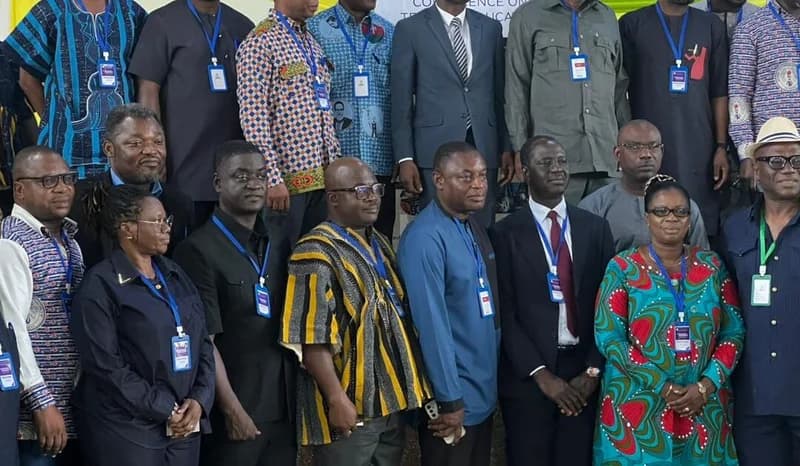
The Kwame Nkrumah University of Science and Technology (KNUST) is positioning itself at the forefront of global academic innovation through a new historic partnership with Virginia State University (VSU) and a proactive push for structured artificial intelligence (AI) adoption in Ghanaian classrooms. The collaboration with VSU, formalized in a ceremony attended by the Asantehene and Chancellor of KNUST, His Majesty Otumfuo Osei Tutu II, signals a significant step in enhancing international engagement. Simultaneously, KNUST leadership is championing a nationwide effort to ensure that emerging technologies like AI are integrated into teacher education with rigorous ethical and pedagogical oversight.
The partnership with VSU aims to foster a robust exchange of knowledge, particularly in the cutting-edge fields of Data Science and Artificial Intelligence. VSU President Dr. Makola M. Abdullah and the Asantehene celebrated the agreement, which facilitates student and faculty exchanges, joint research projects, and leadership development initiatives. This collaboration is designed to create impactful educational outcomes, reflecting a shared vision between the two institutions for excellence and innovation in the digital age. By linking Ghana's premier science university with a prominent American institution, the agreement provides a platform for cross-continental solutions to modern technical challenges.
Complementing these international efforts, Professor Eric Appau Asante, the AI Coordinator at KNUST, has issued a clarion call for the systematic integration of AI within Ghana's teacher education framework. Speaking at the National Conference of Principals of Colleges of Education, Professor Asante emphasized that while generative AI holds immense potential to enhance learning, it must serve as a tool for pedagogy rather than a replacement for it. He warned that without clear institutional policies and evidence-based practices, the country risks creating an "AI divide" that could worsen existing educational inequalities. He urged educators to prioritize critical thinking and develop structured guidelines to ensure AI remains a responsible and effective teaching aid.
Together, these developments highlight a comprehensive strategy by KNUST to modernize the Ghanaian educational landscape. The university is not only seeking global expertise through partnerships like that with VSU but is also taking a leadership role in shaping the domestic policy environment for new technologies. As these initiatives move forward, the focus remains on ensuring that technological advancement is matched by institutional readiness, ultimately preparing both students and educators for a future where digital literacy and international collaboration are paramount.

