••
President Mahama Directs Major Waste Clearance in Accra as Government Strengthens Local Governance and Sanitation Partnerships
•3 min read•7 sources
President John Dramani Mahama has issued a directive to the Ministry of Local Government, Chieftaincy and Religious Affairs to initiate a massive waste evacuation exercise across key areas of Accra, including Sodom and Gomorrah, James Town Beach, and Agbogbloshie. Minister Mahama Ayariga revealed that the waste accumulation at Agbogbloshie has reached the height of a 10-story building, representing a 30-year build-up that poses a severe environmental burden. The operation, which involves the Ministries of Finance, Defence, and Roads and Highways, will utilize the Military Engineering Regiment to transport waste to the Adipa Waste Management Centre. To prevent future dumping, the sites will be secured with military support following the clearance, which is intended to pave the way for major developmental projects in the capital.
Minister Ayariga has complemented this physical cleanup with a broad call for stakeholder collaboration, seeking guidance from the National Chief Imam, Sheikh Osman Nuhu Sharubutu, and the Christian community during the Second Ecumenical Convention. Ayariga emphasized that the government cannot tackle sanitation and environmental stewardship alone, advocating for a united effort between the state and religious institutions to foster responsible citizenship. During these engagements, the Minister expressed disappointment that Ghana is often compared unfavorably to Rwanda regarding cleanliness, questioning how the nation lost its reputation for sanitation and urging a move from complaints to actionable solutions that restore national dignity.
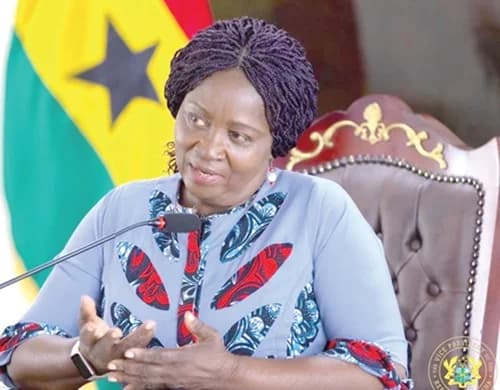
Parallel to these environmental efforts, Vice-President Professor Naana Jane Opoku-Agyemang has reaffirmed the government's commitment to making decentralization policies deliver concrete benefits to citizens. Speaking at the 2026 Inter-Ministerial Coordinating Committee (IMCC) meeting, the Vice-President stressed the need to transform theoretical frameworks into measurable outcomes for community development. She highlighted that successful decentralization relies on sustainable financing and robust domestic revenue mobilization, tasking the IMCC with improving the allocation of the District Assemblies Common Fund (DACF) and ensuring sectors like health and education are effectively devolved to local authorities.
To ensure the fiscal discipline necessary for these local reforms, the Head of the Grants Division of the DACF, Sitso Kwame Asaase, has issued a stern warning to Metropolitan, Municipal, and District Assemblies (MMDAs). Asaase cautioned that any assembly failing to submit timely and properly completed budgets will be denied their quarterly allocations. This move toward greater accountability aims to ensure that funds are used effectively for community-level infrastructure, such as the recently commissioned Akwamufie Small Town Water System in the Asuogyaman District, which now provides sustainable water access through mechanized boreholes to local residents.
Related topic
John Mahama: Latest News & Updates →

