••
Mahama Administration Accelerates 'Big Push' Infrastructure Agenda with Major Energy and Transport Projects
•3 min read•6 sources
The Government of Ghana, under President John Mahama’s administration, has intensified its 'Big Push' infrastructure agenda with several high-value projects aimed at expanding electricity access and improving national transport corridors. A key highlight is the GH""300 million rural electrification and urban intensification project in the Oti Region. Energy and Green Transition Minister, Dr. John Abdulai Jinapor, alongside Deputy Minister Richard Gyan-Mensah, announced that the initiative will connect approximately 90 communities to the national grid by early 2027. This expansion is designed to bridge socio-economic gaps by providing reliable power to support education, healthcare, and local businesses in the Savannah, Central, Oti, and Volta Regions. Oti Regional Minister John Kwadwo Gyapong emphasized that this initiative is critical for unlocking the region"s economic potential, especially as the number of beneficiary communities was recently expanded to address underserved areas.
Simultaneously, the government is making significant strides in the transport sector with the allocation of US$1.7 billion for the construction of a new 199-kilometre Accra-Kumasi Expressway. This project comes at a critical time, following a reported 18.5% increase in road fatalities in 2025, which claimed 2,673 lives. The new expressway is intended to incorporate advanced safety features, including full access control, physical median barriers, and dedicated service roads to prevent informal settlements from encroaching on the highway. In the Upper West Region, the 'Big Push' also includes the clearance of the Tumu-L""o road corridor to Burkina Faso. Local traditional authorities have issued a two-week evacuation notice to businesses and residents encroaching on the road reserve, with Sissala East MP Issah Mohammed Bataglia highlighting the corridor"s potential to boost international trade.
In the Western Region, the government has launched Phase Three of the Appiatse Redevelopment Project to continue rebuilding the community devastated by the 2022 explosion. Minister for Lands and Natural Resources, Emmanuel Armah Kofi Buah, recently cut the sod for the construction of 69 additional housing units. This follows the completion of 124 units in Phase One and compensation packages delivered in Phase Two. The Minister stressed the need for high-quality construction and transparency in resource management, urging stakeholders to ensure the project remains on schedule to restore the livelihoods of the remaining displaced households. Local leaders have called for continued accountability, particularly regarding outstanding compensation issues from the Maxam Company.
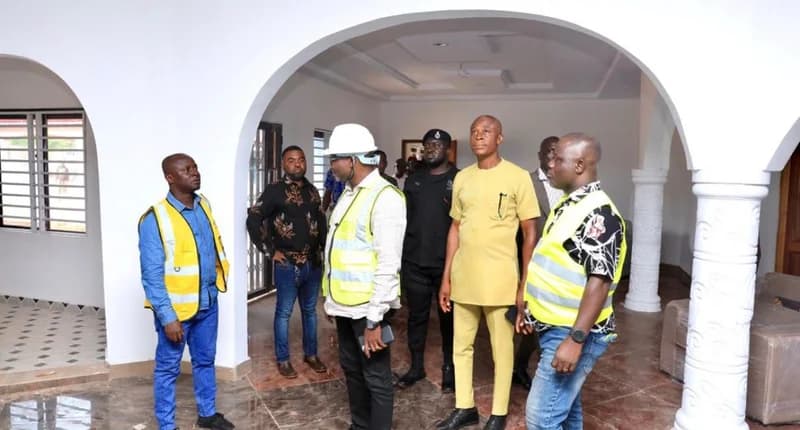
Complementing these large-scale national projects are local governance successes that demonstrate the administration"s focus on asset management. In Techiman North, DCE Adom Kwabena Johnson has completed the transformation of a long-abandoned official residence that had fallen into ruin since 2017. Now 98% complete, the facility will serve as a permanent residence for local executives and a community event center, ending years of costly rental payments for the assembly. Collectively, these initiatives reflect a broader national strategy to utilize infrastructure as a catalyst for job creation and sustainable economic development across Ghana"s sixteen regions.
Related topic
John Mahama: Latest News & Updates →

