••
President Mahama's Administration Clears 20-Month Railway Arrears Amidst Major Public Sector Restructuring
•3 min read•8 sources
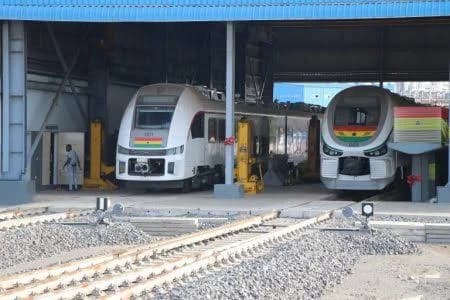
The administration of President John Mahama has reached a major milestone in resolving labor tensions by clearing 20 months of salary arrears for employees of the Ghana Railway Company Limited (GRCL). The payment, which was fully settled on August 24, 2026, covers the period from October 2024 to May 2026. General Secretary of the Railway Workers Union (RWU), Benjamin Essuman, hailed the move as a significant relief that restores hope and dignity to workers who had been facing severe financial hardships. The union expressed its gratitude to President Mahama and other stakeholders while calling for the swift finalization of severance packages and the completion of the Takoradi-Nsuta railway extension by 2027 to stimulate economic growth.
This fiscal intervention occurs alongside a proposed structural overhaul of the rail sector. The State Interests and Governance Authority (SIGA) has recommended the liquidation of GRCL due to its ongoing financial and operational struggles. Under SIGA's 2025 State Ownership Report, the proposal involves absorbing GRCL’s staff into the Ghana Railway Development Authority (GRDA). This move aims to streamline the sector into a dual-purpose entity overseeing both infrastructure development and commercial operations, a transition marked by the commencement of operations on the Tema-Mpakadan line in late 2025.
However, the government faces contrasting pressure in the education sector, where the opposition New Patriotic Party (NPP) has accused the Ghana Education Service (GES) of underpaying promoted teachers. The NPP’s Upper East Regional Communication Director, Dr. Samuel Akonga, alleged that teachers promoted after the 2025 examinations are being short-changed, with arrears payments beginning in July 2026 rather than April 2026. The opposition is demanding an immediate review of promotion letters and payment schedules, arguing that the current delays and inaccuracies undermine the morale of educators essential to national development.
In tandem with these labor issues, the government is enforcing a strict code of discipline within its security agencies. Interior Minister Muntaka Mohammed Mubarak recently confirmed the dismissal of at least 10 recruits from security services training schools for violating a ban on mobile phone usage. Despite instructions to surrender their devices, the recruits were caught using them secretly. The Minister emphasized that with over 500,000 applicants vying for only 10,000 training spots, absolute compliance with institutional regulations is a non-negotiable requirement for those selected to serve the nation.
Broader institutional reforms also reached the media sector, where the National Media Commission (NMC) Chairperson, Professor Akua Opokua Britwum, inaugurated a new Board of Directors for the Graphic Communications Group Ltd. Professor Britwum reminded the board that state-interest media organizations must balance national interests with commercial viability. As the government navigates these complex labor and structural challenges, the focus remains on ensuring that state-owned enterprises are both disciplined and financially sustainable in an increasingly competitive environment.
Related topic
Ghana Education Service (GES): Latest News Today →