••
President Mahama Rejects 'Humiliating' U.S. Health Compact as Ghana Pursues Visa Reprieve and 'Accra Reset'
•2 min read•10 sources
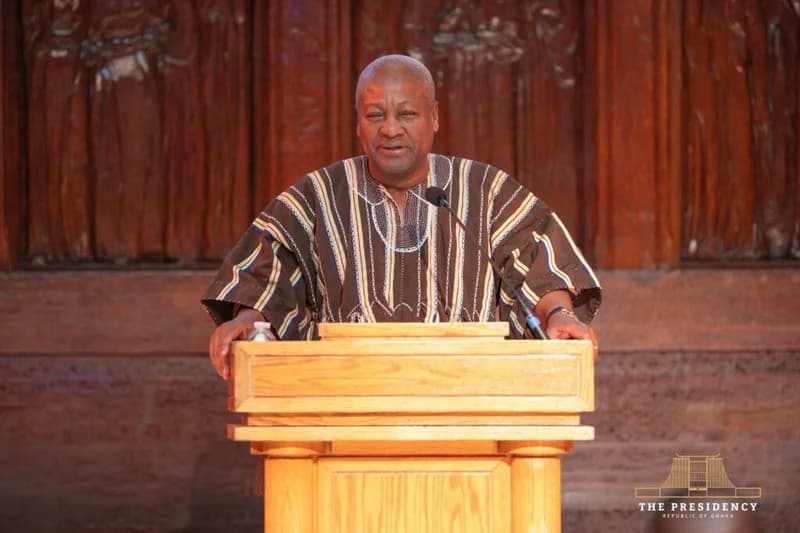
President John Dramani Mahama has delivered a firm defense of Ghana’s national sovereignty, rejecting a proposed health compact from the United States that he described as "humiliating." Speaking at the Council on Foreign Relations in New York on September 25, 2026, the President revealed that his Cabinet swiftly dismissed the agreement due to unprecedented conditions that threatened to compromise the privacy of Ghanaian citizens and the authority of national regulatory bodies. The rejection comes at a pivotal moment as Ghana seeks to redefine its relationship with international partners, moving from donor dependency toward a self-reliant future through the "Accra Reset" initiative.
The proposed compact, intended to mitigate funding shortfalls following a $174 million withdrawal in USAID development support, contained several clauses the Ghanaian government found unacceptable. President Mahama detailed that the U.S. demanded access to Ghana’s pathogen profiles and individual citizens' medical records—requirements he labeled as "bizarre." Furthermore, the agreement sought to bypass the Food and Drugs Authority (FDA) by allowing uninspected medical imports and required Ghana to provide mandatory counterpart funding. Dr. Mark Kurt Nawaane of Parliament's Health Committee echoed these concerns, emphasizing that while health cooperation is valuable, specific medical records are a "no-go area" that must remain under sovereign control.
Despite the tension over the health deal, the administration reported significant progress in other diplomatic channels. Foreign Affairs Minister Samuel Okudzeto Ablakwa announced that Ghana is on track to secure a reprieve from a long-standing immigrant visa ban imposed during the Trump Administration. Speaking to the Ghanaian community in New York, Ablakwa attributed this breakthrough to President Mahama’s commitment to the welfare of the diaspora. He also highlighted a surge in remittances and the establishment of a comprehensive database to track the consular status of Ghanaians globally, signaling renewed confidence in the government's proactive international engagement.
These developments are part of a broader strategic shift to capitalize on global geopolitical changes. Minister Ablakwa articulated a vision for resource sovereignty, stating that Ghana aims to end raw material exports by 2030 and renegotiate resource agreements for fairer returns. President Mahama framed the "Accra Reset" as a necessity for African health sovereignty, aiming to boost local production of medicines and vaccines. As Ghana prepares for the African Union Chairmanship in 2027, the government is positioning itself to lead regional integration and peace efforts, particularly addressing security challenges in the Sahel through home-grown African solutions.
Related topic
John Mahama: Latest News & Updates →

