••
President Mahama at UNGA Demands Reparatory Justice and Global Financial Reform, Rejecting Humiliating Foreign Compacts
•3 min read•17 sources
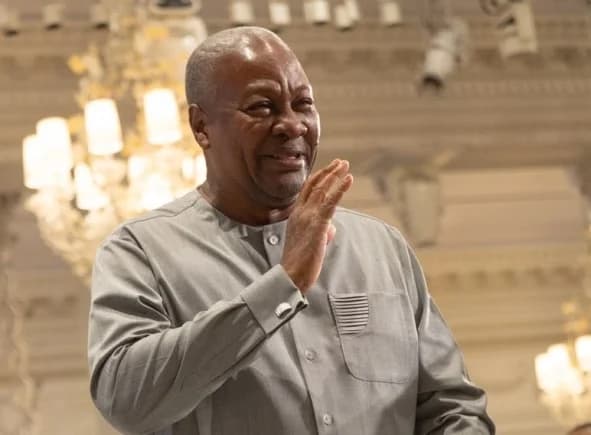
Addressing the 81st Session of the United Nations General Assembly in New York, President John Dramani Mahama issued a forceful call for a new era of global engagement, asserting that Africa seeks equal partnership and mutual respect rather than charity. President Mahama highlighted that the continent will no longer serve as an arena for a new scramble for resources, demanding that critical minerals be processed locally to create jobs and value for African youth. He used the global stage to advocate for a permanent seat for Africa on the UN Security Council and called for a fundamental dismantling of exploitation mechanisms that have historically disadvantaged the Global South. This vision of sovereignty is central to Ghana's current foreign policy, which prioritizes national dignity and economic self-reliance. A significant portion of the President's address focused on the urgent need to reform the international financial architecture. President Mahama decried the debt trap facing African nations, noting that they frequently borrow at interest rates eight times higher than the global average. He pointed to the staggering loss of $90 billion annually through illicit financial flows, such as mis-invoicing by Western corporations, and called for Africa's share in the IMF to be increased from 4.5% to 10%. This demand for economic sovereignty was recently exemplified by Ghana's rejection of a proposed health compact from the United States. President Mahama defended this decision, labeling the compact's conditions as humiliating because they required the sharing of Ghanaian medical records and the entry of uninspected medical products. Instead, he promoted the Accra Reset initiative, which aims to achieve health and vaccine self-sufficiency. Reparatory justice also took center stage as President Mahama urged the international community to move beyond mere acknowledgment of the transatlantic slave trade toward concrete systemic changes. Following a Ghana-led UN resolution passed in early 2026, the President called for a permanent global system for the restitution of cultural heritage and human remains, insisting that historical artifacts should not be treated as collectibles. Brazilian President Luiz Inácio Lula da Silva endorsed this leadership, praising Ghana's role in correcting historical distortions. Mahama emphasized that true repair involves transforming economic relations and trade structures rather than simply seeking financial compensation, welcoming ongoing discussions with nations like France, Germany, and the Netherlands. In his assessment of regional security, President Mahama linked the worsening terrorism crisis in the Sahel to the 2011 US and French-led overthrow of Muammar Gaddafi in Libya. He argued that the resulting destabilization turned Libya into a gateway for arms and fighters, leading to the military coups currently plaguing the region. To address these threats, he advocated for a more integrated African Union focused on collective security and intelligence sharing. On the environmental front, the President characterized climate change as the ultimate test of global equity, noting that while Africa contributes the least to global emissions, it suffers the most from erratic rainfall and coastal erosion. He urged developed nations to honor their financial commitments through non-debt-creating climate aid, ensuring that the burden of a global crisis does not fall unfairly on the world's most vulnerable populations.
Related topic
John Mahama: Latest News & Updates →

